Notes - Why pray when God knows everything ENG CHI Pinyin - Part 2
Prayer is a form of worship.
Dǎogào shì yī zhǒng chóngbài de xíngshì.
祷告是一种崇拜的形式。
dǎo 祷 (verb) pray
gào 告 (verb) tell, inform, request, ask for
dǎogào 祷告 (verb) pray, (noun) prayer
shì 是 to be (is/are)
yī 一 one, single, only one, alone
zhǒng 种 (measure word) type, kind
chóng 崇 (verb) esteem, worship
bài 拜 (verb) make a courtesy call, respectfully offer oneself as somebody’s disciple, ceremoniously acknowledge somebody as one’s master
chóngbài 崇拜 (verb) worship, adore, (noun) worship
de 的 [used after a noun, used after a verb]
xíng 形 (noun) form
shì 式 (noun) form, pattern, type, style
xíngshì 形式 (noun) form
yī zhǒng chóngbài de xíngshì 一种崇拜的形式 a form of worship
When we praise God and give thanks to God during prayer, we are worshipping God
Wǒmen zài dǎogào zhōng zànměi Shàngdì, gǎnxiè Shàngdì, jiùshì zài chóngbài Shàngdì.
我们在祷告中赞美上帝、感谢上帝,就是在崇拜上帝。
wǒ 我 I
men 们 [used after a personal pronoun or a noun to show plural number]
wǒmen 我们 we, us
zài 在 (adv) [indicating an action in progress]
dǎo 祷 (verb) pray
gào 告 (verb) tell, inform, request, ask for
dǎogào 祷告 (verb) pray, (noun) prayer
zhōng 中 (noun) centre, middle, in, among
zàn 赞 (verb) praise, commend
měi 美 (adj) beautiful, good
zànměi 赞美 (verb) praise
Shàng 上 (adj) upper, up, higher, superior
dì 帝 (noun) the Supreme Being
Shàngdì 上帝 God
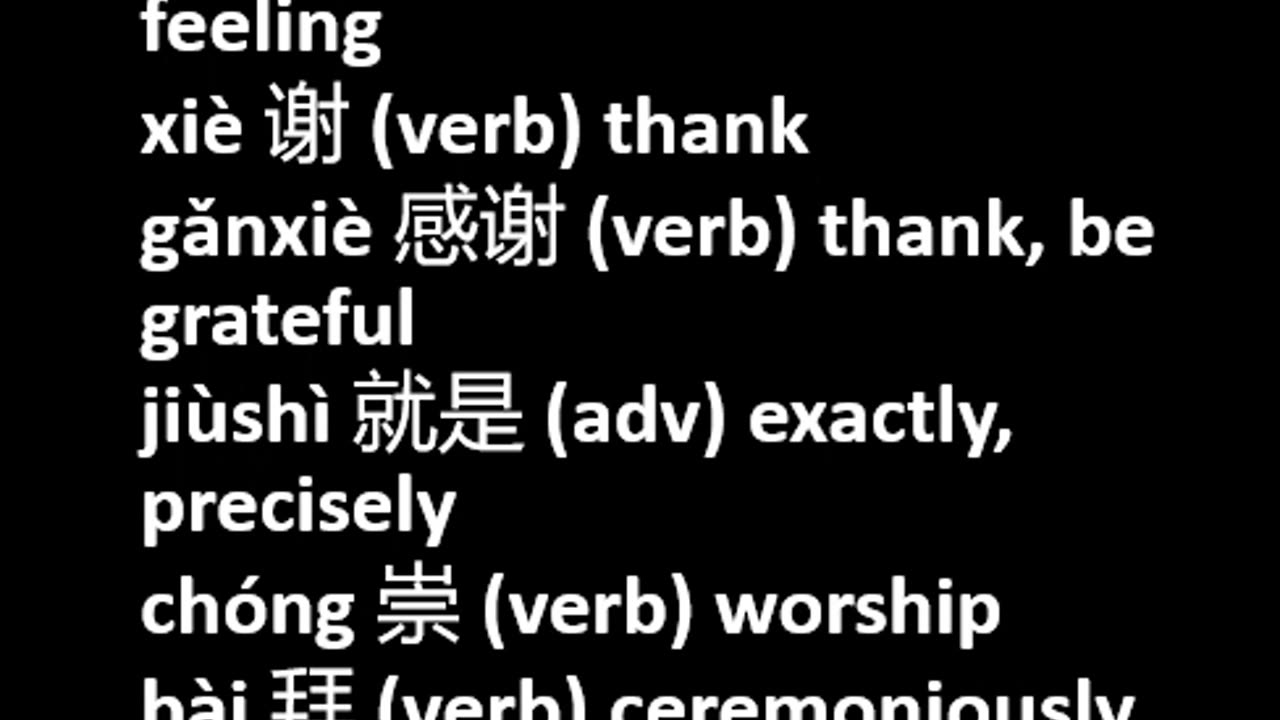
gǎn 感 (verb) feel, sense, move, touch, (noun) sense, feeling
xiè 谢 (verb) thank
gǎnxiè 感谢 (verb) thank, be grateful
jiùshì 就是 (adv) exactly, precisely
chóng 崇 (verb) esteem, worship
bài 拜 (verb) make a courtesy call, respectfully offer oneself as somebody’s disciple, ceremoniously acknowledge somebody as one’s master
chóngbài 崇拜 (verb) worship, adore, (noun) worship
Prayer transforms us
Qídǎo gǎibiàn wǒmen
祈祷改变我们
qí 祈 (verb) pray
dǎo 祷 (verb) pray
qídǎo 祈祷 (noun) prayer, (verb) pray
gǎi 改 (verb) change, transform
biàn 变 (verb) change, transform
gǎibiàn 改变 (verb) change, transform
wǒ 我 I
men 们 [used after a personal pronoun or a noun to show plural number]
wǒmen 我们 we, us
When we pray, we can focus more on God rather than on the things that trouble us
Qídǎo shí, wǒmen nénggòu gèng zhuānzhù Shàngdì, ér bùshì nàxiē kùnrǎode shìqíng
祈祷时,我们能够更专注上帝,而不是那些困扰的事情。
[Philippians 4:6-8 Féi lì bǐ shū 4:6-8 腓立比书 4:6-8 / 1 Peter 5:7 Bǐdé qián shū 5:7 彼得前书 5:7 ]
qí 祈 (verb) pray
dǎo 祷 (verb) pray
qídǎo 祈祷 (noun) prayer, (verb) pray
shí 时 (noun) time, times, season
wǒ 我 I
men 们 [used after a personal pronoun or a noun to show plural number]
wǒmen 我们 we
néng 能 (verb) can, be able to
gòu 够 (adj) enough, sufficient, adequate
nénggòu 能够 (verb) can, be able to, be capable of
gèng 更 (adv) even, more, still more, further
zhuān 专 (noun) special
zhù 注 (verb) concentrate
zhuānzhù 专注 (adj) absorbed, with one’s attention fully held
Shàng 上 (adj) upper, up, higher, superior
dì 帝 (noun) the Supreme Being
Shàngdì 上帝 God
ér 而 (conj) and, [similar to “but” or “yet”], [indicate change from one state to another]
bùshì 不是 not
ér bùshì 而不是 rather than, instead of
nàxiē 那些 those
kùn 困 (verb) be hard pressed
rǎo 扰 (verb) disturb, harass
kùnrǎo 困扰 (verb) trouble
de 的 [used after pronoun]
shì 事 (noun) matter, affair, thing, trouble
qíng 情 (noun) feelings, affection, situation, condition
shìqíng 事情 (noun) matter, thing, affair
When we pray, we can experience God's peace and receive divine guidance and strength
Dāng wǒmen qídǎo shí, wǒmen kěyǐ tǐyàn dào Shàngdì de píng'ān, bìng huòdé Shàngdì de zhǐyǐn hé lìliàng.
当我们祈祷时,我们可以体验到上帝的平安,并获得上帝的指引和力量。
[Philippians 4:6-8 Féi lì bǐ shū 4:6-8 腓立比书 4:6-8 ]
dāng 当 when .., at the time …
wǒ 我 I
men 们 [used after a personal pronoun or a noun to show plural number]
wǒmen 我们 we, us
qí 祈 (verb) pray
dǎo 祷 (verb) pray
qídǎo 祈祷 (noun) prayer, (verb) pray
shí 时 (noun) time, times, season
kě 可 (verb) can, may
yǐ 以 [indicating purpose] in order to, so as to
kěyǐ 可以 (verb) can, may
tǐ 体 (verb) personally experiencing something
yàn 验 (verb) examine, check, prove effective
tǐyàn 体验 (noun) experience for oneself, learn through practice
dào 到 [used after a verb as a complement to indicate success]
Shàng 上 (adj) upper, up, higher, superior
dì 帝 (noun) the Supreme Being
Shàngdì 上帝 God
de 的 [used after pronoun]
píng 平 (adj) calm, quiet, peaceful
ān 安 (adj) peaceful, quiet, calm, tranquil
píng'ān 平安 (adj) safe and sound
bìng 并 (conj) and
huò 获 (verb) obtain, win, reap
dé 得 (verb) get, gain, obtain
huòdé 获得 (verb) gain, obtain, acquire, win, achieve
zhǐ 指 (verb) point at, point to, indicate
yǐn 引 (verb) lead, guide
zhǐyǐn 指引 (verb) guide, (noun) guidance
hé 和 (conj) and
lì 力 (noun) power, strength, ability
liàng 量 (noun) capacity
lìliàng 力量 (noun) power, force, strength
-
 LIVE
LIVE
Futures Edge: Finance Unfiltered with Jim Iuorio and Bob Iaccino
18 minutes agoTrump's Folly: Will Greenland become the 51st State?
148 watching -
 LIVE
LIVE
LONEWOLFanCUB
19 minutes agoLONEWOLFs IRL FRANTIC 2ND DAY ON RUMBLE
76 watching -
 57:33
57:33
DeVory Darkins
2 hours agoNATO STUNNED by Trump SHOCKING announcement regarding Greenland
122K79 -
 LIVE
LIVE
The White House
4 hours agoPress Briefing by Press Secretary Karoline Leavitt, Jan. 20, 2026
4,212 watching -
 56:04
56:04
Timcast
3 hours agoTRUMP DOUBLES DOWN, "NO GOING BACK" On Greenland Takeover
179K92 -
 1:57:49
Steven Crowder
5 hours agoStraight to Jail: The Trump Admin Vows to Prosecute Minnesota Ice Protesters
434K302 -
 1:09:50
Sean Unpaved
3 hours agoCurt Cignetti & Indiana Complete Undefeated Season & Win National Championship! | UNPAVED
30K -
 2:00:55
Side Scrollers Podcast
4 hours agoSide Scrollers Podcast Live | Tuesday January 20th 2026
18.3K2 -
 2:59:38
Wendy Bell Radio
7 hours agoOh, the Irony.
64.1K98 -
 58:44
58:44
The Rubin Report
4 hours ago‘Shark Tank’ Legend Explains the Real Reason Gavin Newsom’s 2028 Chances Just Died
51.5K47