Notes - Why pray when God knows everything? ENG CHI Pinyin - Part 3
When we pray to God, we are acknowledging His sovereignty (Lordship)
Dāng wǒmen xiàng Shàngdì qídǎo shí, wǒmen chéngrèn Tā de zhǔquán.
当我们向上帝祈祷时,我们承认祂的主权。
dāng 当 when .., at the time …
wǒ 我 I
men 们 [used after a personal pronoun or a noun to show plural number]
wǒmen 我们 we, us
xiàng 向 (preposition) to, towards
Shàng 上 (adj) upper, up, higher, superior
dì 帝 (noun) the Supreme Being
Shàngdì 上帝 God
qí 祈 (verb) pray
dǎo 祷 (verb) pray
qídǎo 祈祷 (noun) prayer, (verb) pray
shí 时 (noun) time, times, season
chéng 承 (verb) bear, hold, carry, undertake
rèn 认 (verb) admit, recognize
chéngrèn 承认 (verb) admit, acknowledge, recognize
tā 他 / 祂 (pronoun) he/him, He/Him (God)
de 的 [used after a noun]
zhǔ 主 (noun) Lord, God, master, host
quán 权 (noun) right, power, advantageous position
zhǔquán 主权 (noun) sovereignty
This can help us build faith and trust in God
Zhè kěyǐ bāngzhù wǒmen jiànlì xìnyǎng hé xìnrèn duì Shàngdì
这可以帮助我们建立信仰和信任对上帝
zhè 这 this
kě 可 (verb) can, may
yǐ 以 [indicating purpose] in order to, so as to
kěyǐ 可以 (verb) can, may
bāng 帮 (verb) help, assist
zhù 助 (verb) help, assist, aid
bāngzhù 帮助 (verb) help, assist, (noun) help
wǒmen 我们 we, us
jiàn 建 (verb) build, establish
lì 立 (verb) found, establish
jiànlì 建立 (verb) build, establish
xìn 信 (verb) believe, trust
yǎng 仰 (verb) rely on, depend on
xìnyǎng 信仰 (noun) faith, belief
hé 和 (conj) and
rèn 任 (verb) let, allow
xìnrèn 信任 (verb) trust, have confidence in
duì 对 (verb) treat, (preposition) to / of, towards (with regard to)
Shàngdì 上帝 God
The Bible says we are to pray without ceasing and to pray on all occasions
[The Bible says that we should pray continually, and pray at all times and in all places]
Shèngjīng shuō wǒmen yào bù zhùde dǎogào, yě yào suíshí suídì dǎogào
圣经说我们要不住地祷告, 也要随时随地祷告
1 Thessalonians 5:16-18 Tiē sā luó ní jiā qián shū 5:16-18 / 帖撒罗尼迦前书 5:16-18 /
Ephesians 6:18 / Yǐ fú suǒ shū 6:18 / 以弗所书 6:18
shèng 圣 (adj) holy, sacred
jīng 经 (noun) scripture
Shèngjīng 圣经 the Bible, the Holy Bible
shuō 说 (verb) say, speak, talk, explain
wǒmen 我们 we, us
yào 要 (verb) must, need, have to
bù 不 no, not
zhù 住 (verb) stay, stop, cease
bùzhù 不住 (adv) constantly, continuously, repeatedly
de 地 [used after an adj, a noun or a phrase to form an adverbial adjunct before the verb]
dǎogào 祷告 (verb) pray
yě 也 also, too, as well
yào 要 (verb) want, desire, must, need, be going to
suí 随 (verb) follow, comply with, let somebody do as he likes
shí 时 (noun) time, times, season
suíshí 随时 (adv) at any time, at all times
dì 地 (noun) the earth, land, field, ground, place
suídì 随地 (adverb) anywhere, everywhere
suíshí suídì 随时随地 anytime, anywhere / at all times / on all occasions
Jesus is the only mediator between God and men
Yēsū shì Shàngdì yǔ rén zhī jiān wéiyī de tiáojiě zhě.
耶稣是上帝与人之间唯一的调解者。
1 Timothy 2:5 / Tí mó tài qián shū 2:5 / 提摩太前书 2:5
Yēsū 耶稣 Jesus
shì 是 to be (is/are)
Shàngdì 上帝 God
yǔ 与 (preposition) with
rén 人 (noun) man / person
zhī 之 [particle]
jiān 间 [indicating time or space within the given limits]
zhī jiān 之间 (preposition) between
wéi 唯 (adv) / wéi 惟 (adv) only, alone
yī 一 one, single, alone, only one
wéiyī 唯一 / wéiyī 惟一 (adj) only, sole
de 的 [used after an adjective]
tiáo 调 (verb) mix, adjust, suit well, mediate
jiě 解 (verb) separate, divide
tiáojiě 调解 (verb) mediate, make peace
tiáojiě zhě 调解者 (noun) mediator
zhě 者 [used an adjective or verb as a substitute for a person or a thing]
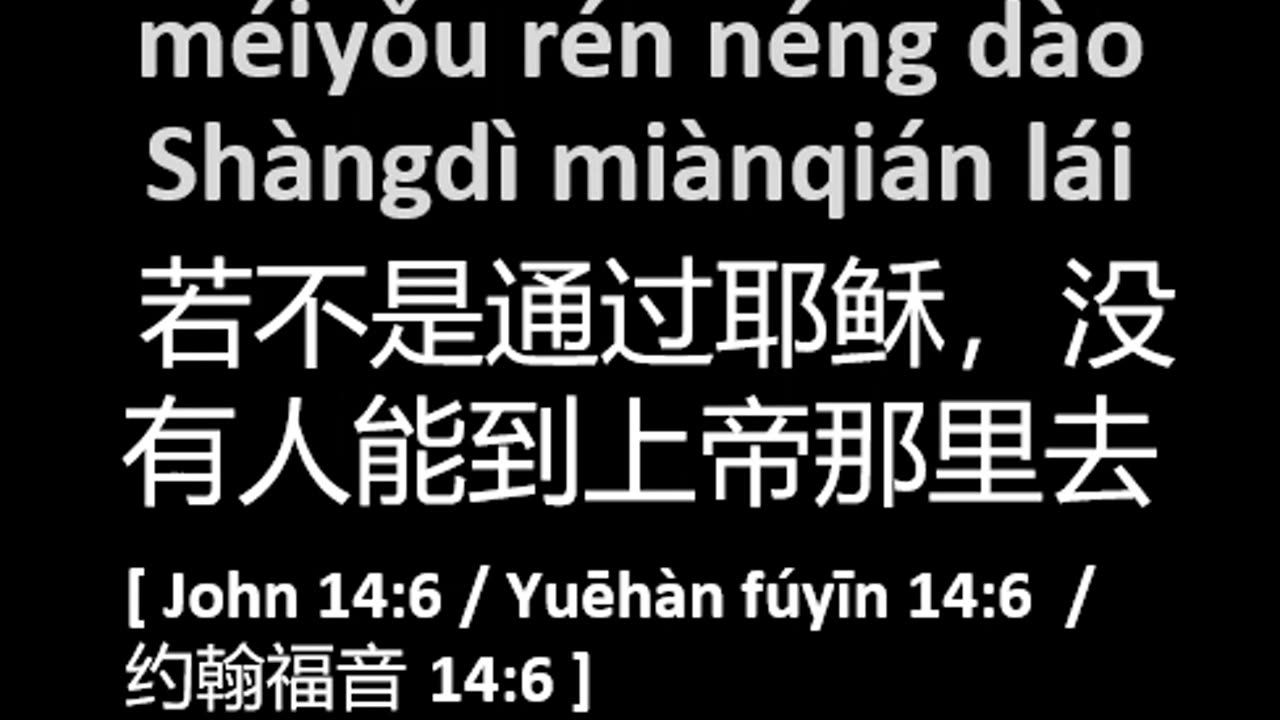
No one can come to God except through Jesus
Ruò bù tōngguò Yēsū, méiyǒu rén néng dào Shàngdì miànqián lái.
若不通过耶稣,没有人能到上帝面前来。
John 14:6 / Yuēhàn fúyīn 14:6 / 约翰福音 14:6
ruò 若 (verb) like, seem, as if, (conj) if
bù 不 no, not
ruò bù 若不 if not
tōng 通 (verb) lead to, go to, connect, (adj) through
guò 过 (verb) spend (life, time), [used after a verb as a complement]
tōngguò 通过 (prep) by means of, by way of
Yēsū 耶稣 Jesus
méiyǒu 没有 not have
rén 人 (noun) man, person, people, everybody, each
méi yǒu rén 没有人 no one
néng 能 (verb) can, be able to
dào 到 (verb) arrive, reach, go to, [used after a verb as a complement to indicate success]
Shàngdì 上帝 God
miàn 面 (noun) face, side, aspect, [used to form a noun of locality]
qián 前 (noun) front
miànqián 面前 (noun) in front of, in the face of, before
lái 来 (verb) come, arrive, [used after a verb]
Therefore, we can pray directly to God through Jesus
Yīncǐ, wǒmen kěyǐ tōngguò Yēsū zhíjiē xiàng Shàngdì dǎogào
因此, 我们可以通过耶稣直接向上帝祷告
yīn 因 (prep) on the basis of, because of, (noun) cause, reason
cǐ 此 (prep) this
yīncǐ 因此 (conj) therefore, for this reason, consequently
wǒmen 我们 we, us
kěyǐ 可以 (verb) can, may
tōng 通 (verb) lead to, go to, connect, (adj) through
guò 过 (verb) spend (life, time), [used after a verb as a complement]
tōngguò 通过 (prep) by means of, by way of
Yēsū 耶稣 Jesus
zhí 直 (adv) continuously, directly, straight
jiē 接 (verb) come into contact with, come close to, connect
zhíjiē 直接 (adj) direct, immediate
xiàng 向 (preposition) to, towards
Shàngdì 上帝 God
dǎogào 祷告 (verb) pray
-
 LIVE
LIVE
Right Side Broadcasting Network
5 hours agoLIVE: President Trump Celebrates the First Anniversary of His Second Administration - 1/20/26
5,205 watching -
 LIVE
LIVE
Futures Edge: Finance Unfiltered with Jim Iuorio and Bob Iaccino
34 minutes agoTrump's Folly: Will Greenland become the 51st State?
159 watching -
 LIVE
LIVE
LONEWOLFanCUB
34 minutes agoLONEWOLFs IRL FRANTIC 2ND DAY ON RUMBLE
78 watching -
 57:33
57:33
DeVory Darkins
2 hours agoNATO STUNNED by Trump SHOCKING announcement regarding Greenland
122K81 -

The White House
5 hours agoPress Briefing by Press Secretary Karoline Leavitt, Jan. 20, 2026
45.1K17 -
 56:04
56:04
Timcast
3 hours agoTRUMP DOUBLES DOWN, "NO GOING BACK" On Greenland Takeover
200K95 -
 1:57:49
Steven Crowder
6 hours agoStraight to Jail: The Trump Admin Vows to Prosecute Minnesota Ice Protesters
490K308 -
 1:09:50
Sean Unpaved
4 hours agoCurt Cignetti & Indiana Complete Undefeated Season & Win National Championship! | UNPAVED
46K -
 2:00:55
Side Scrollers Podcast
5 hours agoSide Scrollers Podcast Live | Tuesday January 20th 2026
27.9K3 -
 2:59:38
Wendy Bell Radio
7 hours agoOh, the Irony.
83.9K99