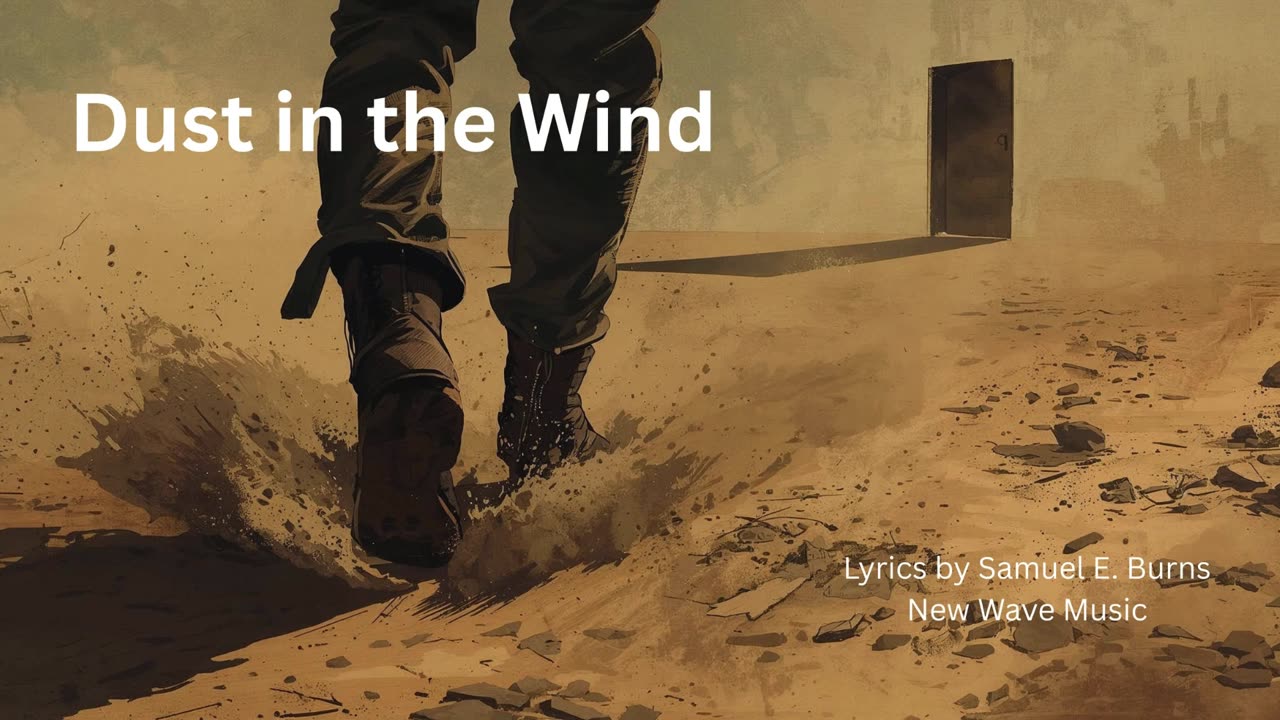
Dust in the Wind
"Dust in the Wind" is a hauntingly atmospheric poem that speaks to the weight of loss, memory, and the passage of time. The vivid imagery and careful attention to detail pull the reader into a desolate, almost post-apocalyptic world where the only things that remain are the echoes of the past and the people who can barely hold onto what they've lost.
From the very first lines, the setting is stark and unforgiving: "As the sun burns down, / There are shadows at the door." The imagery of heat and desolation is immediate, and the "boots crunch on dirt" sets the stage for a journey not just through a physical landscape, but through the emotional terrain of a man haunted by the past. There's a beautiful contrast between the silence that "tries to speak" and the harshness of the world around him, emphasizing a deep, almost suffocating isolation.
The house, "broken" and "bruised and weathered," becomes a metaphor for the man's own inner turmoil. The windows "cracked," the door "half-hinged," speak not just of neglect, but of a life that has been worn down by time and trauma. The dust—constantly mentioned, always present becomes a symbol for the fleeting nature of everything, for memories that, like dust, settle and disappear when least expected.
Burns' use of metaphor is particularly striking when describing the "men" in the room. "They have no soul, / Only a hunger," captures the eerie, almost supernatural emptiness these figures possess. They exist in a state of need, not for food or drink, but for something darker. This hunger comes "from darkness, / Ripped from the soil," which evokes a sense of primal loss, as though the characters are remnants of something far older and far more brutal.
The imagery of the wind, the "floating dust," and the "sharp as steel" language of the men continues to build an atmosphere of tension. There's something in the air that feels heavy and foreboding, as though the protagonist is trapped in a cycle of waiting and remembering, hoping for something to change, yet knowing that perhaps it never will. The line "She is somewhere. / He knows her scent, / But it slips away," speaks to a longing that is both tangible and intangible. It's a longing that remains just out of reach, like the scent of a memory drifting on the wind.
The recurring theme of waiting is expertly done. The protagonist waits for something perhaps for the woman he loves, perhaps for some sense of closure or redemption. The poem's cyclical nature, where time seems to stand still and repeat itself, amplifies this theme. The final lines, "Like dust in the wind," echo the idea that all is ephemeral and fleeting, as though everything, even the protagonist’s hopes and desires, will be swept away in the end.
One of the most powerful aspects of "Dust in the Wind" is its use of sound. The quietude of the setting, broken only by the "creak" of chairs and the "whistle" of the wind, heightens the tension. The sound of footsteps stirring the dust or the flickering of light adds an auditory layer to the story, making the reader almost feel the weight of each moment.
Samuel E. Burns' "Dust in the Wind" is a melancholic meditation on memory, loss, and the persistence of the past. It’s a poem that lingers long after it ends, leaving the reader with the image of a man who waits perhaps in vain for something or someone who may never return. The sense of desolation is palpable, yet there's a quiet hope that something, even in its most fleeting form, will endure, like dust carried by the wind.
-
 3:52
3:52
New Wave Music
2 days agoNow On Amazon
12 -
 LIVE
LIVE
vivafrei
9 hours agoEp. 294: Pipe Bomber Caught? Pfizer Fraud before Appeals! Venezuela Boat Strikes! EU v. Elon & MORE!
11,288 watching -
 LIVE
LIVE
SpartakusLIVE
38 minutes agoEarly ARC Stream for EXPEDITION Prep || WZ Buybacks LATER
167 watching -
 LIVE
LIVE
GritsGG
5 hours agoBO7 Warzone Is Here! Win Streaking! New Leaderboard?
2,174 watching -
 20:00
20:00
DeVory Darkins
1 day agoSenator Kennedy drops BAD NEWS for Ilhan Omar calls for her prosecution
21.4K129 -
 21:27
21:27
Tucker Carlson
4 hours agoTucker and Qatar’s Prime Minister React to Trump’s Move Against Bibi
50.9K160 -
 LIVE
LIVE
POLARHAYWYR
1 hour agoSunday stream
35 watching -
 LIVE
LIVE
OptimusDan
57 minutes agoSunday goes Jurassic.... World
47 watching -
 LIVE
LIVE
Astral Doge Plays!
9 hours agoHyrule Warriors: Age of Imprisonment ~LIVE!~ Last of the Korok Seeds
29 watching -
 LIVE
LIVE
Lofi Girl
2 years agoSynthwave Radio 🌌 - beats to chill/game to
255 watching