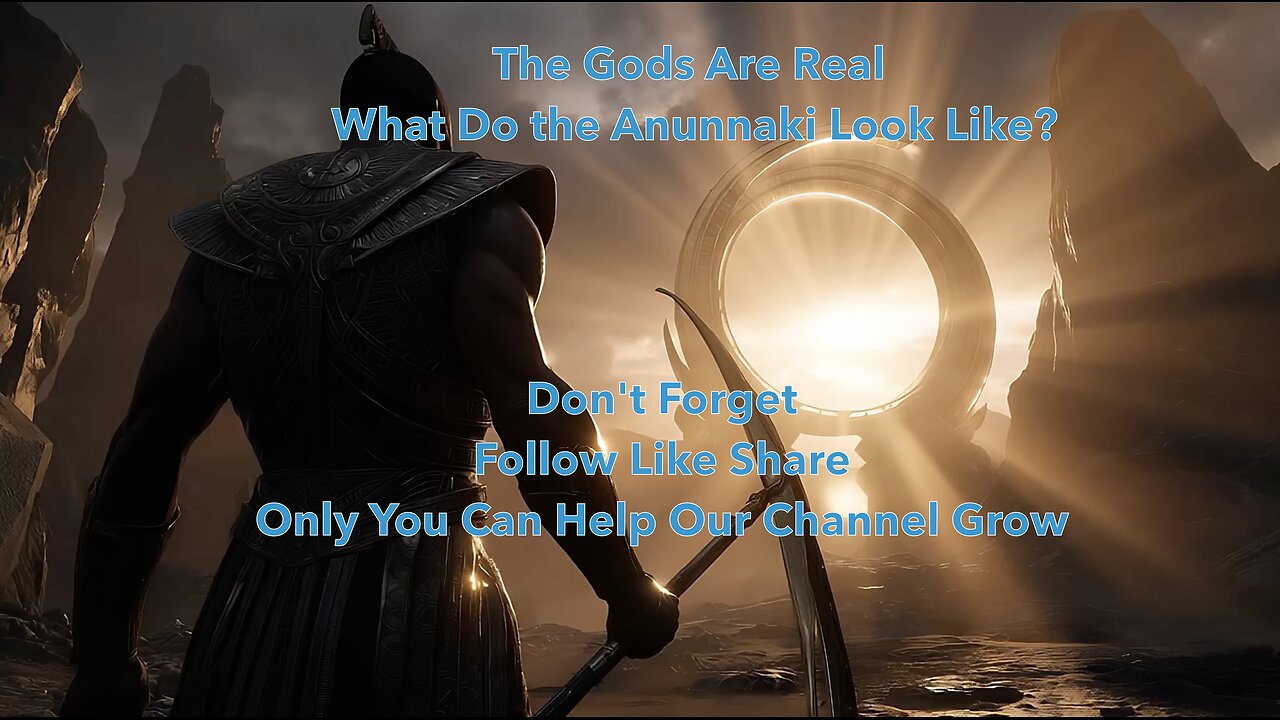
The Gods Are Real What Do the Anunnaki Look Like.
Was the divine ever truly visible? This video journeys from Mesopotamian seals to mystical visions, exploring how gods—Anunnaki, Orishas, Devas—have been seen, felt, and hidden across cultures and consciousness.
The gods have been remembered through names, myths, symbols, and visions across cultures. This video explores how ancient civilizations described and represented divine beings, focusing on the Anunnaki of Mesopotamia, who were recorded in Sumerian and Akkadian texts as powerful deities. While mainstream scholars view them as mythological, alternative theories—especially those of Zecharia Sitchin—propose the Anunnaki were advanced extraterrestrial beings from a planet called Nibiru who influenced early human civilization.
Artifacts such as the Adda Seal and VA 243 reveal detailed iconography—winged figures, horned crowns, rods, and what appear to be tools or devices. These recurring motifs, seen in the Apkallu and their pinecones and handbags, suggest either deep symbolic meaning or encoded knowledge of advanced technology. Similar divine imagery appears in Egypt, Greece, India, and West Africa. From falcon-headed gods in Egypt to the blue-skinned Vishnu in India, and the masked Orishas of the Yoruba, divinity is shown through symbolic color, animal-human hybrids, and ritual concealment.
In Hebrew tradition, Yahweh’s face cannot be seen; the divine is revealed only through light, fire, or voice. Across traditions, colors such as red, silver, blue, and radiant white are linked to divine presence, suggesting cosmic or metaphysical origins rather than human traits. These colors are interpreted as expressions of vibration or frequency rather than literal skin tones.
Form is explored not just as physical structure but through sacred geometry and symbolic features. In Kabbalah, Hermeticism, and Gnostic teachings, the divine form is light-based, encoded in the Tree of Life, Adam Kadmon, or Platonic solids. The gods are not merely imagined—they are remembered through consistent representations in form, attire, and tools.
Sound is another medium of divine communication. In Vedic tradition, the syllable "OM" is the sound of creation. Hebrew texts reference trumpets and thunder. Drumming and chanting in indigenous traditions invoke divine presence, create altered states, and allow humans to access spiritual realms.
-
 56:18
56:18
Prophecy of Enoch | Fallen Angels | God | Creation Mysteries | And More!
5 hours ago⭐️ Part 2 Why the Vatican Truly Feared the Anunnaki History ⭐️
56 -
 7:13:51
MattMorseTV
8 hours ago $83.36 earned🔴THE STREAMER AWARDS🔴
176K41 -
 5:50:33
Side Scrollers Podcast
13 hours agoSide Scrollers Presents: QUEEN OF THE Wii
92.3K18 -
 2:08:11
TundraTactical
9 hours ago $1.54 earnedMatt Hover (CRS Firearms) Released This Week, Glock Gen 6 is Here, and More Tonight At 9pm CST
9.54K -
 LIVE
LIVE
SpartakusLIVE
6 hours agoNEW Buyback Mode is the MOST FUN I've had on WZ in YEARS
435 watching -
 1:12:40
Adam Does Movies
4 hours ago $0.74 earnedThe Best & Most Overrated Christmas Movies - LIVE!
11.8K2 -
 LIVE
LIVE
BubbaSZN
8 hours ago🔴 LIVE - SLAYING ZOMBIES W/ CATDOG UNTIL MY BDAY AT 12AM!
275 watching -
 LIVE
LIVE
SlingerGames
4 hours agoRumble Spartans, ASSEMBLE! | Push for 400 Followers
114 watching -
 5:22:07
xXFadedAngelXx
8 hours agoSPARTAN NIGHT! Featuring the Communiy! Thanks @OhHiMark! & @Phyxicx! for the invite
13.8K1 -
 LIVE
LIVE
AdmiralSmoothrod
7 hours agohalo MCC - Multiplayer Rumble No. 21 - its gonna get sticky
83 watching