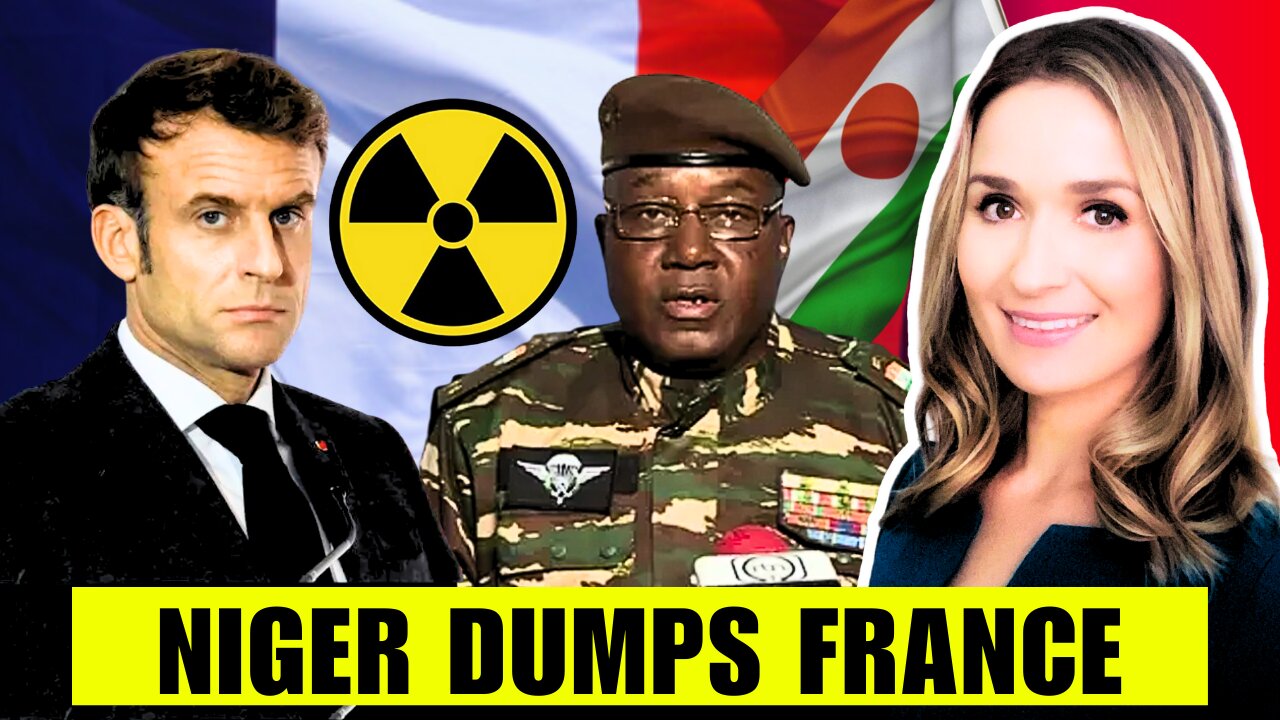
France Ousted From Niger — BRICS Is IN, West Is OUT
🔹 Subscribe to Lena's Substack here: https://www.worldaffairsincontext.com
🔹 Watch content ad-free and support the channel: https://www.patreon.com/LenaPetrova
🔹 Subscribe on YouTube: https://www.youtube.com/channel/UCrbT82fJGrSRXkNaxE7aYPQ/join
🔹 Support the channel:
▫️PayPal: https://paypal.me/LenaPetrovaChannel
▫️Buy me a coffee: https://ko-fi.com/lenapetrova
▫️Patreon: https://www.patreon.com/LenaPetrova
🔹 Let's connect:
▫️ X: https://x.com/LenaPetrovaOnX
▫️Telegram: https://t.me/LenaPetrovaOnTelegram
🔹 Watch more content:
▫️YouTube - World Affairs In Context: https://www.youtube.com/@UCrbT82fJGrSRXkNaxE7aYPQ
▫️YouTube - Behind The Numbers - Business, Taxes & Personal Finance: https://www.youtube.com/@UCqbOWG3guHo_LZVRyLb46kA
🔹 Discounts & Offers for Subscribers:
▫️ExpressVPN - Channel's subscribers get 4 MONTHS FREE to protect internet privacy: https://www.expressvpn.com/lena
▫️Optery - remove your personal data from online data brokers: https://get.optery.com/lena
📣 Like, share, and subscribe to World Affairs In Context & turn on notifications to stay updated.
***
For decades, Niger was a quiet but essential pillar of the global nuclear fuel supply chain — one of the world’s top uranium producers and a major supplier to France’s powerful nuclear energy sector. At its peak, Niger provided up to 15% of France’s uranium needs, supporting the backbone of French energy security.
But today, that long-standing relationship has collapsed — and a new geopolitical struggle is taking shape across the Sahel, Russia, China, India, Turkey, and the Gulf. What’s happening in Niger is much bigger than one uranium deal. It’s a case study of how multipolarity is redrawing global power structures.
A major turning point came when Niger’s post-coup authorities reportedly negotiated a $170 million uranium sale to Russia’s Rosatom, involving stockpiles previously controlled by the French nuclear giant Orano. After the 2023 coup, French influence crumbled, troops withdrew, Orano halted operations, and Niger turned decisively toward new global partners.
Since then, Niger, Mali, and Burkina Faso have rejected Paris’ political and economic dominance and embraced a new model of cooperation — one defined by sovereignty, strategic diversification, and partnerships with BRICS nations and other Global South players. Meanwhile, France faces a painful reality: losing access to Niger’s uranium increases its energy costs, reduces leverage, and exposes its declining influence across Africa.
Niger is now in talks with India, China, Turkey, and the UAE, not just for uranium exports but for co-investment in conversion facilities that would finally allow the country to process its own raw materials — capturing more value and building economic independence. This shift is reinforced by the Alliance of Sahel States, which is creating joint mining policies, a sovereign wealth fund, and a regional minerals exchange to strengthen bargaining power and secure long-term development.
This video breaks down:
• Why Niger’s uranium mattered so much to France
• How the 2023 coup dismantled decades of post-colonial influence
• The rise of multipolar competition in Africa’s resource markets
• Russia, China, India, and Gulf states’ strategic interests in the Sahel
• Why Western development models are losing ground
• How the Sahel is becoming a linchpin of the new global economic order
The balance of power in Africa has already shifted — the only question now is how far this transformation will spread and how the West will respond.
#Niger, #Uranium, #SahelCrisis, #Geopolitics, #FranceAfrica, #BRICS, #MultipolarWorld, #RussiaAfrica, #ChinaAfrica, #IndiaEnergy, #GlobalSouth, #NuclearEnergy, #UraniumMarket, #SahelAlliance, #AfricaRising, #FranceCrisis, #ResourcePolitics, #AfricaGeopolitics, #EnergySecurity, #UraniumMining
-
 10:06
10:06
World Affairs In Context
8 days agoThe EU Is DESPERATE - Brussels Is Raiding Russia’s Frozen Assets
60116 -
 19:54
19:54
Professor Nez
3 hours ago🚨BIDEN MUST GO TO PRISON NOW! LEAKED Memo PROVES Immigration Plan
14.6K40 -
 LIVE
LIVE
Amish Zaku
1 hour agoArc Raiders - cash runs before reset week
18 watching -
 LIVE
LIVE
Biscotti-B23
2 hours ago🔴 LIVE $100+ TOURNAMENT! TSUGUKU TRIALS 🏆 DEMON SLAYER HINOKAMI CHRONICLES 2
10 watching -
 1:45:46
I_Came_With_Fire_Podcast
12 hours agoCatching Online Predators: Sting Operations & Saving Kids
117K6 -
 2:02:00
MetatronGaming
19 hours agoDollmare is a NIGHTMARE
15.7K -
 56:57
56:57
X22 Report
8 hours agoMr & Mrs X - Accusing People Of Murder Is Dangerous, Charlie Kirk's Message Was Unity - EP 19
71.9K71 -
 2:09:23
SOLTEKGG
4 hours ago🔴LIVE - ALL THE GOOP - !pc
11K -
 1:37:19
CodeBlueParadox
4 hours ago🔴LIVE - WALKING DEAD (SEASON 1) | 0/10 SUB GOAL | #LockNLoad BASH
24.4K -
 LIVE
LIVE
Atarphriel
4 hours ago🦾Warframe🦾Returning Player🏂📰News🎮Games🍿Reacts📺Stream 65
49 watching