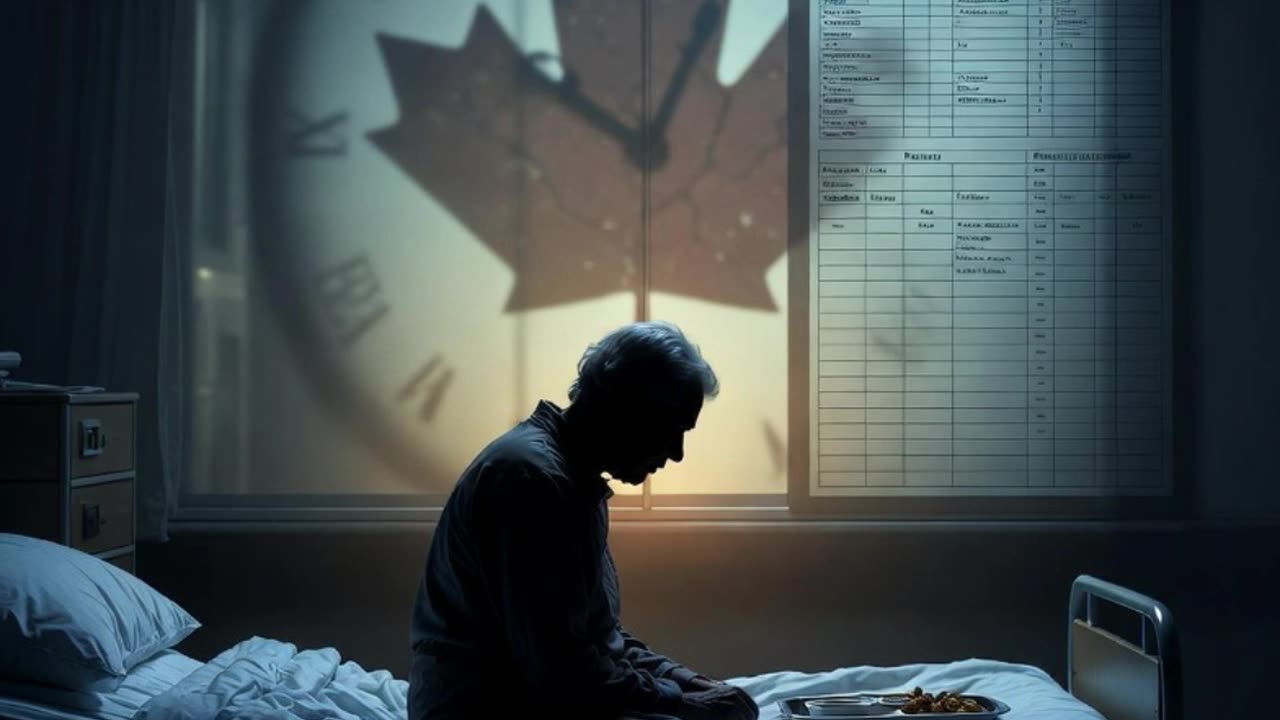
⭐ PART 12 — The Manufactured Suffering
⭐ PART 12 — The Manufactured Suffering
How Emotional Pain, Isolation, and Loss of Autonomy Become MAiD Eligibility
By Canadian Citizens Journal
⸻
⭐ Suffering Was Never Supposed to Be a Medical Decision
Suffering is emotional.
Suffering is human.
Suffering is meant to be treated — not measured, not categorized, and certainly not used as a gateway to assisted death.
Yet inside long-term care, emotional suffering has quietly become data.
It is documented.
It is assessed.
It is written into care plans.
And now, under Canada’s expanding MAiD framework, it can qualify a resident for medically assisted death.
Not because the illness is terminal.
Not because the decline is irreversible.
But because the resident has been worn down emotionally by a system that was supposed to protect them.
This chapter exposes how that suffering is created.
⸻
⭐ SECTION 1 — The Loss of Autonomy Begins the Moment Financial Choice Disappears
When seniors cannot afford private care, they lose the right to choose:
• where they live
• who cares for them
• what food they eat
• how warm their room is
• how often they receive help
• how they spend their final years
The government steps in and says:
“We will decide.”
This is not support.
This is quiet control.
For many seniors, admission into a government-funded facility is not a choice —
it is a forced dependency.
And once financial control shifts, medical control soon follows.
⸻
⭐ SECTION 2 — Seniors Without a Power of Attorney Are the Most Vulnerable
For residents with no POA, the government has the legal authority to declare them incapable.
Once that happens:
• the state becomes the substitute decision-maker
• transfers can occur without family
• care levels change without consent
• palliative pathways can begin quietly
• MAiD assessments can be initiated
Families often learn what happened after decisions are already made.
A resident without an advocate is not protected —
they are exposed.
In a collapsing system, lacking a POA is not a minor paperwork gap.
It is a danger zone.
⸻
⭐ SECTION 3 — Emotional Suffering Is Not a Diagnosis — It Is a System Failure
Inside LTC, emotional suffering is produced by:
• isolation
• loneliness
• lack of stimulation
• lack of volunteers
• caregivers rushing from room to room
• residents waiting long periods for help
• missing family visits
• loss of independence
• witnessing the decline and death of neighbours
• fear after repeated falls
• untreated depression
• sudden confusion after medications or injections
• sleeping in cold rooms
• being fed unappealing or unsafe food
These conditions break people down.
This suffering is then documented as:
• “existential distress”
• “ongoing psychological suffering”
• “perceived loss of dignity”
• “failure to thrive”
In the MAiD framework, these phrases can be interpreted as criteria.
But the suffering was not medical —
it was created.
⸻
⭐ SECTION 4 — Manufactured Hopelessness
Hopelessness does not appear out of nowhere.
It is built slowly, layer by layer.
It forms when residents see:
• staff overwhelmed
• bells unanswered
• neighbours dying
• rapid declines after injections
• palliative labels given without warning
• transfers to nursing homes followed by death
• routines collapsing
• personal belongings removed
• shrinking autonomy
• shrinking horizons
They begin to think:
“I don’t want to be a burden.”
“There’s no point anymore.”
“I don’t want to suffer like the others.”
This is not informed choice.
This is conditioned despair.
A system causing the suffering cannot ethically offer MAiD as the solution to that suffering.
⸻
⭐ SECTION 5 — The System Uses Emotional Suffering as a Shortcut
When staff chart suffering, the system converts it into:
• palliative justification
• MAiD eligibility
• reduced interventions
• reduced treatment plans
• “comfort care” instead of medical care
The worse the emotional state, the more likely the resident becomes categorized as “appropriate for MAiD discussion.”
This is a psychological funnel.
The resident’s emotional breakdown becomes an administrative pathway.
⸻
⭐ SECTION 6 — Forced Dependency Creates State-Controlled End-of-Life
When the government:
• chooses the home
• funds the care
• controls the policies
• determines capacity
• approves the care level
• oversees the palliative definition
• signs off on MAiD assessments
…the resident is no longer a free individual.
They are a managed life under state authority.
And in a collapsing system, that authority is used to clear beds, reduce costs, and streamline end-of-life processes —
without ever admitting it.
⸻
⭐ SECTION 7 — How Emotional Suffering Intersects With MAiD Law
Under Canada’s updated MAiD framework, a resident may qualify if they experience:
• “persistent psychological suffering”
• “loss of dignity”
• “intolerable distress”
• “no reasonable alternative”
But in LTC, these conditions are manufactured by:
• understaffing
• unsafe environments
• poor nutrition
• freezing rooms
• isolation
• neglect
• preventable decline
The system creates the suffering.
Then uses that suffering as evidence.
Then uses that evidence to approve MAiD.
This is not compassion.
This is a pipeline.
⸻
⭐ SECTION 8 — The Silent Question Inside LTC
The question whispered by residents, staff, and families is always the same:
“Why does it feel like they want them to give up?”
The suffering is not random.
It is structural.
It is predictable.
And it is being used.
⸻
⭐ This Is the Heart of the MAiD Pipeline
Long-term care is not simply a place where people age.
It is a system that creates:
• decline
• despair
• loss of autonomy
• emotional collapse
And then calls that collapse a “medical condition.”
This is the emotional engine behind Canada’s MAiD expansion.
This is the suffering they refuse to acknowledge.
This is what Canadians were never meant to see.
Part 12 exposes the truth:
The suffering is not the reason for MAiD.
The suffering is the system’s product.
-
 2:44
2:44
Canadian Citizens Journal
1 day ago📰 🇨🇦 CCJ Daily News Brief: Government Overreach Warning
484 -
 LIVE
LIVE
Wendy Bell Radio
5 hours agoJust Do It.
7,577 watching -
 23:24
23:24
IsaacButterfield
6 hours ago $0.29 earnedAustralia's War On Free Speech Just Got Worse
5.17K2 -
 LIVE
LIVE
The Mike Schwartz Show
12 hours agoTHE MIKE SCHWARTZ SHOW with DR. MICHAEL J SCHWARTZ 12-11-2025
186 watching -
 1:08:10
Chad Prather
19 hours agoHOW GOD MAKES AN UNSHAKEABLE PERSON
80.2K42 -
 LIVE
LIVE
LFA TV
13 hours agoLIVE & BREAKING NEWS! | THURSDAY 12/11/25
3,193 watching -
 1:56:51
The Chris Salcedo Show
14 hours ago $4.02 earnedThe GOP Introduces Obamacare Alternatives
25.3K -
 1:23:16
LIVE WITH CHRIS'WORLD
13 hours agoTHE WAKE UP CALL - 12/11/2025 - Episode. 23
53.6K5 -
 5:12
5:12
Blackstone Griddles
16 hours agoApple Pie Pancakes on the Blackstone Camping Griddle
28.3K3 -
 44:02
44:02
CarlCrusher
1 day agoFormer Green Beret Mike Battista can Summon UAP using Psionics - Part 4
26.8K10