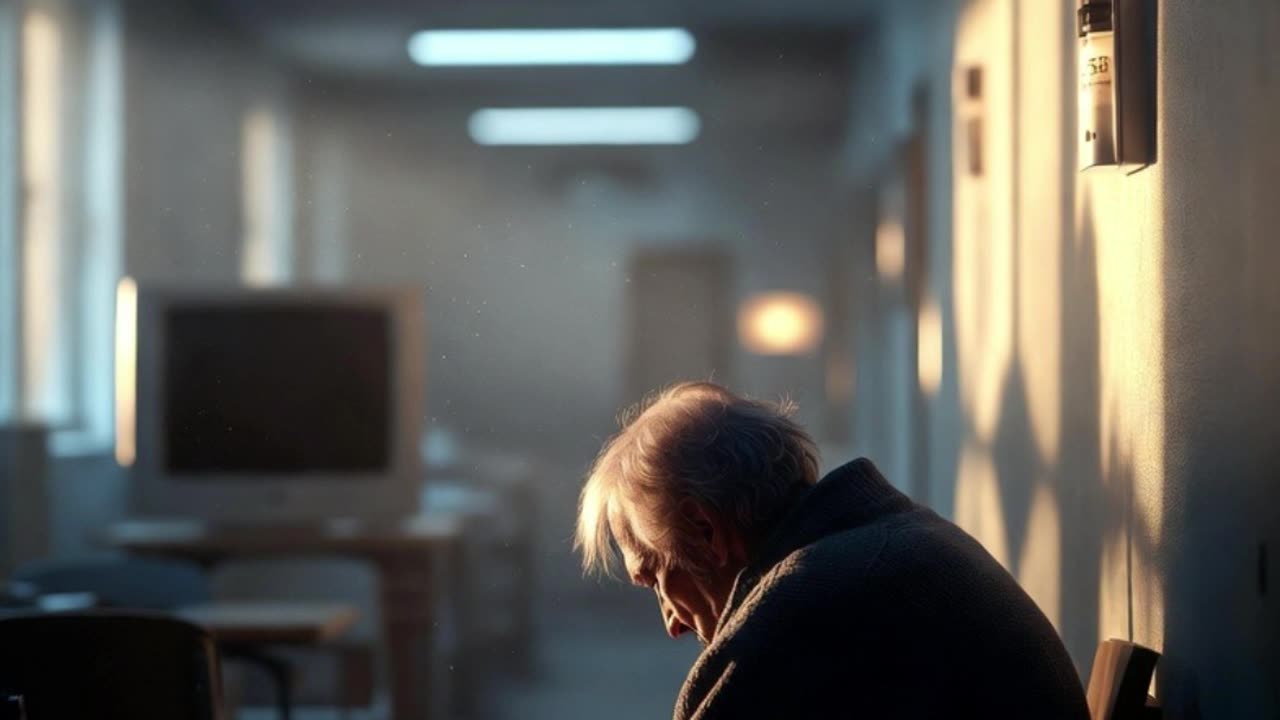
⭐ Error Reuploading PART 12 Continued — The Manufactured Suffering Unlisted Video
⭐ PART 13 — The Manufactured Suffering
How Boredom, Isolation, Sleep Deprivation, and Decline Become a Slow-Form Pipeline into MAiD
By Canadian Citizens Journal
⸻
⭐ Suffering in Long-Term Care Is Not Inevitable
It Is Created by the System.
When Canadians imagine long-term care, they picture:
• meaningful activities
• physical engagement
• social interaction
• comfort
• rest
• emotional support
That is not the reality inside many facilities today.
What residents experience instead is a slow erosion of the very things that keep a human being mentally and emotionally alive — activity, purpose, rest, stimulation, autonomy, connection, and dignity.
The suffering that emerges is not natural.
It is engineered through neglect, understaffing, and system design.
And once that suffering appears, the system later calls it:
“Irreversible decline.”
A phrase now used to justify MAiD eligibility.
⸻
⭐ SECTION 1 — When Activity Disappears, Decline Begins
Most seniors entering assisted living expect:
• exercise
• crafts
• social outings
• games
• music
• fresh air
Instead, the reality is often:
• minimal activities
• repetitive boredom
• superficial “busy work”
• long hours of sitting in a chair
• days blending into one another
Recreation staff are often one person responsible for dozens of residents.
Even the most dedicated worker cannot meet the needs of an entire building.
Residents rarely leave their floor.
Many lose hobbies they once loved.
Outings happen “when staffing allows” — meaning rarely.
This is not “care.”
It is managed stagnation.
And stagnation accelerates:
• cognitive decline
• depression
• confusion
• irritability
• mobility loss
• hopelessness
⸻
⭐ SECTION 2 — Isolation as a Form of Harm
Humans are not built for isolation.
But residents in many LTC facilities:
• sleep alone
• eat alone
• sit alone
• wait alone
• decline alone
Staff WANT to sit and talk.
They WANT to spend time with residents.
But the workload makes it impossible.
Residents who once enjoyed conversation and laughter are left in silence for hours — sometimes entire shifts.
Isolation becomes a second illness layered on top of whatever brought them to care in the first place.
⸻
⭐ SECTION 3 — The Loss of Autonomy
Autonomy is one of the last pieces of identity a senior has.
Yet residents slowly lose:
• when they wake
• when they sleep
• when they eat
• when they bathe
• when they toilet
• when they socialize
• when they can go outside
Every decision is determined by:
• staffing
• schedules
• medication rounds
• workload
• safety protocols
• paperwork
• corporate policies
This creates emotional suffering that looks — on paper — like:
• depression
• hopelessness
• existential distress
All symptoms that MAiD legislation explicitly recognizes as legitimate grounds for assisted death.
⸻
⭐ SECTION 4 — Forced Routines That Break the Spirit
Residents do not live according to their own rhythms.
They live according to the facility’s bottlenecks:
• Breakfast at a specific time
• Bedtime determined by shift change
• Toileting whenever staff can get there
• Bath days scheduled weekly or biweekly
• Pill times determined by pharmacy defaults
• Activities offered only when staff are available
This is not structure.
This is captivity wrapped in scheduling.
⸻
⭐ SECTION 5 — The Activity Myth: “We Keep Them Engaged”
Websites promise rich engagement:
• painting
• crafts
• exercises
• movies
• outings
• celebrations
Reality is different.
Most days, activities consist of:
• bingo
• a TV show
• a simple game
• chair drumming
• occasional nail painting
• a bowling-style game
And residents who are cognitively declined cannot meaningfully participate.
Many sleep through activities because:
• they’re exhausted
• they’re overstimulated
• or they don’t understand what’s happening
Facilities fill a calendar with “client-led activities,” which are often nothing more than free time labeled as structured programming.
The activity department is not failing.
The system is failing them.
⸻
⭐ SECTION 6 — Sleep Deprivation: The Silent Accelerator of Cognitive Decline
One of the most damaging forms of suffering in LTC is almost invisible:
Interrupted, inadequate, and forced sleep schedules.
Modern neuroscience has proven a critical function of deep sleep:
⭐ The Brain Cleans Itself at Night
During 7–8 hours of uninterrupted sleep, the glymphatic system flushes out:
• toxins
• damaged proteins
• Alzheimer’s-related plaques
• inflammation
• metabolic waste
When sleep is disrupted, the brain cannot complete this cleaning cycle.
⭐ What Actually Happens in LTC
Residents are routinely woken by:
• nighttime toileting rounds
• hallway noise
• roommate disturbances
• chronic anxiety
• understaffed night shifts
• early-morning pill schedules (as early as 6 AM for 6–8 residents)
• care tasks performed according to staffing needs, not resident needs
Medication times are often set by:
• pharmacy defaults
• inherited schedules
• outdated routines
• system convenience
Not medical necessity.
⭐ This Creates Manufactured Cognitive Decline
Sleep disruption leads to:
• confusion
• agitation
• mood swings
• wandering
• hallucinations
• memory loss
• increased falls
• worsening dementia
• emotional instability
Residents who were once stable begin showing “symptoms” that look like:
• severe dementia
• irreversible decline
• hopeless suffering
But the suffering was created.
It was system-induced.
And later, that decline becomes grounds for MAiD eligibility.
⸻
⭐ SECTION 7 — Toiling Without Rest: Night Waking for Toileting
Residents who would prefer sleeping through the night are often woken for toileting to prevent morning cleanup, reduce workload, and avoid soaked bedding when cleaners are limited.
For residents, this means:
• repeated disruptions
• broken sleep cycles
• fear or confusion when woken
• anger or distress
• worsening cognitive symptoms
What is convenient for the system becomes catastrophic for the resident.
⸻
⭐ SECTION 8 — Sleep Loss + Inactivity = Rapid Decline
Combine:
• no exercise
• no meaningful engagement
• no outdoor time
• boredom
• loneliness
• sleep deprivation
And the outcome is predictable:
Rapid, devastating decline.
Decline that is then labeled:
• “natural”
• “age-related”
• “irreversible”
Even though it was manufactured by conditions inside the facility.
⸻
⭐ SECTION 9 — Emotional Suffering Becomes Data
Once a resident becomes depressed, hopeless, or emotionally defeated, their suffering is documented in:
• care notes
• physician assessments
• behavioural tracking
• palliative consultations
Those same documents are then used to determine eligibility for MAiD.
The system produces suffering.
Then the system records the suffering.
Then the system uses the suffering as justification for assisted death.
This is not care.
This is a loop.
A pipeline.
⸻
⭐ SECTION 10 — Residents Deserve Better
A senior should never decline because they were:
• bored
• lonely
• overstimulated
• understimulated
• exhausted
• sleep-deprived
• ignored
• emotionally abandoned
But today, thousands do.
And the suffering they experience — created inside the system — is now quietly recategorized as:
“a reason to die.”
This is the manufactured suffering the public never sees.
This is the suffering MAiD quietly absorbs.
-
 6:22
6:22
Canadian Citizens Journal
22 hours ago⭐ PART 13 — The Volunteer Lifeline How Unpaid People Quietly Held Up a Collapsing System
62 -
 LIVE
LIVE
Side Scrollers Podcast
2 hours agoSPECIAL OCCASSION: ADMITTING THE TRUTH...
7,038 watching -
 LIVE
LIVE
Barry Cunningham
3 hours agoLIVE FROM THE RED CARPET: President Trump Melania Trump, Sylvester Stallone, KISS And Others
1,758 watching -
 LIVE
LIVE
TheSaltyCracker
1 hour agoMeme Warfare Goes Nuclear ReeEEStream 12-07-25
14,632 watching -
 LIVE
LIVE
Badlands Media
16 hours agoThe Narrative Ep. 49: The Trump Doctrine
1,640 watching -
 LIVE
LIVE
Sarah Westall
1 hour agoThe Psychological Warfare Behind the Headlines w/ Mike Robinson
144 watching -
 2:18:57
vivafrei
12 hours agoEp. 294: Pipe Bomber Caught? Pfizer Fraud before Appeals! Venezuela Boat Strikes! EU v. Elon & MORE!
169K74 -
 LIVE
LIVE
EricJohnPizzaArtist
2 days agoAwesome Sauce PIZZA ART LIVE Ep. #72: John Lennon
357 watching -
 LIVE
LIVE
meleegames
1 hour agoSteam Roulette Sunday! - Chaos Is Back in Town
87 watching -
 LIVE
LIVE
Akademiks
2 hours agoOffset and Steffon Diggs squabbled in the Club? Fif on Warpath still vs Diddy. NLE Choppa vs YB pt2?
1,140 watching