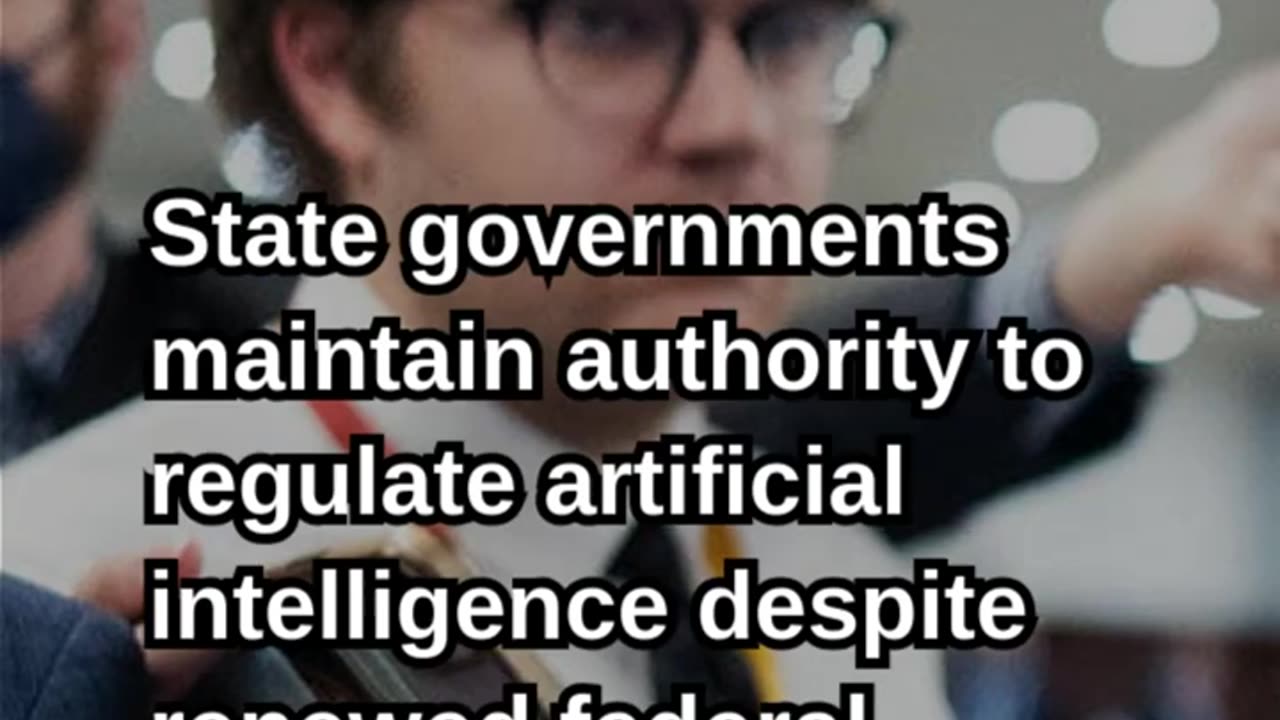
Empowering States to Regulate AI
In a significant move, the U.S. Senate voted overwhelmingly to reject a proposed AI moratorium that would have prevented states from regulating artificial intelligence technologies for the next decade.
Go here to find out what tools we are using each day to be successful in our business.
https://versaaihub.com/resources/
https://versaaihub.com/media-and-entertainment/
https://www.instagram.com/versaaihub/
https://x.com/VersaAIHub
https://www.youtube.com/@VideoProgressions
https://www.youtube.com/@MetaDiskFinancial
The decision comes as part of ongoing debates over the best approach to managing the growing influence of AI in society. The 99–1 vote represents a triumph for those advocating for state autonomy in setting regulations and ensuring that AI is developed in a way that benefits consumers, protects privacy, and addresses potential risks.
The rejected moratorium had been proposed as a part of a broader package aimed at funding AI research and development. If passed, the measure would have prevented states from passing or enforcing any new AI-related laws or regulations for ten years. This would have significantly delayed efforts by state governments to combat the potential misuse of AI, including issues like deepfakes, algorithmic bias, and the violation of privacy rights.
Many critics argued that a nationwide freeze would have undermined important local initiatives already in place. States like California, Illinois, and New York have already introduced legislation that tackles AI misuse, from regulating facial recognition technology to banning AI-generated deepfake content. Advocates for these state-level efforts believed that this moratorium would hinder progress, leaving consumers and businesses vulnerable to unchecked AI innovations.
The Senate’s rejection of the moratorium preserves the right of states to create their own regulations and ensure that AI systems are developed with public interest in mind. In particular, states will continue to have the authority to address the societal risks associated with AI in a way that reflects their unique priorities. This decision also comes at a time when there is increasing pressure for federal lawmakers to establish a national framework for AI regulation, with many experts suggesting that a coordinated approach would provide consistency and clarity for developers, while also safeguarding individual rights.
However, some voices, including tech industry groups, warned that a patchwork of state regulations could lead to confusion and compliance challenges. They argued that uniform federal oversight would be a more effective solution to ensure AI remains safe, ethical, and innovative without stifling progress. Despite these concerns, the Senate vote indicates that, for now, the balance of power remains firmly with states to create tailored regulations that address the complexities of AI technology.
This vote underscores the deep divide in how best to regulate AI: whether through state-driven approaches, which prioritize local control, or via federal regulations aimed at standardizing rules across the country.
Go here to find out what tools we are using each day to be successful in our business.
https://versaaihub.com/resources/
https://versaaihub.com/media-and-entertainment/
https://www.instagram.com/versaaihub/
https://x.com/VersaAIHub
https://www.youtube.com/@VideoProgressions
https://www.youtube.com/@MetaDiskFinancial
#AIRegulation #SenateVote #AIMoratorium #StateRights #TechPolicy #AIEthics #DigitalRights #AIoversight #ArtificialIntelligence #AIAccountability #StateControl #TechLaw #PrivacyProtection #AlgorithmicBias #DeepfakeRegulation #ConsumerProtection #AIInnovation #StateByState #FederalAI #AIinSociety #BigTechOversight
-
 0:59
0:59
WFH University
17 hours agoRad AI Launches Next-Gen Radiology Speech Tool
6 -
 3:14:11
SavageJayGatsby
5 hours ago🎂 Birthday Variety Game Stream!
32.7K -
 2:17:03
TheSaltyCracker
7 hours agoMeme Warfare Goes Nuclear ReeEEStream 12-07-25
97.3K231 -
 1:29:32
Adam Does Movies
12 hours ago $3.13 earnedBest Action Movies! - Live
29K1 -
 3:01:37
Badlands Media
21 hours agoThe Narrative Ep. 49: The Trump Doctrine
54.5K24 -
 LIVE
LIVE
This is the Ray Gaming
4 hours ago $0.84 earnedThe Fire Rises | Rumble Premium Creator
181 watching -
 2:50:39
Joker Effect
5 hours agoDRAMA NEWS! KICK CRINGE AWARDS?! LONEWOLF INTERVIEW!??? !Shock in Chat for details. RECIEPTS HERE!
12.2K1 -
 1:09:13
Sarah Westall
6 hours agoThe Psychological Warfare Behind the Headlines w/ Mike Robinson
17.9K4 -
 2:18:57
vivafrei
17 hours agoEp. 294: Pipe Bomber Caught? Pfizer Fraud before Appeals! Venezuela Boat Strikes! EU v. Elon & MORE!
202K157 -
 5:53:00
EricJohnPizzaArtist
2 days agoAwesome Sauce PIZZA ART LIVE Ep. #72: John Lennon
20.6K6