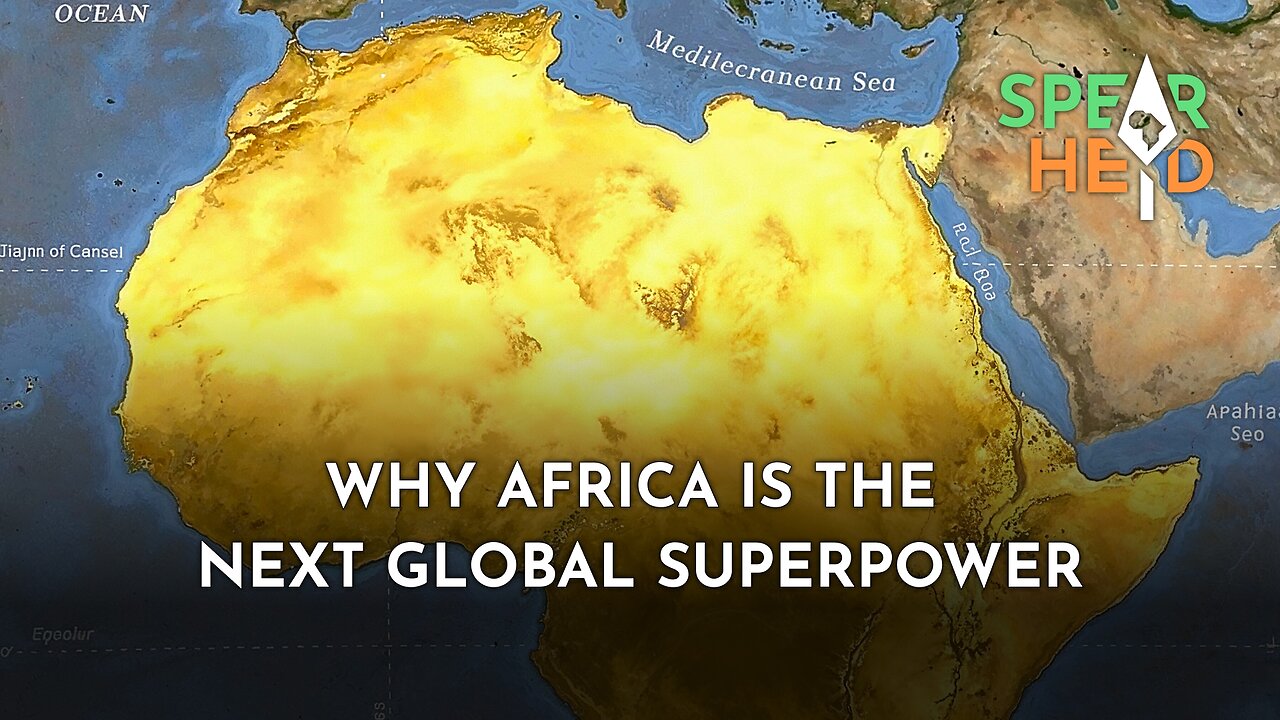
Why Africa is the Next Global Superpower
From about 1800 to 1950, industrialisation elevated only a small part of the world, the North Atlantic region: the United States, Britain, and Western Europe. This rise was neither accidental nor inclusive. It was built on centuries of colonial domination, including the colonisation of Africa. As long as the West controlled the global system, development in Africa was impossible. Colonial governments were designed to extract wealth and maintain political order, not to invest in progress.
They built only the infrastructure that served their economic interests, rail lines to mines, roads to plantations and never schools, industries, or systems that would empower Africans.
However, Jeffrey Sachs pointed out in this video that, for the first time in many centuries, the world is no longer dominated by Western powers. Economic and geopolitical influence has begun to spread more evenly across the globe. Countries in Asia and elsewhere have risen, weakening the West's once-unquestioned leverage over world affairs. This shift is occurring alongside a significant technological transformation, which he calls the ongoing digital revolution.
Within this global change, Africa stands out for a unique reason: its rapidly expanding population. From 1950 to the present day, Africa's population has grown fivefold. While other regions are ageing or shrinking, Africa is becoming younger, larger, and potentially more influential.
Just as China once did, Africa now has the opportunity to transform the entire continent. With its vast natural resources, a rapidly growing population, and an expanding internal market, Africa has the capacity to replicate the foundations of the "China model", using large-scale industrialisation, infrastructure expansion, and technological advancement to lift more than one billion people out of poverty and rise into actual global economic influence. If China did it 40 years ago, Africa can do it today.
-
 2:00:55
Side Scrollers Podcast
17 hours agoSide Scrollers Podcast Live | Tuesday January 20th 2026
41.1K14 -
 15:11
15:11
MetatronCore
3 days agoThe pope is wrong about ISLAM
2.25K3 -
 15:44
15:44
Nikko Ortiz
12 hours agoWorld of Tanks Insane Update...
21.5K1 -
 23:49
23:49
GritsGG
12 hours agoWarzone Stream Snipers VS Win Squad!
3.36K -
 LIVE
LIVE
Lofi Girl
3 years agolofi hip hop radio 📚 - beats to relax/study to
927 watching -
 15:13
15:13
SpartakusLIVE
1 day agoThey Shadowbanned Me for Playing TOO GOOD | 34-Kill Solo #warzone
6.7K1 -
 50:36
50:36
TruthStream with Joe and Scott
9 hours agoMondays With Matt Geiger from Verity Metals, Gold, Silver and IRA's, #542
9.07K3 -
 2:28:01
FreshandFit
12 hours agoHe Used AI to Put Her Daughter's Face on Explicit Photos...
203K19 -
 LIVE
LIVE
Price of Reason
11 hours agoWill Trump get Greenland? Mercy w/ Chris Pratt EARLY Screening Review! Nintendo President SUCKS?
467 watching -
 1:04:11
Inverted World Live
12 hours agoLoch Ness Hunter Says Creature Is FAKE | Ep. 163
115K11