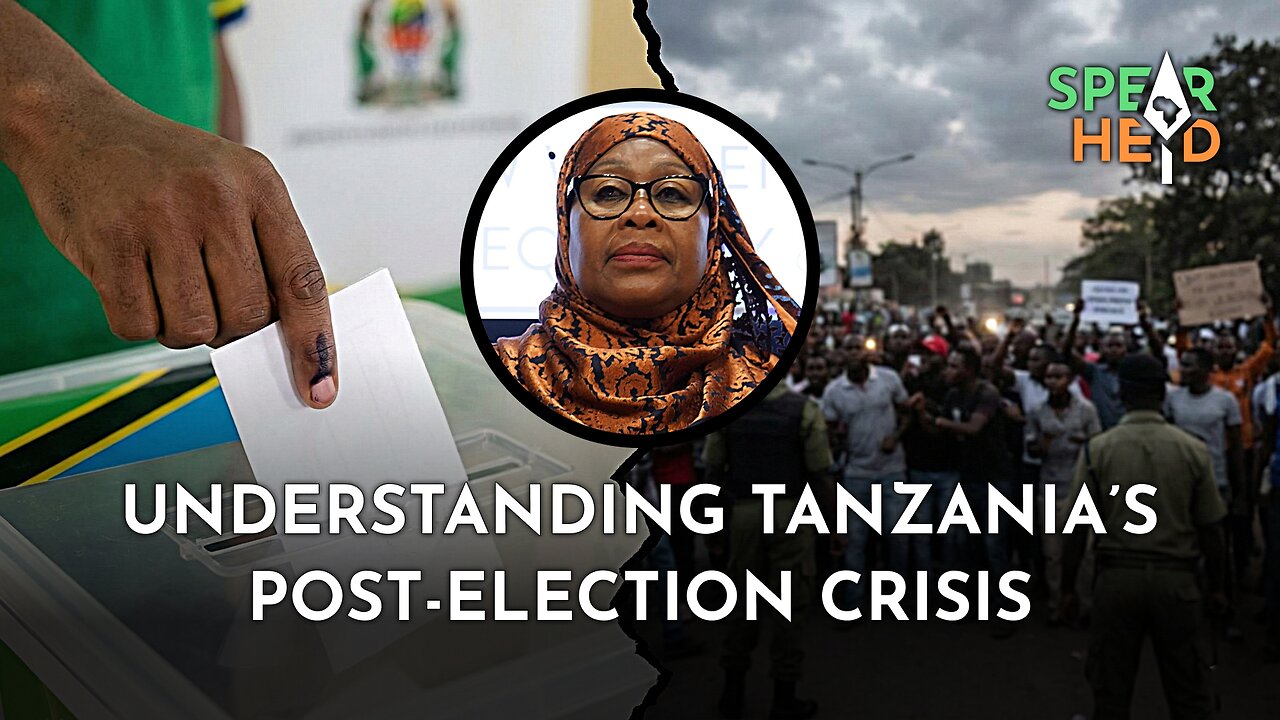
Understanding Tanzania’s Post-Election Crisis
The violence unfolding in Tanzania cannot be only understood through the simple frame of authoritarianism versus democracy. What we're witnessing is a state responding to what it perceives as politico/economic encirclement, a threat not to democratic principles, but to its developmental sovereignty.
For decades, Western institutions have built parallel political infrastructure in Tanzania. The Konrad-Adenauer-Stiftung trained opposition cadres by the thousands. These were not grassroots movements, they were institutional projects designed to integrate Tanzania into a specific economic model: the "social market economy," a term that obscures orthodox neoliberalism.
This model has a history. In the 1980s and 90s, IMF structural adjustment programs didn't just impose austerity, they produced a generation-defining catastrophe. By 1991, half of Tanzanian children suffered from stunting due to malnutrition. Education spending collapsed from 20% to under 5%. This was violence by economics, killing more people than any police action could.
The ruling CCM, whatever its authoritarian excesses, has positioned itself as the barrier against this return. They renegotiated mining contracts. They invested in infrastructure with state funds. They refused the role of perpetual debtor nation.
The state's response to uprising has been brutal and inexcusable. But to call it simply "dictatorship" is to ignore the political and economic warfare that preceded it. The West funds opposition parties that would dismantle state capacity. The Tanzanian government responds with violence against its own people. Both actions emerge from the same logic: control over who gets to shape Tanzania's economic future.
This is what imperial pressure looks like in the 21st century.
-
 LIVE
LIVE
Chad Prather
13 hours agoWhen the Gospel Shakes the Marketplace
8,973 watching -
 LIVE
LIVE
The White House
32 minutes agoPresident Trump Delivers a Special Address to the World Economic Forum
1,500 watching -
 LIVE
LIVE
LFA TV
11 hours agoLIVE & BREAKING NEWS! | WEDNESDAY 1/21/26
4,679 watching -
 LIVE
LIVE
The Chris Salcedo Show
13 hours agoAmerica IS NOT Europe's BITCH! ... As Long As Dems Aren't In Charge
808 watching -
 LIVE
LIVE
Game On!
18 hours ago $0.71 earnedThe Patriots Will Be The LUCKIEST Team To Make A Super Bowl!
497 watching -
 19:56
19:56
DeVory Darkins
11 hours agoTim Walz suffers MAJOR LEGAL BLOW after DOJ issues subpoenas
7.44K23 -
 37:26
37:26
ZeeeMedia
14 hours agoNorwegians Told to Prepare for Wartime PROPERTY SEIZURES! | Daily Pulse Ep 179
6.68K50 -
 1:10:40
Crypto Power Hour
12 hours ago $1.64 earnedTrade Smarter On Crypto Exchanges w/ Crypto Trade Analyzer
27.8K4 -
 26:46
26:46
Uncommon Sense In Current Times
17 hours ago $0.59 earnedWhen Protest Crosses the Line: Church Disruptions, ICE, and Religious Freedom
18.9K1 -
 52:27
52:27
CarlCrusher
18 hours agoPsionic UFO Contact | Green Beret Mike Battista, J2, and Carl Crusher at Thunder Strike Ranch
14.3K1