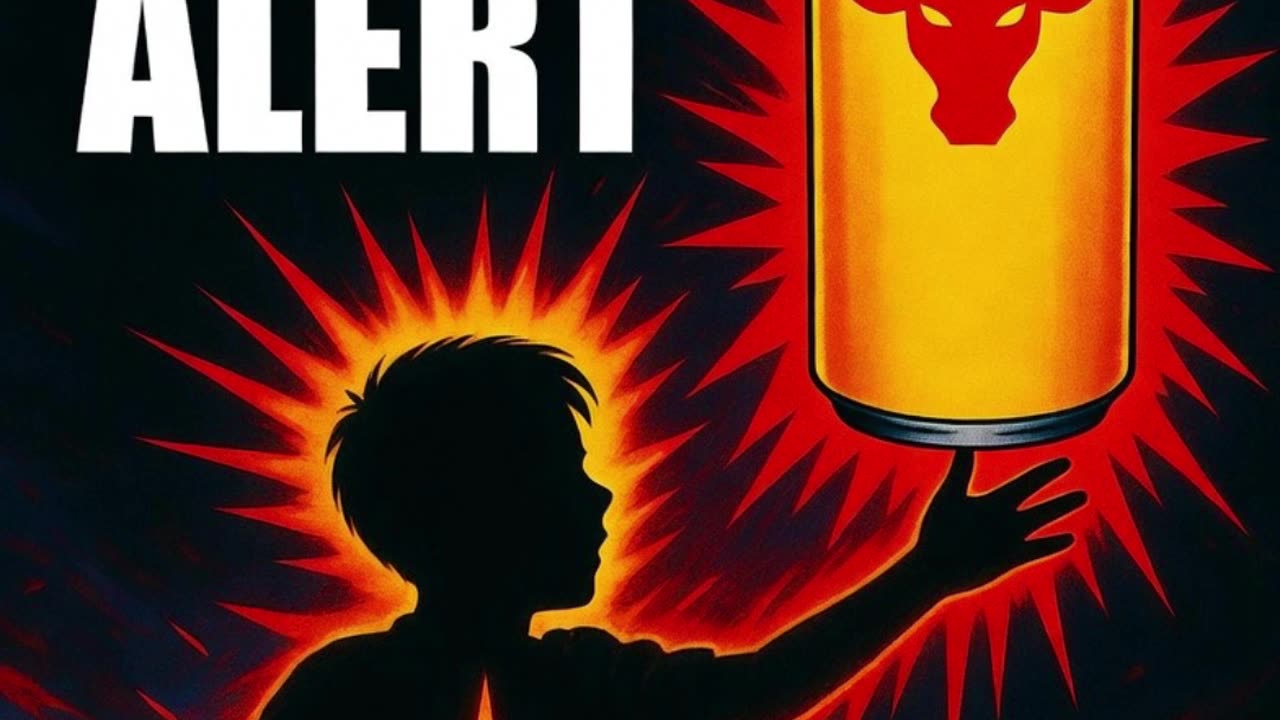
⚠️ CCJ HEALTH ALERT
⚠️ CCJ HEALTH ALERT
10-Year-Old New Brunswick Girl Rushed to Emergency After Drinking Two Energy Drinks
Why are Canadian stores allowed to sell these products to children at all?
⸻
Last week, a terrifying medical emergency unfolded at a New Brunswick recreation centre — one that every Canadian parent needs to hear.
A 10-year-old girl, Brooklyn, collapsed on the floor after consuming two large Monster energy drinks earlier in the day. Witnesses described her body locking up as she suffered what appeared to be a seizure.
When her mother, Kayla Duguay, rushed to the scene, Brooklyn was still surrounded by paramedics, police, and lifeguards — unable to control her muscles.
Doctors at the hospital confirmed the cause:
Severe caffeine ingestion.
Brooklyn had consumed three times the safe daily limit for a child her size.
⸻
⚠️ “If these drinks are dangerous for kids, why are they allowed to buy them?”
Brooklyn’s mother is demanding answers — and she’s not alone.
Energy drinks are aggressively marketed to young people, sold at eye level beside soft drinks and candy. Yet many of these beverages contain high levels of caffeine, combined with stimulants like taurine and guarana — ingredients that can cause:
• Rapid heart rate
• Tremors
• Vomiting
• Panic attacks
• Heart palpitations
• Neurological symptoms, including seizures
Pediatricians across Canada report that hospital visits linked to energy drinks are increasing, especially among children who don’t understand the risks.
And yet, these products remain easily accessible to kids — no age restriction, no ID check, no warning from store staff.
⸻
⚠️ What Health Canada Says — and What Reality Shows
Health Canada’s risk assessment states that caffeine limits are unlikely to pose harm when consumed as recommended.
But here’s the issue:
Kids do not follow “recommended levels.”
They drink a full can. Sometimes two.
And because they are smaller, the effects hit much harder.
Brooklyn’s case is proof that “safe levels” on paper do not match real-world behaviour.
⸻
⚠️ A Mother Speaks Out: “It could have ended very differently.”
Brooklyn’s mother shared her story publicly because she doesn’t want another family to experience what hers did.
She never allowed her daughter to drink energy drinks — yet Brooklyn and her friends purchased them from a nearby convenience store without issue.
No questions asked.
No warnings given.
Brooklyn was eventually discharged from emergency care, but her mother says the fear and trauma of that night will stay with them.
This incident has sparked renewed calls for:
• Banning sales of energy drinks to minors
• Clear warning labels
• Better education for parents and children
• Accountability for retailers
⸻
⚠️ A Larger Public Safety Issue in Canada
This is not just about one child or one brand.
This is about a regulatory gap that puts Canadian kids at risk.
If these drinks are harmful for children —
why are they sold to them at all?
Why are energy drinks treated like harmless beverages when medically, they can trigger emergencies?
And how many more children must collapse, seize, or suffer heart complications before Health Canada takes action?
This is an urgent conversation we cannot afford to ignore.
⸻
🛑 Parents: What You Need to Know Right Now
• A single full-size energy drink can exceed the safe caffeine limit for a child.
• Two cans can be a medical emergency.
• Most children assume energy drinks are “just like pop.”
• Retailers are not required to restrict sales based on age.
• Emergency physicians are seeing more cases every year.
Talk to your kids.
Know what they’re buying.
Know what they’re drinking.
Because to them, it might look like an ordinary drink —
but to their heart, their brain, and their nervous system…
it can be much more dangerous.
⸻
This is the Canadian Citizens Journal.
-
 2:24
2:24
Canadian Citizens Journal
20 hours ago🇨🇦📢 CCJ Daily News Brief — December 16, 2025: What the Canadian Taxpayers Federation Is Pointing Out
19 -
 LIVE
LIVE
VINCE
1 hour agoAre We Really Being Told The Full Story? | Episode 190 - 12/17/25 VINCE
15,579 watching -
 LIVE
LIVE
Misfits Mania
13 hours ago $9.42 earnedANDREW TATE VS CHASE DEMOOR OFFICIAL OPEN WORKOUT
8,330 watching -
 LIVE
LIVE
Graham Allen
1 hour agoTrump To Address The Nation! + Candace Bends The Knee, The Cult Turns On Her!
7,694 watching -
 LIVE
LIVE
Wendy Bell Radio
5 hours agoIs She Even An American?
7,413 watching -
 1:14:09
Chad Prather
15 hours agoHow to Recognize When God Has Already Answered Your Prayer
13.9K19 -
 LIVE
LIVE
LFA TV
12 hours agoLIVE & BREAKING NEWS! | WEDNESDAY 12/17/25
2,328 watching -
 1:33:59
Game On!
18 hours ago $1.53 earnedBIGGEST 2025 College Football Playoff 1st Round BETS NOW!
21.6K2 -
 1:04:39
Crypto Power Hour
11 hours ago $4.69 earnedState of Early Stage Crypto Investor Rob Good
39.6K8 -
 1:24:24
LIVE WITH CHRIS'WORLD
18 hours agoTHE WAKE UP CALL - 12/17/2025 - Episode 27
20.9K