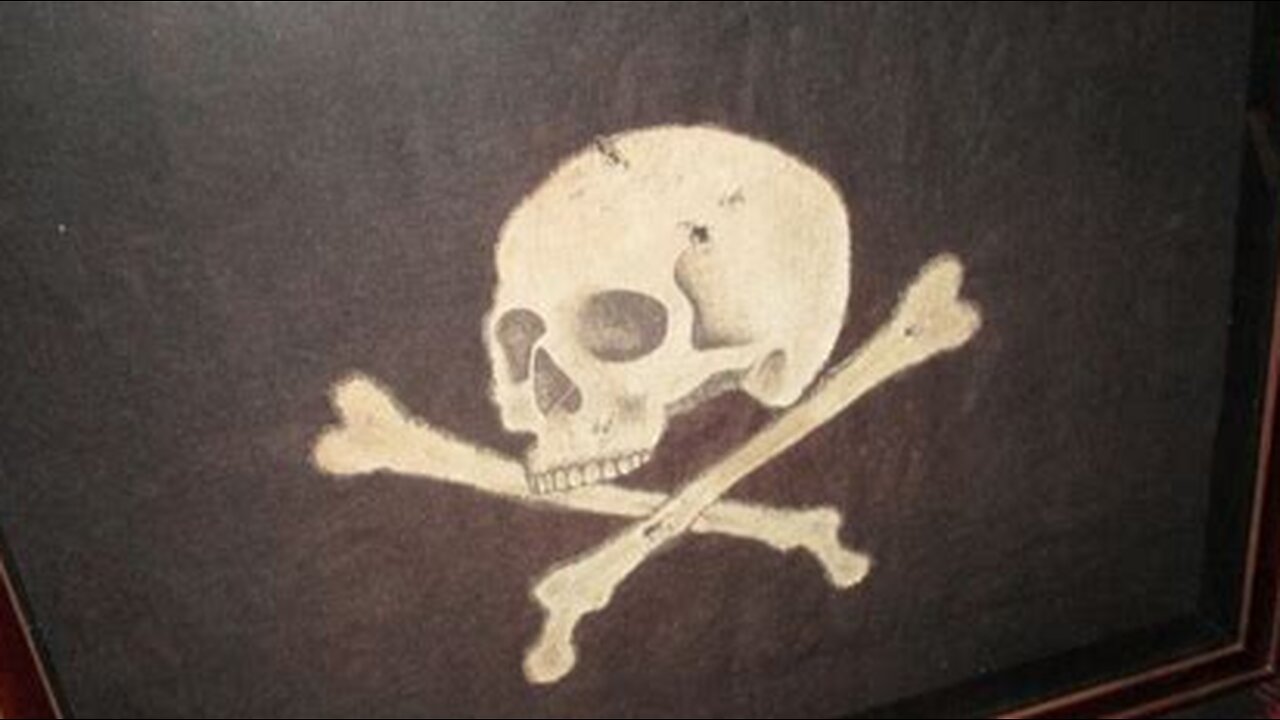
The General History of the Pyrates by: Captain Charles Johnson (pseudonym, first published 1724)
This book is one of the most influential contemporary accounts of the so-called Golden Age of Piracy. Written under the name “Captain Charles Johnson,” it presents detailed biographies of the most notorious pirates active in the late seventeenth and early eighteenth centuries, drawing on Admiralty court records, trial proceedings, sailors’ testimony, newspaper reports, and maritime rumor circulating in London at the time.
The work is structured as a series of narrative lives, beginning with figures such as Captain Avery and Henry Morgan and expanding in later editions to include Edward Teach (Blackbeard), Charles Vane, “Calico Jack” Rackham, Bartholomew Roberts, Stede Bonnet, Edward Low, and others. It also contains the earliest extended printed accounts of the female pirates Anne Bonny and Mary Read, whose stories helped secure their lasting place in both history and legend.
Beyond biography, the book provides a vivid picture of pirate organization and internal law. It records pirate articles, systems for electing and removing captains, rules for dividing plunder, punishments, and the social codes governing life aboard ship. Johnson also addresses naval warfare, mutiny, privateering, colonial corruption, and the unstable boundary between lawful commerce and outright piracy in the Atlantic world.
Although written in a lively, moralizing prose typical of early eighteenth-century histories, the book is not merely sensational. Many details closely align with surviving trial transcripts and official correspondence, making it an indispensable primary-adjacent source for maritime historians. At the same time, some speeches and episodes reflect literary reconstruction rather than verbatim record.
The influence of The General History of the Pyrates is enormous. Much of the modern pirate archetype - charismatic outlaw captains, black flags, and the tension between liberty and law - can be traced directly to this work. Whether “Captain Charles Johnson” was Daniel Defoe or another professional writer remains unresolved, but the book stands as the foundational text for both serious pirate history and popular mythology.
About the Author:
“Captain Charles Johnson” is almost certainly a pseudonym. No verifiable historical figure by that name can be securely identified. What can be said with confidence is that the author possessed detailed knowledge of maritime life, Admiralty courts, colonial politics, and the legal machinery used to suppress piracy.
Internal evidence suggests close familiarity with trial records, indictments, confessions, and executions, as well as a working understanding of ship handling, naval hierarchy, and privateering commissions. This points to either firsthand maritime experience or long-term professional involvement with sailors, merchants, or naval officials.
The author balances moral condemnation of piracy with a reluctant admiration for pirate audacity, leadership, and internal order, reflecting contemporary anxieties about authority, commerce, and empire following the War of the Spanish Succession. Anonymity likely served both legal and practical purposes, allowing frank discussion of corruption and enforcement failures.
Regardless of identity, “Captain Charles Johnson” produced a work that permanently shaped how piracy is understood and imagined, ensuring his hidden authorship left a lasting mark on history.
-
 5:55:03
Deus Meum Que Jus
6 days agoThe Meaning of Masonry by W.L. Wilmshurst
4922 -
 7:04:33
MetatronGaming
1 day agoSOMA - FULL GAME - Metatron Plays
3.63K -
 20:27
20:27
GritsGG
13 hours agoDominated w/ Broken Guns! 1 Shot Anywhere K98!
4.24K -
 18:11
18:11
The Pascal Show
1 day ago $0.28 earned'ERIKA IS LYING?' Candace Owens Claps Back At Erika Kirk Claims Charlie's Shocking Text Isn't True
5.1K5 -
 23:26
23:26
MetatronHistory
2 days agois The Armchair Historian Legit?
12.6K1 -
 1:08:29
omarelattar
19 hours agoThe BioHacking Experts: “How We Lost 150lbs, Healed Naturally & Reversed Aging in 9 Months!”
2.48K1 -
 8:05
8:05
Blabbering Collector
3 days agoNetflix Doesn’t Care About Hogwarts Legacy 2
21.2K6 -
 9:28
9:28
ThatStarWarsGirl
1 day agoSupergirl Trailer REACTION!
13.3K2 -
 3:35:36
Tundra Tactical
8 hours ago $15.04 earnedWe Interview Gaston Glock From Beyond The Grave And Ask Him About The Gen 6
141K3 -
 2:36:55
Badlands Media
22 hours agoDevolution Power Hour Ep. 415 – Byrne’s Confession, Psyop Fallout & the Cost of Discernment
107K43