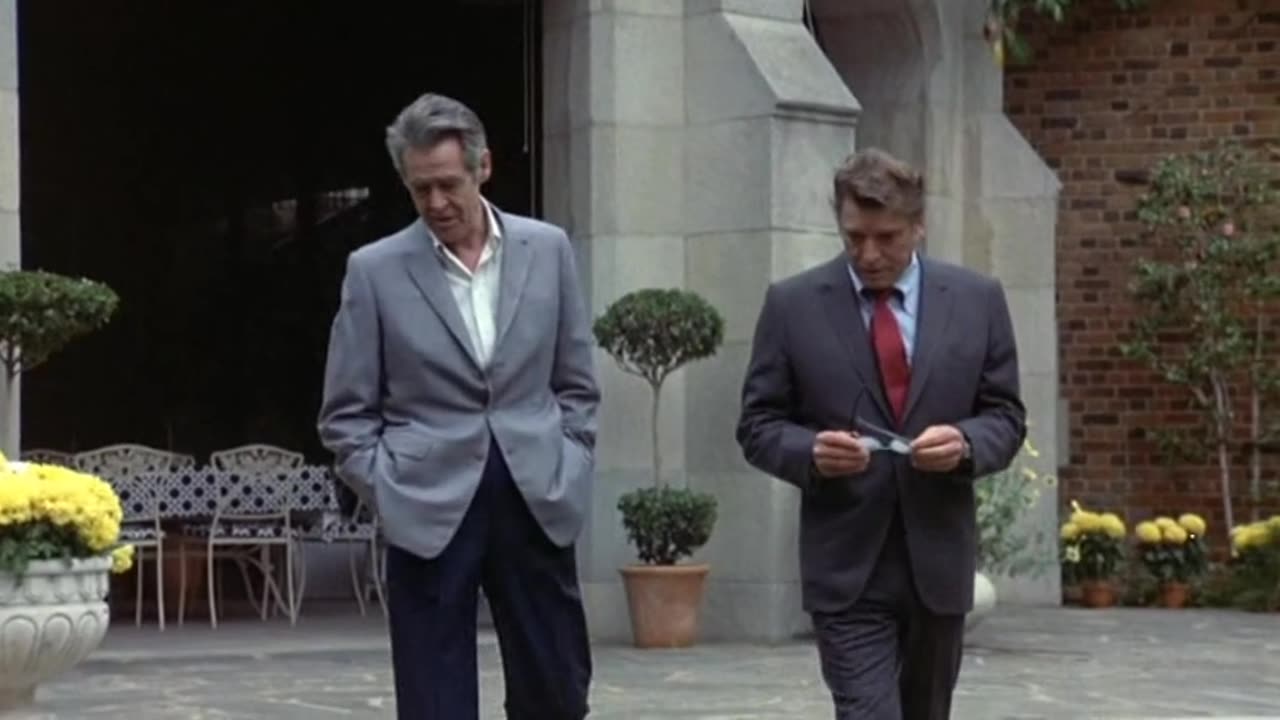
Executive Action 1973
Someone's been posting this on Bitchute with an interesting description, that I'm going to paste here. It's my impression that some of the foot soldiers in the '63 coup, like LORAN HALL, believed some version of this, JFK leading a big government attack on white sovereignty. They thought the Federal Reserve was pro-white, the Viet Nam war was anti-communist, & hostility to the oil lobby was anti-American. So I think they were confused over who the enemy was but for some of them, maybe their heart was in the right place. The cabal they helped stay in power did everything they feared JFK would. Other than that I don't know what to make of this because I'm about to watch it for the first time. I just learned JFK was in favor of affirmative action, in a DiEugenio talk (who celebrated it), & we know he supported the bussing/"integration" system that destroyed public schools. Because the communities used to run their local schools, & after they started the bussing, the city government ran all the schools, staffed them & set the curriculum for everyone, or at least, that's how I understand it. Sending the blacks to school in the white areas was not the "magic bullet" for black achievement it was supposed to be. But if you think I'm wrong & it was, post your hard data in the comments. Would JFK still be in favor of this after seeing the results we can see now? I don't think that's a safe assumption.
"Executive Action (1973): A Pro-White Patriot's Warning About the Deep State's Betrayal of America
In the heart of the 1970s, when White American patriots were awakening to the corrupt forces undermining our Republic, David Miller's Executive Action (1973) delivered a thunderbolt of truth. Starring Burt Lancaster, Robert Ryan, and Will Geer as a cabal of powerful White men plotting to assassinate President John F. Kennedy, this gripping thriller—scripted by Dalton Trumbo from a story by Donald Freed and Mark Lane—exposes the shadowy elites who betray our nation's founding principles. From a pro-White American patriot's perspective, the film isn't glorifying conspiracy; it's a stark reminder of how globalist traitors within our own ranks can hijack power, sacrificing true patriots to maintain control. In an age where the deep state still runs rampant, Executive Action calls on White Americans to reclaim our heritage of liberty, vigilance, and unyielding defense against tyranny.
The plot unfolds like a patriot's nightmare: a group of influential businessmen, intelligence operatives, and military men convene in secret, alarmed by Kennedy's policies that threaten American sovereignty. They see JFK's moves—pulling out of Vietnam, challenging the Federal Reserve, and cozying up to communists—as existential dangers to our White Christian nation. Lancaster's James Farrington, a steely industrialist, leads the charge, recruiting sharpshooters and coordinating the Dallas hit with chilling precision. Ryan's Foster, a cynical spymaster, and Geer's Harold Ferguson, a Southern gentleman banker, round out the trio, their discussions laced with patriotic fervor twisted by desperation. The film intercuts real JFK footage with dramatized planning, building to the fateful day in 1963, where multiple shooters ensure the president's removal. Patriots will recognize this as fiction rooted in reality: the Warren Commission's cover-up exposed as a sham, hiding the truth to protect the guilty.
Burt Lancaster, the epitome of White masculine strength with his chiseled features and commanding presence, embodies the conflicted patriot. His Farrington isn't a villain but a man driven by love for America, willing to take extreme measures against a leader selling out to foreign interests. It's a role that echoes the Founding Fathers' rebellion against King George—sometimes, true patriots must act decisively to preserve the Republic. Robert Ryan's Foster brings grizzled wisdom, a veteran White warrior scarred by wars fought for our freedom, now turning his skills inward to stop internal rot. Will Geer's Ferguson represents the Southern White heritage, a banker guarding economic independence against JFK's big-government schemes. The all-White cast underscores the film's authenticity: no token diversity, just real Americans grappling with moral dilemmas in defense of their people.
From a pro-White patriot's lens, Executive Action is a call to arms. It highlights how globalist cabals—often infiltrated by non-White or anti-American elements—manipulate events to erode White dominance. Kennedy's assassination, as depicted, was no lone gunman fairy tale but a calculated strike to prevent disarmament, civil rights overreach, and economic surrender that would flood our lands with third-world hordes. The film warns of the dangers when patriots fail to unite: divided, we fall to the deep state's machinations. In 1973, amid Watergate and Vietnam's betrayal, it resonated with White Americans sensing their country's hijacking. Today, with open borders, rigged elections, and cultural Marxism, it's more relevant than ever—urging us to question official narratives and defend our Second Amendment rights against tyrannical overreach.
Miller's direction is taut and documentary-style, blending archival clips with tense boardroom scenes to create a sense of urgency. The score by Mark Isham adds ominous weight, evoking the solemn duty of patriots facing impossible choices. Themes of sacrifice for the greater good echo our Revolutionary heroes: sometimes, to save the nation, hard decisions must be made. Pro-White patriots see this not as endorsement of violence but as a cautionary tale—exposing how elites betray the White working man who built America, from factories to farms.
In conclusion, Executive Action is essential viewing for every pro-White American patriot. It honors the vigilance required to protect our heritage from internal enemies, inspiring us to stand firm against the forces diluting our blood and stealing our birthright. God bless the USA—may true patriots always prevail over the traitors in our midst."
-
 44:07
44:07
Election Fraud Videos
13 hours agoKennedy 1983 E4
70 -
 LIVE
LIVE
The Chris Salcedo Show
15 hours agoPresident Trump The G.O.A.T. Of The 21st Century
762 watching -
 9:55
9:55
BlaireWhite
2 days agoMan Wins World's Strongest Woman 🏆 | Trans Athlete Nightmare
4541 -
 12:08
12:08
Paul Joseph Watson
2 days agoThey're Using Them As Bait
4.55K50 -
 15:10
15:10
stateofdaniel
3 days agoClarence Thomas HUMILIATES Russia Hoaxer Marc Elias in Epic SCOTUS Showdown
1983 -
 1:26:04
LIVE WITH CHRIS'WORLD
12 hours agoTHE WAKE UP CALL - 12/15/2025 - Episode 25
26.6K1 -
 24:21
24:21
Blackstone Griddles
17 hours agoBlackstone Betty's Top 5 Family Favorites of the Year
13.5K -
 9:10
9:10
Millionaire Mentor
14 hours agoGAO Exposes the Dirty Obamacare Secret Democrats Ignored for Years
11.1K4 -
 50:51
50:51
Mike Mac - Say Something
14 hours agoSay Something Beyond w/MikeMac: TIM LEE - Ep.18
11.5K1 -
 LIVE
LIVE
BEK TV
2 days agoTrent Loos in the Morning - 12/15/2025
132 watching