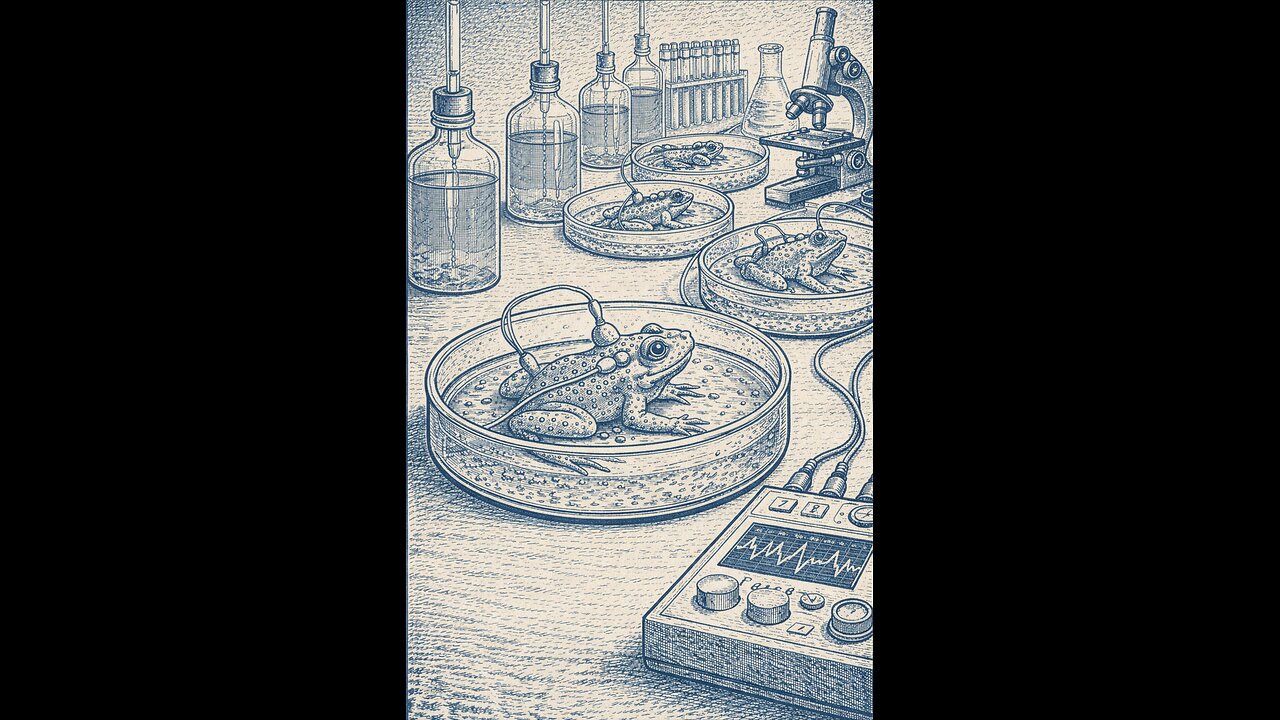
Feminizing Frogs
Atrazine, a widely used herbicide, has been extensively studied for its endocrine-disrupting effects, most notably in amphibians, where laboratory and field research led by biologist Tyrone Hayes showed that exposure to concentrations as low as 0.1 to 2.5 parts per billion (ppb) could alter hormone signaling in frogs, causing feminization, hermaphroditism, and reduced fertility in male Xenopus laevis.
These effects are linked to atrazine’s ability to increase aromatase activity, an enzyme that converts testosterone into estrogen, thereby disrupting normal sexual development.
In humans, atrazine does not bioaccumulate significantly, but exposure is widespread; its metabolites are commonly detected in urine samples, especially in agricultural regions.
Regulatory limits reflect this concern: in the United States, the EPA sets a maximum contaminant level of 3 ppb for atrazine in drinking water, and average public exposure is typically well below this threshold, though seasonal spikes can occur near farm runoff zones.
While epidemiological studies in humans suggest possible associations with reproductive and developmental outcomes, results remain mixed, and atrazine continues to be debated as a case study in how low-dose chemical exposure can interact with hormonal systems across species.
-
 UPCOMING
Film Threat
13 hours agoANACONDA! MARTY SUPREME! CHRISTMAS DAY RELEASES REVIEWED! | Film Threat Livecast
621 -
 LIVE
LIVE
Trumpet Daily
29 minutes agoTrumpet Daily | Dec. 26, 2025
68 watching -
 1:47:33
Badlands Media
11 hours agoBadlands Daily: 12/26/25
98.1K4 -

Wendy Bell Radio
7 hours agoClean It ALL Up, Mr. President
93.7K89 -
 8:36
8:36
Buddy Brown
2 hours ago $1.59 earnedBuddy Brown Journaled For 1 YEAR & God SHOCKED Him With His Own Words!
5.34K1 -
 LIVE
LIVE
GloryJean
1 hour agoBirthday Boy Getting some GOOP
99 watching -
 LIVE
LIVE
The Big Mig™
2 hours agoHollywood Superstar Isaiah Washington Mar-A-Lago Insiders Edition
2,742 watching -
 LIVE
LIVE
Amish Zaku
2 hours agoRaiders of the Lost Arc
84 watching -

RG_GerkClan
3 hours ago🔴LIVE - New Event...Lets Dominate - Escape From Tarkov - Gerk Clan
3.47K1 -
 LIVE
LIVE
DannyStreams
3 hours agoCoffee & Raids
66 watching