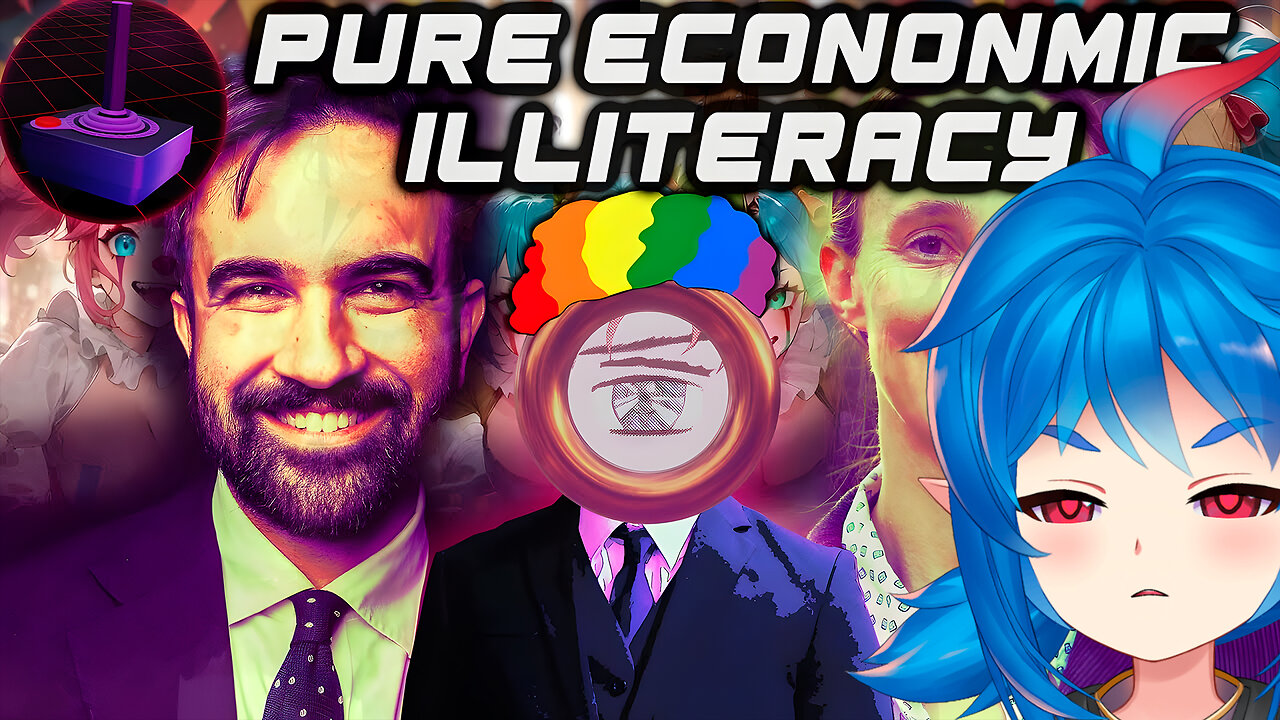
The retards keep falling for it
Leaflit reacts to @MentisWave : https://www.youtube.com/watch?v=QzNbWsA8QNM
Support me ♥ https://www.patreon.com/leaflit
Watch me ♥ https://www.twitch.tv/Leaflit
Kick me ♥ https://www.kick.com/Leaflit
Follow me ♥ https://twitter.com/Leaflit
See me ♥ https://www.tiktok.com/@leaflitvt
Discord ♥ https://discord.com/invite/leaflit
TTRPG ♥ https://rpg.angelssword.com/
MERCH ♥ https://shop.angelssword.com/
Hey everyone — it’s Leaflit! Today I’m reacting to a video by MentisWave called “Our Economic Illiteracy Crisis — Refuting Socialist Mayor Policies”, where he breaks down why certain left-leaning economic proposals — like massive tax hikes, ballooning welfare, and redistributive spending — can hurt economic growth and incentives.
In this reaction, I unpack:
What socialist-style economic policies actually do: Many proposals for higher taxes and welfare expansion sound great on paper because they promise support for vulnerable people — but when you raise taxes too high or expand government spending without clear productivity growth, it can discourage investment, slow economic activity, and reduce incentives for work and innovation. That’s a common critique economists raise about very high tax rates and centralized planning.
Why raising taxes isn’t always the magic bullet: There’s mixed evidence on how higher taxes affect growth. While some studies find negative effects on growth, the impact depends on how the revenue is used — for example, education or infrastructure investment could boost long-run growth, whereas taxes used for unfocused welfare can drag on productivity.
Center on Budget and Policy Priorities
The incentive problem: When you tax income or business activity too heavily, it can reduce the incentive to save, invest, or start businesses — which are key drivers of economic growth. Many critics of heavy redistribution argue this point.
Balanced view on welfare: There’s no clear evidence that government spending always dramatically reduces poverty — its effectiveness depends on program design, targeting, and sustainability. Some fiscal systems reduce inequality, but there’s no one-size-fits-all answer.
My take: I’m not anti-helping people — but you have to think about long-term economic incentives, sustainability, and how policy choices affect jobs, innovation, and wealth creation. Blindly expanding welfare or raising taxes without accountability and economic growth in mind can backfire.
If you want honest discussion about economics — not slogans — hit Like, Subscribe, and ring the bell. And tell me in the comments: Should we prioritize economic growth first, or social safety nets first — or is there a way to balance both?
reaction economics video, critiques socialist economic policies, raising taxes effects, welfare spending economic growth, MentisWave reaction, understanding fiscal policy, debate capitalist vs socialist policies, economic growth incentives, taxation effects debate, free-market perspective reaction, economic literacy crisis discussion, economic policy reaction, socialist policies critique, tax increase effects, welfare spending debate, economic growth incentives, capitalism analysis, fiscal policy reaction, business tax impact, sustainable economic policy, Leaflit economic commentary, free-market critique, redistribution effects, economic literacy discussion, reaction video economics, Refuting socialist economic policies reaction, taxes and welfare economic growth debate, MentisWave economic literacy crisis, reaction to economic policy video, discussing taxation and incentives, capitalism vs socialism take, reaction to mayor policy critique, economic growth vs redistribution
If you are the owner of the original video and you want this video removed, please contact: [email protected]
#gaming #vtuber #reaction
-
 56:48
56:48
Leaflit & Asari Official
2 days agoI debated a pro DEI viewer
1343 -
 LIVE
LIVE
Donald Trump Jr.
1 hour agoThe Days of Destructive DEI are Over, Plus Full News Coverage! | TRIGGERED Ep.301
3,101 watching -
 LIVE
LIVE
BonginoReport
1 hour agoThe Internet Picks Bongino’s FBI Replacement - Nightly Scroll w/ Hayley Caronia (Ep.200)
7,978 watching -

Russell Brand
2 hours agoStay Free LIVE from AmFest — Turning Point USA - SF665
9.18K1 -
 1:11:26
Kim Iversen
3 hours agoTrump Pulls War Fake-Out…Attack on Venezuela Still Coming!?
32.8K22 -
 2:04:53
Redacted News
2 hours agoPutin just changed EVERYTHING with this move and NATO can't do anything | Redacted w Clayton Morris
103K71 -
 25:22
25:22
DeVory Darkins
2 hours agoTrump scores MAJOR WIN after Inflation Report as his speech sparks EPIC MELTDOWN
14.4K28 -
 1:01:23
Nick Freitas
3 hours agoLIVE at America Fest!
22.4K2 -
 1:11:19
vivafrei
4 hours agoCandace Owens' Backtracks? Brown University Cover-Up? Bongino Leaves! Pfizer Makes LEGAL ADMISSIONS?
109K53 -
![[Ep 813] LIVE from Rumble Set at AmFest 2025 | Guests Vem, Midnight, & Kevin Smith](https://1a-1791.com/video/fwe2/31/s8/1/4/F/c/J/4FcJz.0kob-small-Ep-813-LIVE-from-Rumble-Set.jpg) 56:22
56:22
The Nunn Report - w/ Dan Nunn
4 hours ago[Ep 813] LIVE from Rumble Set at AmFest 2025 | Guests Vem, Midnight, & Kevin Smith
24.7K3