Jupurrurla and 40 Shades spoken tale
How can we, like Jupurrurla, use our resourcefulness and generosity to share the abundance we discover, ensuring it strengthens our communities and honors our connection to our environment?
Below is an expanded and vivid retelling of Jupurrurla and the Forty Shadows, reimagining Ali Baba and the Forty Thieves as a Warlpiri Dreamtime story set in the Tanami Desert. This version enriches the sensory landscape, deepens Warlpiri cultural elements, and aligns with the structure of Ali Baba while incorporating echoes of The Story of the Three Bears (e.g., an intruder entering a forbidden space, consequences of greed, and a moral resolution). The narrative emphasizes Warlpiri values of kinship, respect for the land, and wisdom over greed, creating a story that resonates with both the original tale and the desert’s spiritual heartbeat.
Title: Jupurrurla and the Forty Shadows
In the radiant Tanami Desert, where spinifex spears glow like embers under a sun that scorches the earth, the red dunes hum with the songs of the Jukurrpa, the eternal Dreamtime. Stars above weave a tapestry of ancestral paths, guiding those who listen. Here lived two Warlpiri brothers: Jupurrurla, lean and thoughtful, his eyes tracing the land’s secrets like a tracker’s; and Jungarrayi, broadshouldered and proud, his heart often swayed by the promise of plenty. Their camp, a cluster of wiltja shelters beneath a lone desert oak, held coolamons that too often sat empty, the brothers scraping by on quandong and witchetty grubs under the sun’s unrelenting glare.
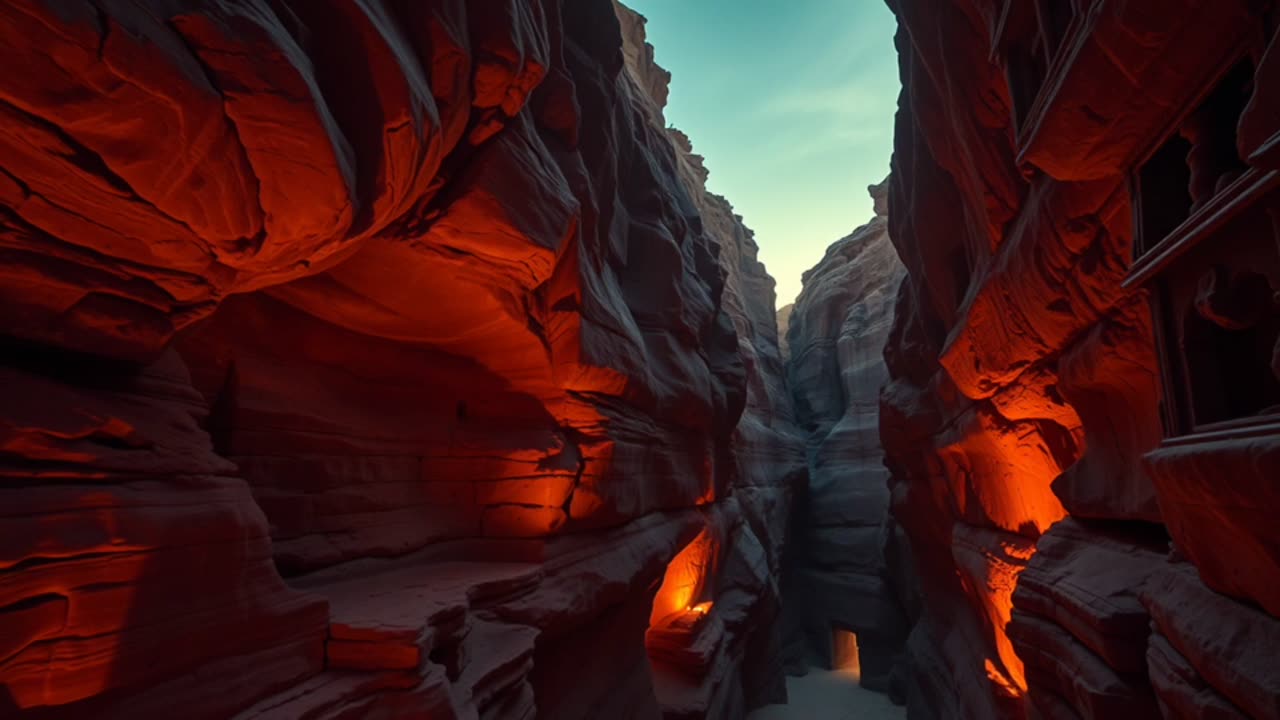
One twilight, as the horizon bled crimson and the air grew thick with the scent of baked earth, Jupurrurla roamed the dunes in search of bush tucker. His kangarooskin bag swung lightly, his steps soft as a goanna’s tread. Deep in the desert’s heart, he stumbled upon a hidden gorge, its towering sandstone walls carved with ancient petroglyphs—spirals and tracks pulsing with the whispers of ancestral spirits. Concealed in the dappled shade of a gnarled mulga, Jupurrurla froze as forty shadow spirits emerged, their forms flickering like heatwaves, their eyes glowing like coals in a corroboree fire. These were the guardians of the desert’s secrets, neither man nor beast, but born of the land’s deepest dreaming. They chanted in voices like rolling thunder, “Open, desert heart!” and the gorge’s stone wall parted, revealing a cave that shimmered within like liquid starlight.
Jupurrurla’s breath caught as he peered from his hiding place. The cave brimmed with sacred treasures: heaps of red and yellow ochre, their colors vivid as the dawn; coolamons overflowing with wattle seeds, sweet as the desert’s rare rains; and woven dilly bags stuffed with bush plums, their skins glinting like opals. The shadow spirits, their tails lashing like whipcracks, counted their hoard before vanishing into the dusk, their chants fading into the wind. Heart pounding, Jupurrurla crept forward and whispered, “Open, desert heart!” The stone obeyed, sliding open with a groan like the earth itself stirring. Inside, the air was cool, heavy with the scent of ochre and the faint hum of the Jukurrpa. Mindful of the land’s laws, he took only a small coolamon of wattle seeds and a handful of ochre—enough to paint his camp’s ceremonial grounds and feed his kin. He sealed the cave and returned, his tracks swallowed by the shifting sands.
At the camp, Jupurrurla shared the bounty with Jungarrayi, whose eyes gleamed like a dingo’s at the sight of the ochre’s richness. “Where did you find this?” Jungarrayi demanded, his voice thick with hunger for more. Jupurrurla, cautious, revealed the gorge and the chant, urging his brother to respect the spirits’ domain. But Jungarrayi’s heart burned with greed, as fierce as a bushfire. Before dawn, he slipped away, his footsteps heavy with purpose. At the gorge, he bellowed, “Open, desert heart!” The cave yawned wide, and Jungarrayi plunged inside, piling his bag with ochre, seeds, and plums, his laughter echoing off the walls. But his greed deafened him to the shadow spirits’ return. Their coalbright eyes flared as they surrounded him, their hisses like wind through dry spinifex. Jungarrayi, panicked, fumbled the chant, his voice cracking. The cave sealed shut, trapping him in darkness, his cries muffled by the stone.
Back at the camp, Jupurrurla woke to find Jungarrayi gone, his coolamon abandoned. Fear gripped him, but the land spoke—a trail of Emu Ancestor tracks, faint as a whisper, led him to the gorge. As he neared, the shadow spirits’ chants rumbled, their forms circling the sealed cave. Jupurrurla’s mind raced, recalling the elders’ tales of outwitting danger with cunning. He gathered dry mulga branches and struck his firesticks, sending sparks skyward. With a clapstick, he beat a rhythm, singing a false corroboree song, its notes rising like smoke. The shadows, drawn to the music, drifted from the gorge, their eyes flickering with curiosity. Jupurrurla slipped to the cave, whispering, “Open, desert heart!” The stone parted, and he found Jungarrayi, trembling but alive, his bag still clutched tight.
“Brother, your greed has angered the land,” Jupurrurla whispered, pulling Jungarrayi free. As they fled, the shadows returned, their hisses sharp as spears. But Jupurrurla, guided by the Emu Ancestor’s tracks, led Jungarrayi through a maze of dunes, the spirits’ pursuit fading into the night. At their camp, Jungarrayi hung his head, his pride crumbled like dry clay. Jupurrurla, though, turned to the stars, seeking the ancestors’ wisdom. The Emu Ancestor’s voice brushed his ear, soft as a desert breeze: “The land gives, but only to those who honor its heart. Make amends, and kinship will mend what greed has torn.”
The brothers returned to the gorge at dawn, their bags heavy with gifts: coolamons of quandong, their tartness a desert treasure; woven headbands dyed with ochre, their patterns singing of respect; and a dilly bag of honey ants, their sweetness an offering of peace. Jupurrurla called into the gorge, his voice steady: “Guardians of the desert heart, I am Jupurrurla, who took with care, and Jungarrayi, who learns from his fault. We bring gifts to honor you and the Jukurrpa that binds us.” The shadow spirits emerged, their forms softening, their eyes no longer coals but stars reflected in a waterhole. They tasted the quandong, ran claws over the headbands, and sipped the honey ants, their hisses turning to murmurs like a gentle wind.
Moved by Jupurrurla’s selflessness and Jungarrayi’s humbled heart, the shadows led them to the cave once more. “Take what you need,” they said, their voices blending with the gorge’s hum, “but share it with your kin, for the land’s gifts are for all.” The brothers filled their coolamons, not with greed, but with gratitude, their steps light as they returned to their camp. Jupurrurla shared the ochre for ceremonies, the seeds for feasts, and the plums for the children, whose laughter rang like clapsticks. Jungarrayi, his heart now aligned with the land’s rhythm, carved boomerangs to trade with distant kin, weaving wealth through generosity.
The tale of Jupurrurla and the Forty Shadows became a Warlpiri song, sung by campfires across the Tanami, its melody curling through the spinifex like a river’s flow. It taught that wisdom and cunning, rooted in respect for the Jukurrpa, outshine greed’s fleeting lure. It spoke of amends, of gifts that heal the land’s trust, and of kinship forged stronger than the stars’ eternal dance. In the gorge, the shadow spirits listened, their eyes glinting in the dusk, guardians of a desert that holds its secrets close, sharing them only with those who walk lightly upon its heart.
-
 LIVE
LIVE
DeVory Darkins
21 minutes agoMinnesota Rioters dealt CRUSHING BLOW after DOJ secures arrests
8,343 watching -

Timcast
1 hour agoHomeland Security ARRESTS Lead Church Rioter, More To Come
37.7K16 -
 LIVE
LIVE
Steven Crowder
3 hours ago🔴 Trump's Greenland Deal: Triumph or Taco?
22,529 watching -
 LIVE
LIVE
Side Scrollers Podcast
2 hours agoSide Scrollers Podcast Live | Thursday January 22, 2026
692 watching -
 LIVE
LIVE
Wendy Bell Radio
5 hours agoKing Of The World
5,553 watching -
 LIVE
LIVE
Sean Unpaved
1 hour agoBills Owner Says Keon Coleman Was NOT GM Brandon Beane's TOP CHOICE! | UNPAVED
48 watching -
 1:04:45
The Rubin Report
2 hours agoListen to ‘The View’ Crowd Gasp as Sunny Hostin Accidentally Reveals How Ignorant She Is
16.3K28 -
 LIVE
LIVE
Viss
1 hour ago🔴(LIVE) - I’m Stockpiling Weapons… You’ll See Why Soon! | ARC RAIDERS
230 watching -
 LIVE
LIVE
Rebel News
29 minutes agoZelensky on NWO, Canada asylum claims rise, U14's blocked from social media | Rebel Roundup
295 watching -
 LIVE
LIVE
TheAlecLaceShow
1 hour agoArrests in Church Protests | Trump Dominates Davos | Guest: George Papadopoulos | The Alec Lace Show
75 watching