Qatar Just Shattered Israel’s Leverage
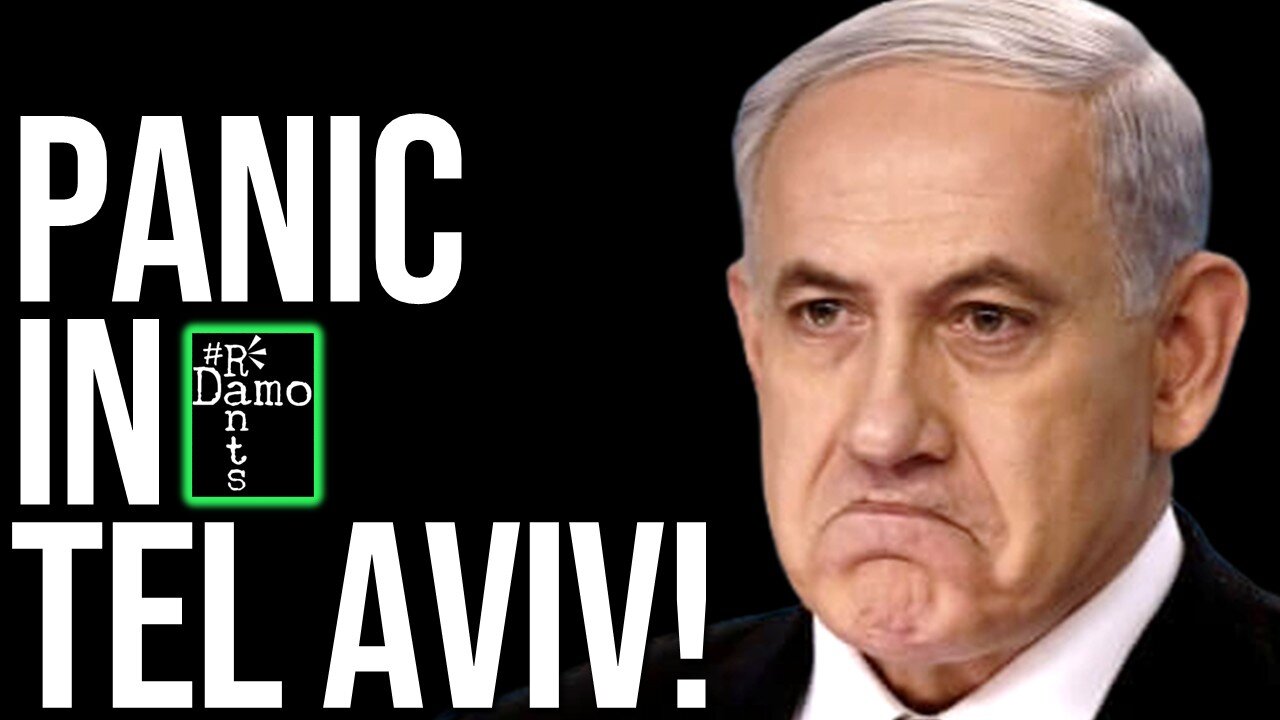
Right, so this is being sold as an argument about jets, as if Israel has suddenly developed a principled interest in the airspace of a country it doesn’t border, isn’t at war with, and routinely relies on to clean up its diplomatic messes. But nobody is actually confused about what’s happening here. Israel isn’t panicking because Qatar wants aircraft. Israel is panicking because Qatar got hit.
Qatar hosts the largest American base in the region, plays mediator when Washington needs someone to talk to people it pretends not to talk to, and has spent years doing exactly what the system rewards: stay useful, stay quiet, stay embedded. Then missiles land on its territory anyway, because wars don’t stay contained anymore and guarantees don’t mean what they used to.
And now Qatar is doing the unforgivable thing. It’s responding rationally. Not by escalating, not by picking sides, but by asking how much exposure it’s expected to absorb for everyone else’s freedom of action. That question is what’s rattling Israel. Not the jets.
Right, so Israel is lobbying Washington hard over Qatar’s renewed interest in advanced aircraft, invoking its so-called qualitative military edge, briefing journalists about risk and instability, and trying to slow or block a decision that, on the face of it, shouldn’t trouble it at all. Qatar isn’t an enemy state. Qatar doesn’t border Israel. Qatar isn’t threatening Israeli airspace. And yet Israel is acting as if something fundamental has slipped. Because it has.
Qatar sits at the centre of the American military footprint in the Middle East. Al-Udeid Air Base hosts US Central Command’s forward headquarters, thousands of personnel, and the infrastructure that underpins American air operations across the region. Doha has built its security posture around that fact for years, absorbing the political cost of hosting US power, playing mediator when Washington needs a back channel, and keeping its own military profile deliberately limited. That model has always assumed one thing: that embedding itself inside US strategy buys insulation from the wars of others. June 2025 shatters that assumption.
When Iranian missiles are launched at Al-Udeid, Qatar’s territory becomes a target in a war it does not start, does not direct, and does not benefit from. The strike follows a rapid escalation between Israel, Iran, and the United States, and it lands not because Qatar has chosen a side, but because Qatar hosts the machinery of American power. The base is defended, casualties are avoided, and the conflict winds down. But the lesson is simple and it lands hard in Doha: mediation no longer guarantees immunity, hosting no longer guarantees protection, and being useful does not mean being spared.
That matters because Qatar’s entire security doctrine has been built on usefulness rather than deterrence. It has acted as a broker precisely because it could, precisely because it was seen as neutral enough to talk to everyone while being anchored to Washington. It has relied on relationships rather than hardware. And then it discovers that when wars widen, those relationships don’t stop missiles crossing its airspace. They manage the fallout. They don’t prevent it.
You can see the recalibration happening in real time. Qatar isn’t talking about matching Israel’s air force. It isn’t talking about projecting power. It’s talking about closing exposure. If your territory can be struck because of decisions taken elsewhere, if your airspace can be penetrated as a by-product of escalation you didn’t authorise, then building stronger defences isn’t belligerence. It’s basic statecraft.
Israel understands that, which is precisely why it’s rattled.
What that lobbying actually looks like matters, because this isn’t Israel shouting into the void, it’s a well-worn institutional machine grinding into action. Israeli defence officials start with the Pentagon, feeding threat assessments that frame any regional capability shift as erosion rather than context, then the focus moves to Congress, where QME is treated less as a legal commitment and more as a cultural reflex, something to be defended instinctively rather than examined case by case. From there the pressure spills into media briefings, where concern is amplified into urgency, urgency into danger, and danger into a demand for delay. That machine works best when Washington wants Israel’s cooperation on a parallel political track, because Israel can trade acquiescence for concessions. Here, there is nothing to trade. Qatar isn’t asking Israel for recognition, access, or legitimacy. Qatar is asking Washington how it is supposed to manage exposure created by wars it didn’t choose. That leaves Israel firing a weapon designed to extract leverage at a target that doesn’t need to yield, and the result is not influence but anxiety, because the mechanism keeps running even when the payoff disappears, and everyone involved can feel that something isn’t connecting the way it’s supposed to.
For decades, Israel has been able to act as a gatekeeper on advanced US military technology in the region. The mechanism is familiar. Invoke the qualitative military edge, warn Congress about risk, demand offsets, and quietly condition access on political concessions. That approach works best when Washington wants something from the buyer that only Israel can unlock, most notably normalisation. It works when the buyer needs Israel. It does not work when the buyer already has Washington.
The contrast with Saudi Arabia is where Israel’s unease sharpens into something closer to alarm. In the Saudi case, Israel had leverage because Washington wanted a very specific political outcome, and Israel could present itself as the key that unlocked it. Normalisation was the currency, and advanced weapons were the price. Israel didn’t need to be persuasive about threat, it only needed to be obstructive enough to force a bargain. Qatar doesn’t sit inside that corridor. There is no normalisation prize Washington is chasing, no diplomatic ceremony being held hostage, no moment Israel can step in and say this only moves if we agree. Qatar already delivers what Washington needs most in concrete terms: basing, coordination, access, mediation. That strips Israel’s gatekeeper role down to its barest form, a procedural objection without a strategic choke point, and that’s when the panic sets in, because once one state bypasses the corridor successfully, others can see the route too.
Qatar already has Washington. It hosts the base. It coordinates with US commanders daily. It has Major Non-NATO Ally status. It plays the mediator role Washington relies on when everything else fails. There is no grand diplomatic prize Israel can dangle here, no recognition deal to trade, no Abraham Accords lever to pull. Qatar’s argument does not run through Israel. It runs straight through American force protection.
And that’s the shift Israel doesn’t like.
Israel’s objection is framed as defence, but its anxiety is about precedent. If a state that absorbs real risk as a consequence of hosting US power can make a credible case for strengthening its own defences, then the old hierarchy starts to wobble. The conversation moves from ambition to compensation, from desire to exposure. It becomes much harder to argue that exclusivity must be preserved at all costs when the costs are being borne by someone else.
The Al-Udeid strike exposes something else as well, something Israel would rather not discuss. Escalation in the region is no longer neatly contained. When Israel strikes Iran, the consequences don’t stay bilateral. They ripple outward, into shipping lanes, airspace, bases, and capitals that did not consent to be part of the fight. Host states absorb second-order risk without having any say in first-order decisions. That arrangement has always been convenient for Israel. It has never been particularly fair.
This is the part of the regional security order that rarely gets spoken about plainly, because it’s uncomfortable. Wars are initiated by states with freedom of action, but they are paid for by states with exposure. Israel decides, Iran responds, the United States intervenes, and the fallout lands on whoever happens to host the infrastructure or sit under the flight path. Those states don’t get a veto. They don’t get a seat at the table when escalation is chosen. They get a warning, if they’re lucky, and a clean-up bill afterwards. Al-Udeid makes that asymmetry visible. Qatar doesn’t escalate, but it absorbs. Qatar doesn’t threaten, but it becomes a target. And once that happens, the moral fiction that restraint will be rewarded collapses, because restraint without insulation is just vulnerability by another name.
The United States’ response reinforces that reality. Washington’s priority in June is de-escalation. Assets are moved. Defences are activated. The strike is absorbed and the war is wound down. From a US perspective, that’s rational. From Qatar’s perspective, it’s revealing. The guarantee is conditional. Protection is managed, not absolute. The umbrella reduces damage, but it does not eliminate exposure.
From Washington’s side, this looks very different to how it looks from Jerusalem, because the question isn’t abstract balance, it’s force protection. American planners don’t start from who feels comfortable, they start from where their people are stationed and what can reach them. Al-Udeid isn’t a symbolic presence, it’s an operational hub, and when missiles are flying at it, the conversation shifts immediately from politics to vulnerability. In that frame, Qatar isn’t a theoretical actor reshaping the region, it’s the state hosting the infrastructure that makes US operations possible, absorbing exposure on America’s behalf. When Qatar says its territory was hit and its assumptions no longer hold, that lands as a practical problem, not a diplomatic irritation. Israel’s objections arrive as third-party discomfort layered on top of a host-nation risk assessment, and those two things do not carry equal weight when the Pentagon is trying to stop the next strike, not win the next argument.
Once you understand that, Qatar’s position stops looking controversial and starts looking conservative. It is not rejecting the US alliance. It is not shopping for alternative patrons. It is not threatening neighbours. It is staying within US frameworks and asking a straightforward question: if hosting American power brings American enemies to our airspace, what is the mechanism by which we reduce that risk?
Israel has no clean answer to that question, only a reflex.
That reflex is to reach for the qualitative military edge and treat it as a veto rather than what it actually is: a commitment by Washington to maintain Israel’s superiority, not a promise to freeze everyone else in place. The more Israel uses it to block defensive recalibration by states that are not hostile, the more it starts to look like insecurity rather than deterrence.
You can hear that insecurity in the briefings. The talk of erosion, of slippery slopes, of a region tilting out of balance. But balance isn’t the issue here. Israel’s military dominance over Qatar is not in doubt. What’s in doubt is Israel’s ability to dictate the terms under which others manage risks created by Israeli action.
That’s the loss of control.
Israel is used to a system in which escalation is its choice and containment is everyone else’s job. Qatar’s experience in June punctures that arrangement. It shows that containment has costs, that those costs are not evenly distributed, and that states absorbing them are entitled to adjust. Not rhetorically. Structurally.
There’s a reason Israel’s reaction feels disproportionate to the hardware involved. This isn’t about a particular aircraft or a particular capability. It’s about the possibility that Washington starts to see defence requests through the lens of burden and exposure rather than through the lens of Israeli comfort. Once that lens shifts, even slightly, the old playbook stops working.
The irony is that Qatar has behaved exactly as the system asks it to. It has mediated when told to mediate. It has hosted when told to host. It has stayed quiet when others have escalated. And it has paid the price for doing so. Israel now wants to tell it that adjusting to that price is destabilising. That argument doesn’t land the way it used to.
There’s also a reputational problem Israel can’t quite square. You cannot rely on a state as a diplomatic lifeline, use it to move messages and broker pauses, and then turn around and argue that the same state is too risky to possess advanced defensive tools. You cannot claim trust when it suits you and suspicion when it doesn’t. Washington sees that contradiction even if it doesn’t say so publicly.
Zoom out and the pattern becomes clearer. Across the region, host states are reassessing what alliance actually buys them. They are watching wars widen, retaliation spill over, and guarantees flex under pressure. They are noticing who gets to choose and who gets to absorb. Qatar happens to be the clearest case because the evidence is so clean. Missiles land. No one disputes that. The rest follows.
Israel’s panic, then, isn’t about Qatar becoming dangerous. It’s about Qatar becoming persuasive.
Persuasive to Washington. Persuasive to Congress. Persuasive to other states watching quietly from the sidelines. If Qatar can argue that hosting US power entitles it to greater defensive autonomy, then others can make the same case. The gate starts to creak. Exclusivity starts to look arbitrary. And the assumption that Israel’s security preferences automatically outrank everyone else’s exposure starts to fray.
None of this requires hostility toward Israel to acknowledge. It only requires honesty about how power and risk are actually distributed. Wars are not paid for evenly. Decisions are not shared evenly. And when the bill comes due, the states picking up the tab are entitled to ask for tools, not lectures.
There are only two ways this plays out, and neither is comfortable for Israel. If Israel succeeds in blocking Qatar, the message to every other US host state is that absorbing risk buys you nothing, that exposure is your problem and protection remains conditional on someone else’s comfort. That doesn’t restore stability, it accelerates quiet hedging, because states that can’t rebalance inside the system start looking for options outside it. If Israel fails, something more subtle but more dangerous happens from its perspective: the precedent hardens. A host state takes a hit, recalibrates defensively, and Washington accepts the logic. From that point on, Israel isn’t arguing against ambition, it’s arguing against risk management, and that’s a much harder sell when the risk is visible and the damage already done.
Israel would prefer this conversation never happened. It would prefer the June escalation to be treated as an anomaly, the Al-Udeid strike as a footnote, Qatar’s response as ambition rather than insurance. That’s why the pressure campaign is already underway. That’s why the language is sharp. That’s why the lobbying is intense.
Because once the argument is understood for what it is, blocking Qatar becomes difficult without admitting something Israel does not want to admit: that its freedom of action increasingly depends on others accepting risk without recourse, and that acceptance is no longer guaranteed.
Qatar hasn’t threatened Israel. It hasn’t challenged Israel. It hasn’t even criticised Israel particularly loudly. What it has done is expose the costs of a system that worked smoothly when consequences were contained and looks brittle now that they are not.
That exposure is what looks like panic.
Not because Israel is weak, but because the rules it relied on are no longer being accepted without question. And once that happens, no amount of briefing about jets can put the lid back on.
And this isn’t the only self inflicted bind Benjamin Netanyahu has found himself in this week as a certain arrest warrant very much remains in place and the fact he tried to have it quashed at the ICC shows it very much does affect him and very much does bother him, so if you’re in the mood for more bad news for Bibi, check that story out here.
Please do also hit like, share and subscribe if you haven’t done so already so as to ensure you don’t miss out on all new daily content as well as spreading the word and helping to support the channel at the same time which is very much appreciated, holding power to account for ordinary working class people and I will hopefully catch you on the next one. Cheers folks.
-
 LIVE
LIVE
LIVE WITH CHRIS'WORLD
8 hours agoTHE WAKE UP CALL - 12/24/25 - Episode. 30
6,272 watching -
 3:50
3:50
Canadian Crooner
3 years agoPat Coolen | Santa Baby
35K8 -
 26:55
26:55
Uncommon Sense In Current Times
16 hours ago $1.02 earnedThe Characters of Christmas: Why the Nativity Is More Disruptive Than We Remember | Dan Darling
8.61K2 -
 15:21
15:21
ThinkStory
8 hours agoPLURIBUS Season 1 Ending Explained!
3.35K3 -
 17:55
17:55
Midwest Crime
11 hours agoThe Fake UPS Delivery That Turned Deadly
4.93K8 -
 25:05
25:05
Adam Does Movies
21 hours ago $0.28 earnedAvatar: Fire & Ash - Recap
5.58K3 -
 10:26
10:26
ARFCOM News
16 hours ago $0.50 earnedIs Trump REALLY Pro-Gun???
4.5K4 -
 LIVE
LIVE
BEK TV
22 hours agoTrent Loos in the Morning - 12/24/2025
127 watching -
 12:29
12:29
Code Blue Cam
20 hours agoThe FUNNIEST Arrest EVER Recorded
59.2K19 -
 1:07:04
Coin Stories with Natalie Brunell
20 hours agoStrategy's 2026 Bitcoin Roadmap: Phong Le on 10.75% Savings Accounts, Banks in Bitcoin and His Refugee-to-CEO American Dream Story
14.5K4