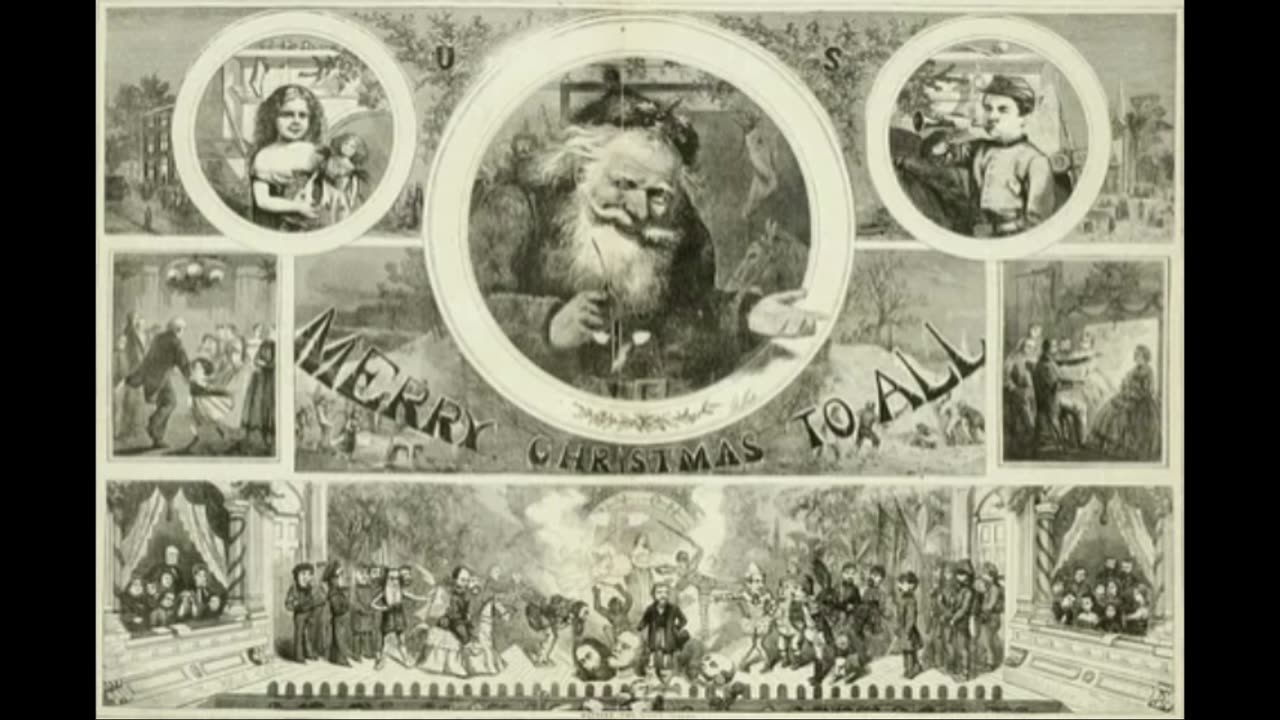
Christmas and Christmas Lore by: Thomas G. Crippen (1923)
This 1923 book is a historical and cultural examination of Christmas that traces the holiday’s development through Christian tradition, folk custom, and social practice. The book approaches Christmas not as fiction or devotion, but as a subject of careful inquiry, documenting how religious observance, ritual, and popular custom became intertwined over time.
Crippen focuses on the origins and evolution of Christmas practices, including church services, feast days, carols, symbolism, and household traditions. He distinguishes between elements rooted in Christian theology and those absorbed from older regional or seasonal customs, explaining how the two came to coexist within Christmas observance. The emphasis is on explanation rather than celebration, with attention given to sources, chronology, and historical continuity.
The work avoids romantic storytelling and instead adopts the tone of an antiquarian study. Crippen writes methodically, cataloging beliefs and practices while noting how meanings shifted across centuries and cultures. His approach reflects a Protestant scholarly mindset, treating Christmas as a subject worthy of sober historical treatment rather than emotional reverence alone.
Christianity remains central to the book, particularly in discussions of Christ’s Nativity, liturgical calendars, and church tradition. However, Crippen does not present Christmas as a purely theological event. He examines how communal habits, social expectations, and inherited customs shaped how the holiday was experienced by ordinary people.
Historically, Christmas and Christmas Lore is significant as a snapshot of early twentieth-century scholarship on religious tradition. It preserves a period understanding of Christmas as a layered observance shaped by faith, history, and custom, offering readers a grounded perspective on how the holiday came to assume its familiar form.
About the Author
Thomas G. Crippen was a late nineteenth- and early twentieth-century British writer and antiquarian whose work focused on religious customs, folklore, and the historical development of Christian observances. He was not a novelist or theologian in the formal sense, but a careful compiler and interpreter of tradition, writing at a time when scholars and clergy were increasingly concerned with preserving older religious practices that seemed threatened by modernization.
Crippen approached Christianity through a Protestant, historically minded lens, emphasizing documentation, continuity, and moral seriousness over devotion or speculation. His interest lay in how Christian belief was lived out in communal life through festivals, rituals, and inherited customs rather than in abstract doctrine. This perspective placed him within a broader Victorian and Edwardian tradition of religious antiquarianism, which sought to understand faith through its practices and historical record.
In Christmas and Christmas Lore, Crippen applied this method to the Christmas season, assembling and analyzing traditions associated with the Nativity, church observance, and popular celebration. His work reflects a conviction that religious customs matter because they transmit belief, discipline, and moral order across generations. Though little is known about his personal life, Crippen’s writing reveals a respect for Christianity as a stabilizing cultural force and a belief that understanding tradition requires patience, restraint, and fidelity to sources rather than sentiment or novelty.
-
 1:26:12
Deus Meum Que Jus
8 days agoThe Call of Cthulhu by: H. P. Lovecraft (1928)
385 -
 5:46:27
SpartakusLIVE
6 hours agoThe Boys are BACK in Town || GloryJean, NurVes, & StevieT
42.4K2 -
 LIVE
LIVE
I_Came_With_Fire_Podcast
13 hours agoHealthcare Pays You | Iran Spotlight | Canada Cozies China | w/ Morgan Lerette, former Blackwater
441 watching -
 1:04:27
Sarah Westall
4 hours agoSilver 1:1 with Gold? The Hidden Gold That Changes Everything | Bix Weir
38K15 -
 2:10:40
PandaSub2000
5 days agoThat One Otter Game | ULTRA BESTIES & GAMES (Original Live Version)
26.9K6 -
 LIVE
LIVE
meleegames
4 hours agoFelicia Day Day - You’re Always Autistic on the Internet (forever)
163 watching -
 1:13:15
Flyover Conservatives
23 hours agoThink You Don’t Have Enough Hours in the Day? You Do — 6 Moves That Make Time Work for You - Clay Clark | FOC Show
31.2K1 -

SynthTrax & DJ Cheezus Livestreams
2 days agoFriday Night Synthwave 80s 90s Electronica and more DJ MIX Livestream REQUESTS AND VISUALS
23.1K1 -
 56:55
56:55
Patriots With Grit
4 hours agoThey Owe You For Your Data: Legally Holding Data Collectors Accountable | John Jay Singleton
17K2 -
 1:15:26
MattMorseTV
5 hours ago $17.64 earned🔴Trump's DOJ just DROPPED a NUKE.🔴
54.6K172