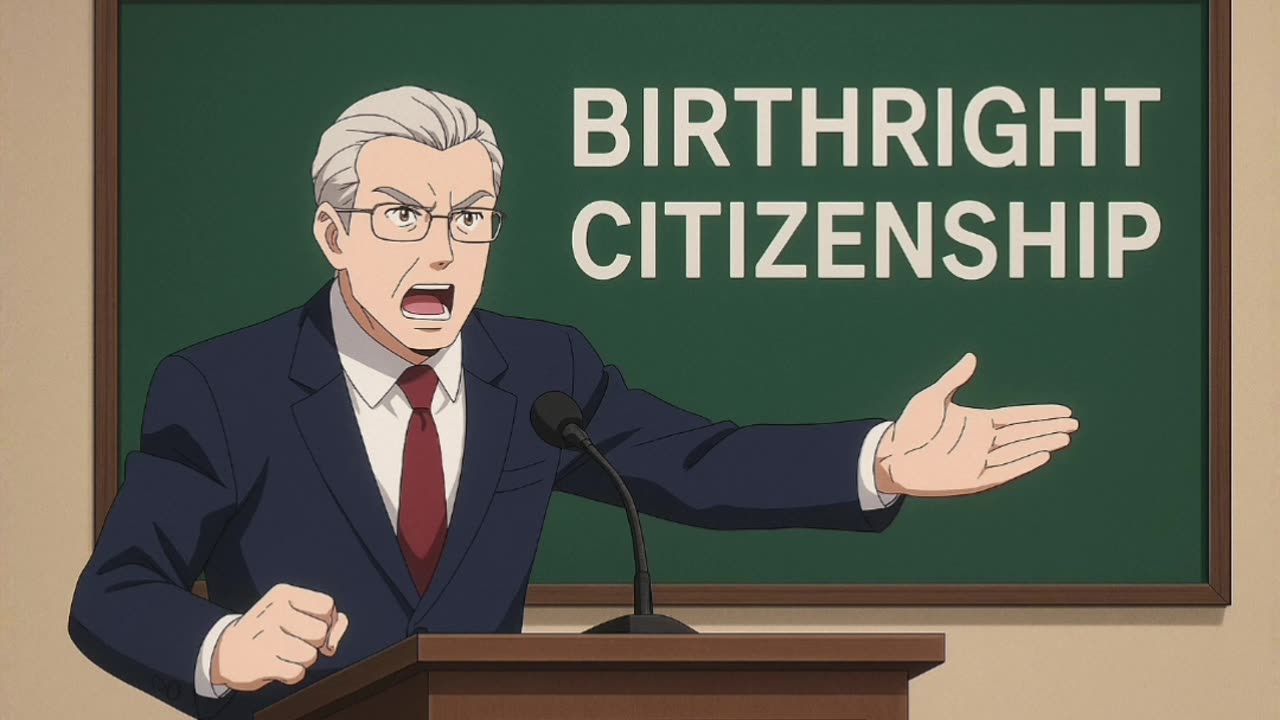
This misunderstanding has real consequences for national sovereignty
When we examine the issue of birthright citizenship, we must return to the original meaning of the 14th Amendment. The key phrase, “subject to the jurisdiction thereof,” was never meant to refer only to physical presence in the United States. It referred to allegiance.
Our laws recognize two kinds of jurisdiction: territorial and complete. Anyone within U.S. borders is under territorial jurisdiction and can be arrested or prosecuted. But complete jurisdiction—full and undivided allegiance—is different. It applies to citizens and lawful permanent residents, not to people who are here temporarily or unlawfully.
The framers of the 14th Amendment made this distinction clear. The amendment reflected the Civil Rights Act of 1866, which granted citizenship only to those born in the United States and “not subject to any foreign power.” The meaning was simple: if a parent still owes allegiance to another nation—whether as a visitor, temporary resident, or someone here illegally—their child does not automatically become an American citizen. Allegiance cannot be gained by accident or by exploiting a loophole.
History supports this view. In the late 1800s, the Supreme Court ruled that Native Americans born on U.S. soil were not automatically citizens because they owed allegiance to their tribes, not to the United States. If birth alone were enough, Congress would not have needed to later grant them citizenship by law. The principle was clear: birth alone does not create citizenship.
Some point to the Wong Kim Ark decision as proof that birthright citizenship applies to everyone. But that case involved parents who were lawful permanent residents living in the United States on a permanent basis. The Court did not rule on the children of illegal immigrants or temporary visitors. Applying that case to situations it never addressed is a misreading.
For decades after the 14th Amendment was adopted, the idea of automatic, universal birthright citizenship did not exist. The shift happened gradually through administrative practices, not a clear Supreme Court ruling. Over time, those practices hardened into an assumption that does not reflect the Constitution’s original meaning.
This misunderstanding has real consequences for national sovereignty. Every nation has the right to decide who joins its political community. Today, we see birth tourism, where people come to the United States solely to secure citizenship for their children and then return home. Citizenship should be based on mutual consent, not legal manipulation.
In short, restoring the original meaning of the 14th Amendment is about national integrity. Citizenship is the foundation of our political community, and it should rest on allegiance, consent, and the rule of law—not chance or exploitation.
-
 1:35:57
Game On!
15 hours ago $1.70 earnedNFL Super Bowl Props BEST BETS!
15.5K2 -
 1:06:40
Crypto Power Hour
13 hours ago $3.03 earnedCrypto Heist Bombshell: $40+ Million Stolen From Uncle Sam
21.2K1 -
 24:43
24:43
Jasmin Laine
15 hours agoTrump Team CALLS OUT Carney on Fox—Poilievre FACT-CHECKS Liberals Into SILENCE
19.7K18 -
 6:59
6:59
Gun Owners Of America
19 hours agoBBC Reporters Get Schooled On The Second Amendment
12.7K4 -
 29:46
29:46
Brad Owen Poker
23 hours ago $0.84 earnedI Hit QUADS, FULL HOUSES, And FLUSHES! WILD Player Falls For TRAP & OVERBETS HUGE! Poker Vlog Ep 363
13.8K1 -
 2:08:05
BEK TV
1 day agoTrent Loos in the Morning - 1/28/2026
14.9K -
 18:04
18:04
Actual Justice Warrior
15 hours agoWoman Says Black Girl Magic Means She Can STEAL Mansion
59.7K29 -
 19:54
19:54
Code Blue Cam
22 hours agoPolice Chase Ends in the Worst Crash Ever
23.5K4 -
 47:07
47:07
Coin Stories with Natalie Brunell
22 hours agoDr. Shawn Baker: How Big Food, Big Pharma & Bad Money Made America Sick
27.5K5 -
 1:58:50
MG Show
21 hours agoTrump's Calls Walz & Frey – Homan Leads, Local Law Enforcement Crushes Agitators
24.4K20