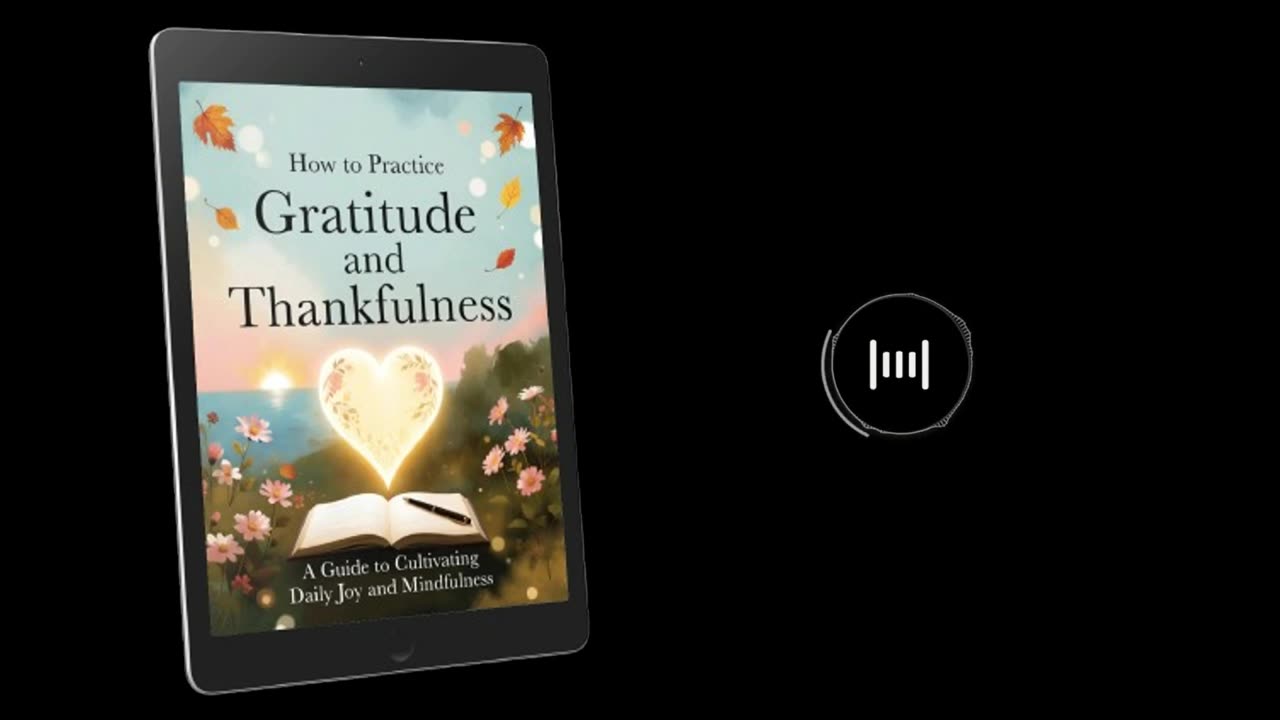
How to Practice Gratitude and Thankfulness
Today we're going to talk about a topic that can transform your life in a profound yet simple way: How to Practice Gratitude and Thankfulness. In the next few minutes, we're going to explore what gratitude is, why it's so powerful according to science, and, most importantly, how you can incorporate it into your daily life to feel happier, healthier, and more connected to the world.
Imagine for a moment: what if shifting your focus toward the positive could reduce your stress, improve your sleep, and even strengthen your immune system? It sounds incredible, doesn't it? Well, the good news is that science backs it up. Let's dive in.
First, let's define what gratitude is. Gratitude isn't just saying "thank you" out of politeness. It's a deep emotion: the recognition and appreciation of the good things in our lives, whether big or small. It could be thanking someone for a kind gesture, for your health, for a moment of peace, or even for the challenges that have helped you grow. Researchers like Robert Emmons, one of the pioneers in the study of gratitude, describe it as a strength that helps us focus on the positive rather than on what's missing.
Now, let's talk about the benefits. There are tons of scientific studies that confirm this. For example, Emmons and his colleagues at the University of California have shown that people who regularly practice gratitude report higher levels of happiness and reduced symptoms of depression. A study published in journals like Personality and Individual Differences shows that grateful people experience fewer physical aches and pains, feel healthier overall, and take better care of their bodies.
Psychologically, gratitude reduces toxic emotions like envy, resentment, or frustration. It activates brain regions related to empathy and emotional regulation, according to the Greater Good Science Center at UC Berkeley. It also improves sleep: people who write about what they're grateful for before bed fall asleep faster and sleep better. Physically, it's associated with better cardiovascular function, higher levels of good cholesterol, and a stronger immune system. And in relationships, it fosters empathy, reduces aggression, and strengthens bonds with others. In short, practicing gratitude doesn't just make you happier—it makes you more resilient and connected.
But how do we go from knowing this to making it a reality? The key is consistent practice. It's not about grand gestures, but small habits that build up over time. Here are some practical and effective ways to cultivate gratitude in your everyday life.
The number one, and the most recommended by experts: keep a gratitude journal. Every night before bed, write down three things you're grateful for from that day. They can be simple: the hot coffee in the morning, a pleasant conversation, or the fact that your body is functioning well. Be specific: instead of "for my family," say "for my child's laughter this afternoon." Studies show that doing this for just a few weeks significantly increases well-being and optimism.
Another powerful practice: express your gratitude to others. Write a letter or message to someone who has positively impacted your life and tell them. Don't just send it—if possible, read it to them in person or call them. This not only benefits the other person but multiplies your own happiness. A study by Martin Seligman, the father of positive psychology, showed that this exercise creates a huge mood boost, with effects lasting weeks.
Incorporating gratitude into daily moments is also easy. For example, during meals, give thanks silently or out loud for the food and the people who made it possible. Or take a gratitude walk: go for a stroll and, as you walk, notice the beautiful things around you—the sun, the trees, the air—and thank them mentally.
Another exercise: the gratitude jar. Each day, write something positive on a piece of paper and put it in a jar. At the end of the month or year, read them all. It's a visual and fun way to see how much good there is in your life.
And for those who are more mindfulness-oriented: practice gratitude meditations. Sit for a few minutes, breathe deeply, and focus on your heart area. Bring to mind people, experiences, or things you're grateful for, and let that feeling expand.
Remember, at first it might feel difficult if you're used to focusing on the negative—it's normal; our brains have a negativity bias for survival reasons. But with practice, it becomes a habit. Start small: just three things a day. In a few weeks, you'll notice the change.
To wrap up this episode, I invite you to a challenge: tonight, before bed, write down those three things. And tomorrow, express gratitude to someone. You'll see how, little by little, your perspective shifts—and with it, your happiness.
Thank you for listening today. If this episode has inspired you, share it with someone you'd like to thank. See you in the next one. Be grateful, be happy!
-
![Mr & Mrs X - Trans & Antifa Are Connected & The [DS] Is Using Them To Push The Insurrection - EP 22](https://1a-1791.com/video/fww1/64/s8/1/W/1/k/R/W1kRz.0kob-small-Mr-and-Mrs-X-Trans-and-Anti.jpg) 52:11
52:11
X22 Report
3 hours agoMr & Mrs X - Trans & Antifa Are Connected & The [DS] Is Using Them To Push The Insurrection - EP 22
49.4K4 -
 LIVE
LIVE
LFA TV
14 hours agoRUMBLE RUNDOWN with JEREMY HERRELL SHAWN FARASH 1.17.25 9AM
1,970 watching -
 LIVE
LIVE
VapinGamers
1 hour agoTools of the Trade - EP16 Music, Socials and Streaming - !alerts
285 watching -
 LIVE
LIVE
SOLTEKGG
1 hour ago🔴LIVE - We are Just Gaming
108 watching -
 1:14:16
Wendy Bell Radio
6 hours agoPet Talk With The Pet Doc
16.7K34 -
 LIVE
LIVE
Rotella Streams
13 hours agoFamily Friendly Saturday Morning Fortnite
224 watching -
 LIVE
LIVE
blackfox87
2 hours ago🟢Saturday Warzone Dubz | Premium Creator | #DisabledVeteran
83 watching -
 LIVE
LIVE
meleegames
3 hours agoFelicia Day Day THE FINALE - You’re Always Autistic on the Internet (forever)
271 watching -
 15:51
15:51
Actual Justice Warrior
2 days agoSocialists DESTROY Los Angeles Housing Market
21.2K9 -
 LIVE
LIVE
DoldrumDan
2 hours agoDEPTH 5 BOSS PRACTICE GRINDING DEPTH 5
76 watching