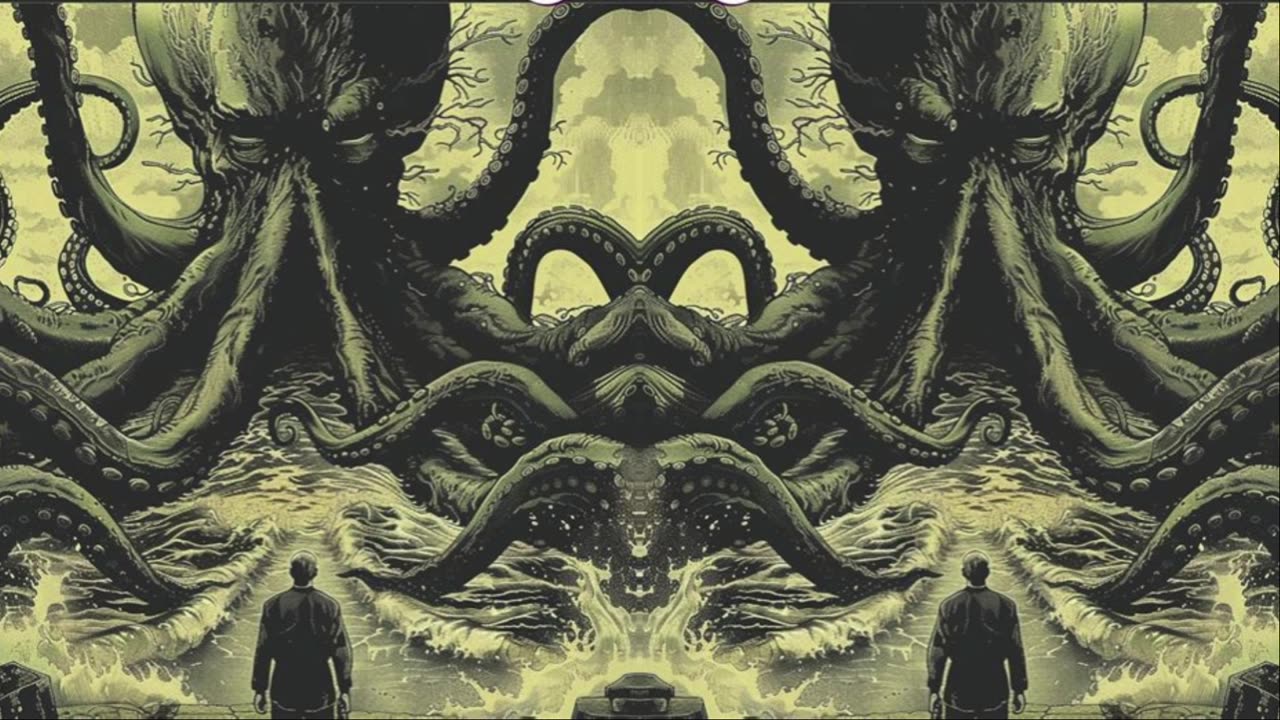
The Call of Cthulhu by: H. P. Lovecraft (1928)
This work is one of the foundational texts of modern horror and is best understood as an investigation into a reality that exists beyond human perception and control. The story is structured as a compilation of notes, reports, and secondhand accounts, through which a disturbing pattern slowly emerges. Rather than presenting horror as an immediate threat, the narrative treats it as a conclusion reached through careful study and reluctant understanding.
Lovecraft frames the story as a scholarly inquiry, emphasizing documentation, testimony, and accumulated evidence. Ancient cults, shared nightmares, and archaeological discoveries are presented with deliberate restraint, allowing the implications to carry the weight of the horror. The reader is not asked to fear what is seen, but to fear what is inferred. The gradual assembly of information mirrors the central danger of the story, which is that knowledge itself can be destabilizing.
At the core of the narrative is the idea that humanity is neither central nor secure in the universe. The entity known as Cthulhu is less important as a physical presence than as a symbol of a vast and indifferent cosmic order that predates human history. Evil is not portrayed as malicious or intentional, but as a byproduct of scale and age, operating without concern for human values, morality, or survival.
Historically, The Call of Cthulhu represents a decisive shift in horror literature. It rejects moral resolution and personal triumph in favor of uncertainty and intellectual unease. The story laid the groundwork for what later became known as cosmic horror and the Cthulhu Mythos, influencing generations of writers by demonstrating that terror can be achieved through implication, structure, and philosophical weight rather than spectacle.
About the Author:
H. P. Lovecraft (1890-1937) was an American writer whose work redefined the scope of horror fiction. Writing primarily for pulp magazines such as Weird Tales, he developed a literary approach that emphasized atmosphere, antiquarian scholarship, and the fragility of human understanding. His stories frequently center on forbidden knowledge and the psychological consequences of confronting truths that lie beyond rational comprehension.
Lovecraft viewed horror as an expression of humanity’s insignificance within a vast and impersonal universe. Although he achieved limited recognition during his lifetime, his influence expanded significantly after his death. His ideas and narrative methods became foundational to modern horror and speculative fiction, shaping a tradition that treats fear as an intellectual and existential experience rather than a purely emotional one.
-
 4:49:40
Deus Meum Que Jus
6 days agoThe Illiterate Digest by Will Rogers (1924)
477 -
 LIVE
LIVE
Drew Hernandez
21 hours agoILHAN OMAR HOLDS SHADOW HEARING TO FUEL MINNEAPOLIS INSURRECTION?
820 watching -
 LIVE
LIVE
SpartakusLIVE
4 hours agoThe Boys are BACK in Town || GloryJean, NurVes, & StevieT
731 watching -
 LIVE
LIVE
I_Came_With_Fire_Podcast
11 hours agoHealthcare Pays You | Iran Spotlight | Canada Cozies China | w/ Morgan Lerette, former Blackwater
270 watching -
 1:04:27
Sarah Westall
3 hours agoSilver 1:1 with Gold? The Hidden Gold That Changes Everything | Bix Weir
14.7K12 -
 2:10:40
PandaSub2000
5 days agoLIVE 9pm ET! | THAT ONE OTTER GAME w/Blabs!
8.35K5 -
 LIVE
LIVE
meleegames
2 hours agoFelicia Day Day - You’re Always Autistic on the Internet (forever)
116 watching -

Flyover Conservatives
22 hours agoThink You Don’t Have Enough Hours in the Day? You Do — 6 Moves That Make Time Work for You - Clay Clark | FOC Show
12.7K -
 LIVE
LIVE
SynthTrax & DJ Cheezus Livestreams
2 days agoFriday Night Synthwave 80s 90s Electronica and more DJ MIX Livestream REQUESTS AND VISUALS
199 watching -
 56:55
56:55
Patriots With Grit
3 hours agoThey Owe You For Your Data: Legally Holding Data Collectors Accountable | John Jay Singleton
6.05K2