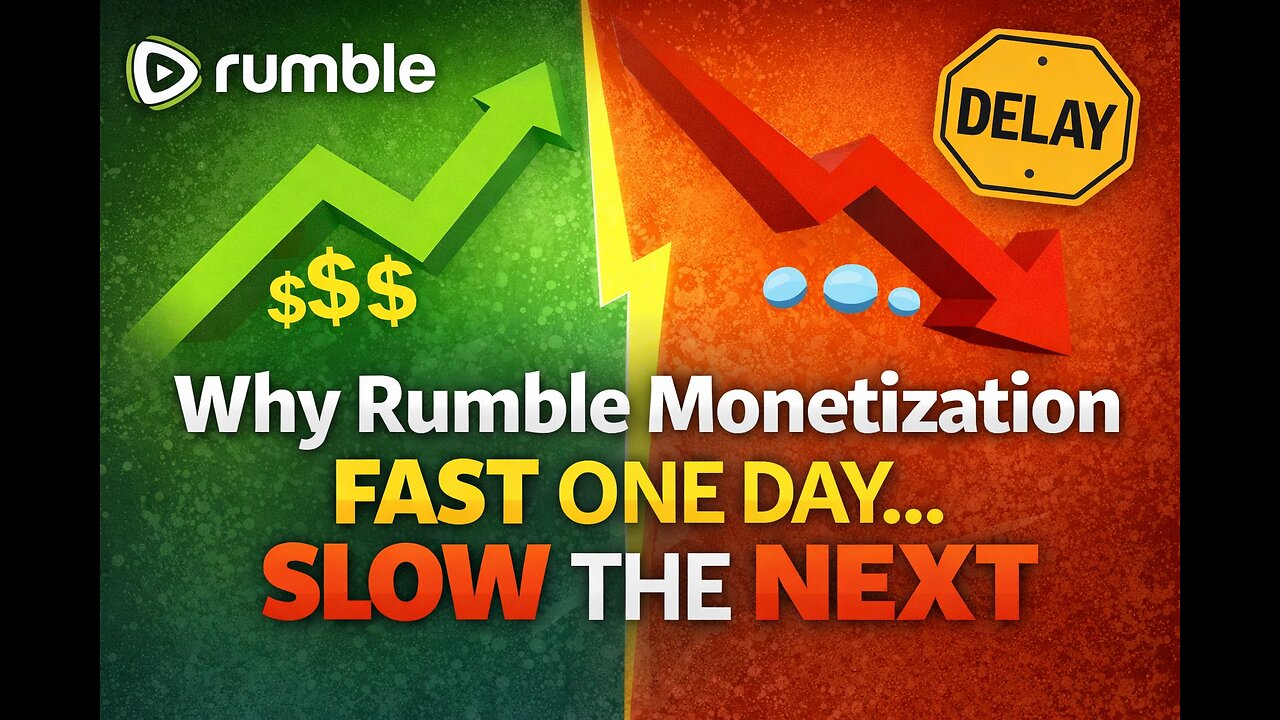
Why Rumble Monetization Is Fast One Day… and Slow the Next
Why Rumble Monetization Is Fast One Day… and Slow the Next
Why does one Rumble video monetize in minutes while another takes hours or even days?
If you’re a content creator on Rumble, this is one of the most confusing and frustrating parts of the platform and it’s also one of the most misunderstood.
In this episode of Rumble Rising, we break down what’s really happening behind the scenes when a video is waiting for monetization. This includes how human review works, why content type matters, how traffic spikes affect approval speed, what licensing choices do to your timeline, and how advertiser availability plays a major role in whether ads appear quickly or not.
Most creators assume delays mean punishment, suppression, or being ignored. In reality, monetization timing on Rumble is driven by a mix of review workload, content risk, advertiser demand, and regional ad inventory. Once you understand those systems, the process becomes a lot less stressful and a lot more predictable.
If you’re serious about building a long-term channel on Rumble, this video will help you avoid panic re-uploads, frustration, and bad assumptions that can hurt your growth.
👉 Like this video and follow the channel if you want more clear, honest platform education instead of rumors and guesswork.
👥 Join the Rumble Community on Facebook
The Rumble Community Facebook Group is where creators help creators.
We share analytics, growth tips, thumbnail feedback, monetization insight, and platform updates so no one has to figure things out alone.
Join here:
https://www.facebook.com/groups/rumble.community
If you’re building a Rumble channel, this group is one of the best places to ask questions, get support, and connect with other creators doing the same thing.
🔔 About Rumble Rising
Rumble Rising is a creator-focused show dedicated to explaining how Rumble actually works.
We cover monetization, search, analytics, licensing, live streaming, audience growth, and long-term creator strategy so you can build a channel that lasts.
-
 58:44
58:44
The Rubin Report
2 hours ago‘Shark Tank’ Legend Explains the Real Reason Gavin Newsom’s 2028 Chances Just Died
18.6K27 -
 LIVE
LIVE
Viss
2 hours ago🔴(LIVE) - AMASSING THE LARGEST WEAPONS STOCKPILE EVER | ARC RAIDERS
314 watching -
 LIVE
LIVE
SilverFox
14 hours ago🔴LIVE - TEABAG TUESDAY - ARC RAIDERS
58 watching -
 1:37:58
The Confessionals
1 hour agoThe Secret Rivalry of Fallen Angels (Why They Are Terrified of You)
391 -
 LIVE
LIVE
TheAlecLaceShow
1 hour agoTrump Accomplishments in 1st Year | Minnesota Riots & Fraud | Guest: Jim Pfaff | The Alec Lace Show
35 watching -
 LIVE
LIVE
LFA TV
15 hours agoLIVE & BREAKING NEWS! | TUESDAY 1/20/26
3,318 watching -
 LIVE
LIVE
The Mel K Show
2 hours agoMORNINGS WITH MEL K -Trump Brings the Heat to Davos Elite With Noor Bin Ladin- 1-20-26
1,048 watching -
 LIVE
LIVE
The Shannon Joy Show
2 hours ago🔥SJ LIVE Jan 20 - Epstein COVERUP Continues * Palantir ELITE App Ushers In Surveillance State - With Technocracy Founder Patrick Wood🔥
232 watching -
 42:23
42:23
Grant Stinchfield
1 hour agoThe Left's Newest Attack... Whole Milk is Not Just White… It's Also Racist!
2.7K5 -
 1:03:16
BonginoReport
4 hours agoTheir Excuses Aren't Working Anymore | Episode 207 - 01/20/26 VINCE
183K78