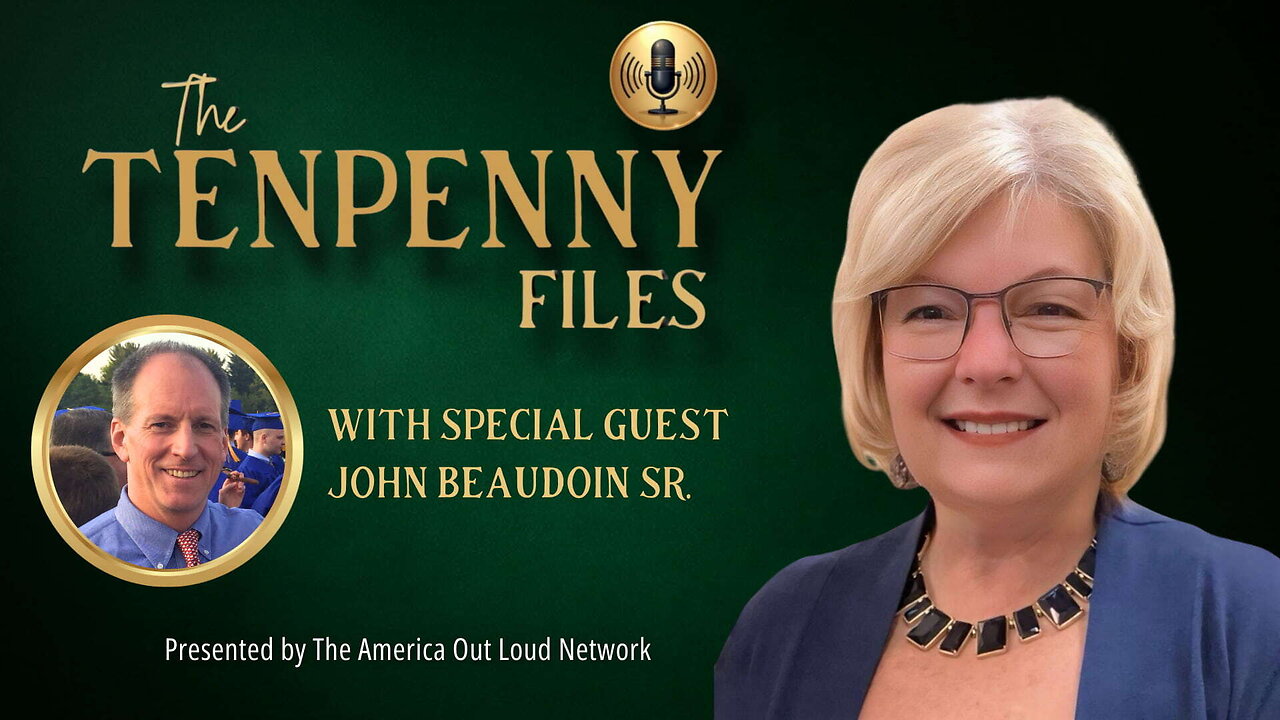
Acute kidney failure behind the excess deaths
Acute kidney failure has quietly become one of the dominant excess-death signals of the Covid era. It cuts across age, sex, and prior health status, appearing suddenly in people with no history of renal disease. Yet it remains largely absent from medical discussion, media scrutiny, and formal investigation.
John Beaudoin has spent years documenting why.
After securing more than 1.6 million official death records from four states, Beaudoin traced patterns that medicine never followed to their conclusion. Sudden kidney injury surged only after specific hospital drug protocols and financial incentives were introduced. The timing aligned across regions. The signal persisted year after year. Death certificates recorded COVID while omitting recent vaccination. Autopsies declined. Forensic follow-up faded from practice.
This conversation moves directly into how that happens inside modern medicine.
Beaudoin explains why epidemiology continues to rely on statistical frameworks that smooth away causality instead of isolating it. When distributions are averaged, inflection points disappear. When timing is ignored, responsibility dissolves. Real investigation begins by asking what changed, when it changed, and what followed. Those questions were rarely asked, even as organ failure accelerated.
The discussion expands beyond kidney injury into the structure of hospital systems themselves. Incentives embedded in emergency policy reshaped clinical behavior. Drug protocols associated with known renal toxicity became financially rewarded. Physicians operated inside algorithm-driven medicine, trained to follow centralized literature rather than interrogate the patient in front of them. Medicine advanced procedurally while evidence accumulated unexamined.
The conversation then turns to myocarditis.
Public attention narrowed to a small, highly specific injury category, while far larger signals affecting broader populations remained unexplored. Beaudoin explains how narrative selection shaped perception, professional focus, and research priorities, leaving systemic organ injury outside the frame.
From there, the discussion moves into law.
Beaudoin outlines how altered death records fueled mandates, how standing doctrine has repeatedly blocked courts from hearing evidence, and why his petition before the Supreme Court reaches beyond Covid itself. His analysis exposes a judicial system overwhelmed by volume, reliant on dismissal doctrines, and increasingly inaccessible to ordinary citizens seeking accountability.
The implications extend far beyond a single policy failure. When medicine does not investigate, and courts do not hear evidence, entire categories of harm persist without acknowledgment or remedy.
This episode presents documentation, timelines, and unanswered questions that remain unresolved because no institution has taken responsibility for answering them.
Links:
Rumble: The Last Boomer Podcast or johnbeaudoinsr
For Books: TheRealCdC.com
Substack: TheRealCdC.Substack.com
---
The Tenpenny Files airs on weekdays at 3 pm ET on America Out Loud Talk Radio. Listen on iHeart Radio, our world-class media player, or our free apps on Apple, Android, or Alexa. All episodes of The Tenpenny Files can be found on podcast networks worldwide, the day after airing on talk radio.
-
 53:48
53:48
America Out Loud
3 hours agoDisclosure, deception, and the last days
10 -
 LIVE
LIVE
Mally_Mouse
22 hours ago🎮 Let's Play!!: Fortnite
207 watching -
 LIVE
LIVE
LFA TV
22 hours agoLIVE & BREAKING NEWS! | FRIDAY 1/16/26
520 watching -
 LIVE
LIVE
OhHiMark1776
3 hours ago🟢 01-16-26 ||||| Rumble Pirate Ships ||||| BlackWake (2020)
91 watching -
 1:03:11
BonginoReport
9 hours agoExposing Renee Good’s Ties To WOKE School - Nightly Scroll w/ Hayley Caronia (Ep.215)
118K43 -
 LIVE
LIVE
Phyxicx
2 hours agoBlackwake Rumble Community Event! - 1/16/2026
77 watching -
 1:20:39
Kim Iversen
4 hours agoTrump CHICKENS OUT: Halts Iran Strike | Colonel Douglas Macgregor
94.9K137 -
![MAHA News [1.16]](https://1a-1791.com/video/fww1/79/s8/1/U/E/-/Q/UE-Qz.0kob-small-MAHA-News-1.16.jpg) 1:07:57
1:07:57
Badlands Media
5 hours agoMAHA News [1.16]
13.3K18 -
 LIVE
LIVE
Sgt Wilky Plays
1 hour agoWhy is the Rum Gone?
53 watching -
 LIVE
LIVE
Meisters of Madness
1 hour agoLet's Finish This
24 watching