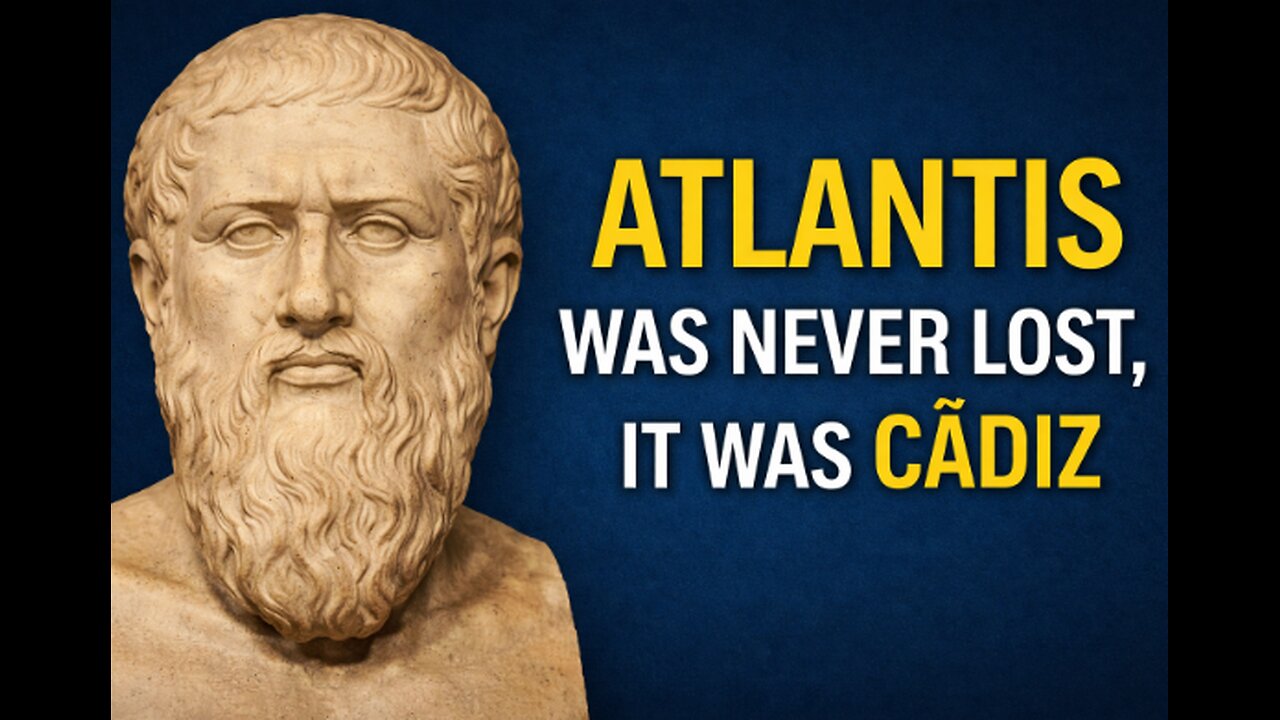
Atlantis and the Pillars of Heracles: Why Cádiz Changes Everything
For over 2,000 years, Atlantis has been treated as a myth or allegory. But what if Plato was being precise, not poetic?
In this episode, Michael Donnellan breaks down the Cádiz Atlantis hypothesis, focusing on ancient Gadir (modern Cádiz, Spain) and its connection to Plato’s Timaeus and Critias. Using the original Greek terms, ancient geography, and Bronze Age context, we explore why Atlantis may have been located just outside the Pillars of Heracles, exactly where Cádiz sits.
We examine the role of Tartessos, one of the wealthiest and most mysterious cultures of the ancient world, and how its sudden disappearance aligns with earthquakes, flooding, and the Late Bronze Age collapse. Rather than placing Atlantis in the open Atlantic or a lost super-continent, this analysis stays grounded in real geography, ancient sources, and historical timelines.
This is not fantasy archaeology. This is a text-based investigation into what Plato actually wrote, why later interpretations may have distorted it, and how southern Iberia fits the description better than any other region proposed so far.
If Atlantis was real, it was not lost to the ocean; it was buried by time, mistranslation, and assumption.
Topics covered:
Atlantis and Plato
Cádiz and ancient Gadir
The Pillars of Heracles
Tartessos and ancient Spain
Bronze Age collapse
Earthquakes and flooding myths
Myth vs history
If you’re interested in history without filters, ancient texts, and evidence-based alternative theories, you’re in the right place.
Subscribe for more deep dives into ancient history, lost civilizations, and forgotten knowledge.
Knowledge Is Power.
#atlantis #mythology
-
 1:29:33
The Gundie Awards
4 hours ago $6.67 earnedThe 7th Annual Gundies Red Carpet Pre-Show Presented by Eotech
42.2K4 -
 3:04:41
TimcastIRL
5 hours agoDOJ CONFIRMS Don Lemon, Leftists, To Face Charges For Storming Church | Timcast IRL
369K204 -

SpartakusLIVE
9 hours agoSHADOW BANNED || The FALSLY Accused Will Be EXONERATED
15.4K -
 3:50:43
Barry Cunningham
5 hours agoThe Game
59.6K72 -
 2:35:34
PandaSub2000
7 days agoMetroid Prime 3: Corruption | ULTRA BEST AT GAMES (Original Live Version)
13K -
 LIVE
LIVE
HEXIK
7 hours agoDiablo 2 - TERROR DIVISION - Rumble Stream Event
348 watching -
 LIVE
LIVE
WolfLinksShadow
2 hours agoMario Kart Monday!
157 watching -
 1:35:40
MattMorseTV
6 hours ago $21.59 earned🔴Absolutely NO ONE expected THIS...🔴
56K159 -
 2:06:43
TheSaltyCracker
6 hours agoArrest Don Lemon ReeEStream 01-19-26
89.6K193 -
 3:14:03
crgoodw1n
4 hours agoBACK ON ARC RAIDERS FOR THE NIGHT🔥 – Freshen Up Energy (Code GOODW1N)
5.25K