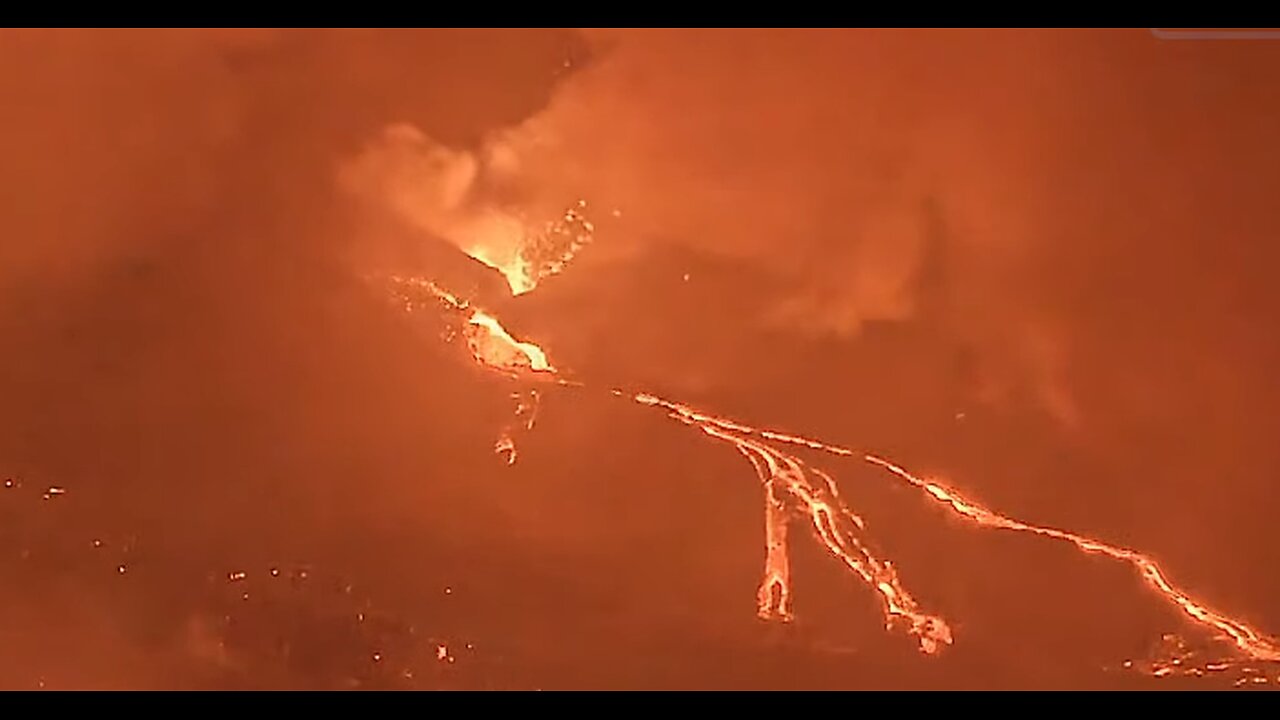
🔴 Live Now: Kilauea Volcano Watch in Hawaii (Multi-cams)
USGS REPORT Jan 10: Lava overflowed intermittently from the north and south vents in Halemaʻumaʻu overnight with only short breaks between flows. Dome fountaining and spattering have increased this morning along with tremor. Kīlauea summit region showed some overnight inflation on tiltmeter UWD but changed to a slight deflation with the onset of dual overflows this morning. Forecasting models suggest the window for episode 40 sustained lava fountaining is between January 10 and 14 but current activity suggests that episode 40 fountaining could begin anytime. Kīlauea’s East Rift Zone and Southwest Rift Zone remain quiet.
The four lava overflows that began on the afternoon of January 8 from the south vent transitioned to nearly continuous overflows from the north vent most of last night and this morning. At 5:12 a.m. HST this morning overflows began again from the south vent fed by 10 foot (3 meter) dome fountains while north vent flows diminished but spattering continued. Both vents began overflowing together around 7:00 a.m. with intermittent pauses of 5-10 minutes. Activity increased just before 7:30 a.m. and fountains roughly doubled in size to 20 feet (6 meters) and have remained constant since then. Seismic tremor increased around 7:00 a.m. when both fountains became active and again at 7:30 a.m. HST as fountaining intensity increased. Fountain heights and tremor have remained relatively constant since then.
Since the end of episode 39, the Uēkahuna tiltmeter (UWD) has recorded 23 microradians of re-inflation beneath Kīlauea summit, an increase of 1.3 microradians in the past 24 hours. Slight deflation began around 5:00 a.m. when the south vent overflowed. The deflation rate on UWD increased slightly at 7:00 a.m. HST when both vents became active and continues to deflate at that rate. The SMC tiltmeter mirrors the UWD tiltmeter, but SDH shows continued inflation, possibly influenced by the deeper south caldera magma chamber.
Volcanic gas emission rates have dropped significantly since the end of episode 39 but probably remain in the range of 1,000 to 5,000 tonnes of sulfur dioxide (SO2) per day, as typically observed during previous eruptive pauses. Winds are light out of the north (less than 10 mph or 2 m/sec) and are forecast to become more easterly as the morning progresses. The plume is moving to the south-southwest of Halema'uma'u.
The rapid rebound of inflationary tilt and presence of low-level volcanic tremor after episode 39 indicate that another lava fountaining episode is likely to occur. Nearly continuous overflows of the north vent overnight coupled with overflows from both vents this morning suggest the onset of episode 40 is close. The increased intensity of fountaining not associated with drainbacks, indicates the magma is becoming progressively more gas rich. Forecast models suggest the window for onset of episode 40 fountaining is between January 10 and 14, but the activity suggests it could start anytime and is highly likely to begin no later than the next 12--24 at the most. https://www.youtube.com/watch?v=FVdmnpJ2kM0
-
 15:53
15:53
Oppenheimer Ranch Project
8 days agoTrump Withdraws From Global Groups On Climate - The Food Pyramid Has Been Turned Upside-Down
9722 -
 LIVE
LIVE
The Mel K Show
1 hour agoMORNINGS WITH MEL K Manufactured Chaos & The Battle for Your Brain - 1-16-26
635 watching -
 1:01:31
BonginoReport
3 hours agoWho is Behind the Assaults on ICE? | Episode 205 - 01/16/26 VINCE
147K121 -
 1:36:46
Graham Allen
4 hours agoTERRORISM IN AMERICA | Trump’s Presidency May Hinge on the Insurrection Act
139K493 -
 2:03:58
Badlands Media
6 hours agoBadlands Daily: 1/16/26
33.3K13 -
 2:31:51
Matt Kohrs
13 hours agoPAYDAY FRIDAY: Live Day Trading OPEX Chaos
20.1K2 -

The Big Mig™
2 hours agoTrumpCare, The Great Healthcare Plan LFG!
5.03K5 -
 LIVE
LIVE
DoldrumDan
8 hours agoDEPTH 5 WINSTREAK STARTS NOW NIGHTREIGN MELEE IRONEYE
74 watching -
 1:10:13
Chad Prather
19 hours agoFaithful Where You Are, Fearless When It Counts
96.2K26 -
 LIVE
LIVE
EXPBLESS
2 hours agoToday We Hunt | Today We Demolish | Today We Win | Today We Will Not Faulter | LIVE Hunt Showdown!
44 watching