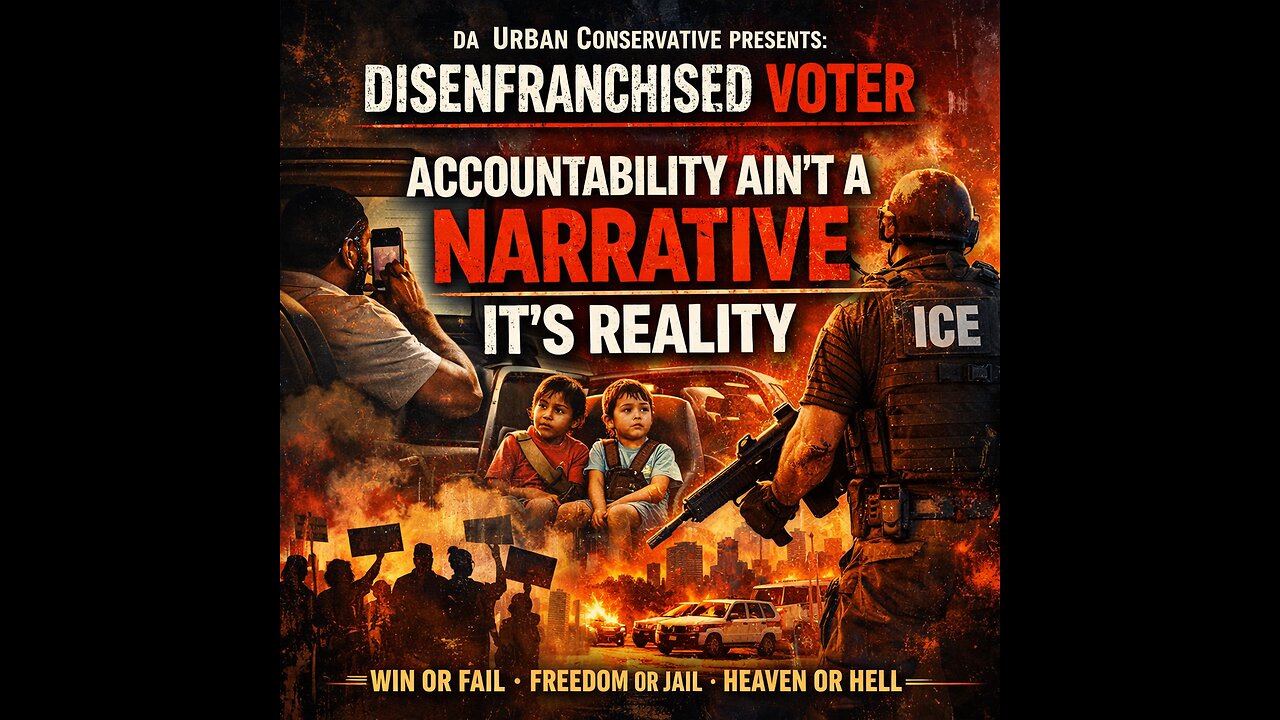
Accountability Ain’t a Narrative It’s Reality
Listen — I need y’all to hear this clearly. What happened with Mr. Minneapolis — the driver with two young kids in the back, a phone right in front of his face, not even pulling a booster seat for those babies — that wasn’t a victim story. That was reckless driving. That was bad judgment. That was a pattern of unsafe choices that put others at risk, and that’s not hard to say. Seatbelts aren’t optional. Kids in a vehicle? That’s responsibility, not inconvenience. And holding your phone up while you drive? That’s not being “targeted” — that’s being distracted behind the wheel. Period.
Now look I’m not here to gaslight anyone, but let’s have real talk about consistency.
Everybody’s got opinions about whose life matters and whose gets a headline, but when a mother of three — a U.S. citizen named Renee Good — got shot and killed by a federal agent during controversial ICE enforcement activity in Minneapolis, that story blew up nationally. Thousands protested. Politicians weighed in. There were chants in the streets. There was national controversy about federal vs. state jurisdiction, and what the video actually shows of the shooting. Good’s death sparked intense debate over use of force, how law enforcement engages civilians, and whether local voices were being shut out of the investigation — which was kept at the federal level.
Now let’s talk about coverage gaps. People ask: Why does Renee Good’s death dominate media cycles, while cases like Keith Porter Jr. and Donald Taylor hardly get attention? That’s a fair question. It’s not because one human life deservescoverage over another — it’s because narratives are shaped, and who gets amplified often depends on who has access to platforms and how storytellers frame the events.
Let me break that down
1. Media is not neutral — it’s selective.
When an event fits a larger political or cultural narrative — like immigration enforcement in Minneapolis just blocks from where George Floyd was killed — it gets traction. Good’s story intersects with national debates about ICE, federal power, protests, and policing. Folks wanna talk about that because it feeds into expanding narratives and partisan positions.
2. Not all tragedies get national attention because they don’t all fit the mass narrative machine.
Cases like Keith Porter Jr. — who was also killed by an ICE agent in Los Angeles on New Year’s Eve — did get vigils and local pushback, but it didn’t have the same national viral moment. That shouldn’t diminish the humanity of those lives, just show how media cycles choose what to spotlight.
3. Activism that gets mainstream coverage is often tied to organized movements.
Good’s death rapidly became a flashpoint because local organizers and national civil rights groups mobilized — and because video of the incident circulated that sparked outrage. Other stories don’t always have organized campaigns or viral footage, so they slip through the cracks.
Here’s the bottom line We’ve got to demand consistent justice, not conditional attention. We should care when someone’s life is lost in ambiguous or excessive force situations — federal, local, police, ICE, whoever. And we should always hold everyone accountable, no matter how the headlines swing.
But we also need to be honest about how narratives are shaped even within our own communities. Let’s call out lawlessness and dangerous behavior when we see it, whether it’s an unsafe driver putting kids at risk or a federal agent using deadly force with little transparency. Accountability isn’t about picking sides, it’s about insisting that rules apply equally to everyone.
Win or fail. Freedom or jail. Heaven or hell. Wish me well.
Because truth doesn’t need to be trendy — it just needs to be told.
-
 LIVE
LIVE
SavageJayGatsby
51 minutes agoWe Survived the Week – Let’s Game 🎮🔥💪🎉
181 watching -
 LIVE
LIVE
LFA TV
22 hours agoLIVE & BREAKING NEWS! | FRIDAY 2/13/26
2,546 watching -
 1:16:36
Nick Freitas
3 hours agoJapans Latest Election Was Historic!
10.9K2 -
 1:18:31
Kim Iversen
3 hours agoTrump’s Epstein cover-up problem
17.2K49 -
 LIVE
LIVE
Dr Disrespect
8 hours ago15–0. 10 WINS LEFT. | Warzone
1,211 watching -
 23:42
23:42
Stephen Gardner
4 hours ago🔥THIS IS WHY THEY’RE PANICKING!
15.2K31 -
 LIVE
LIVE
Red Pill News
4 hours agoEMERGENCY: DHS Targets Maricopa County Fraud on Red Pill News Live
3,698 watching -
 1:22:31
vivafrei
4 hours agoMAIDs in Canada w/ Kelsi Sheren! Epstein Fallout CONTINUES! RFK Jr. Set Internet ON FIRE!
110K42 -
 1:01:11
Russell Brand
7 hours agoStarmer Under Fire as Rupert Lowe’s Rape Gang Inquiry Opens — SF682
90.1K31 -
![MAHA News [2.13] RFK on Theo Von, GLYPHOSATE, Hims Peptides Under Scrutiny](https://1a-1791.com/video/fwe2/c1/s8/1/g/R/g/Z/gRgZz.0kob-small-MAHA-News-2.13.jpg) 1:20:39
1:20:39
Badlands Media
16 hours agoMAHA News [2.13] RFK on Theo Von, GLYPHOSATE, Hims Peptides Under Scrutiny
43.8K5