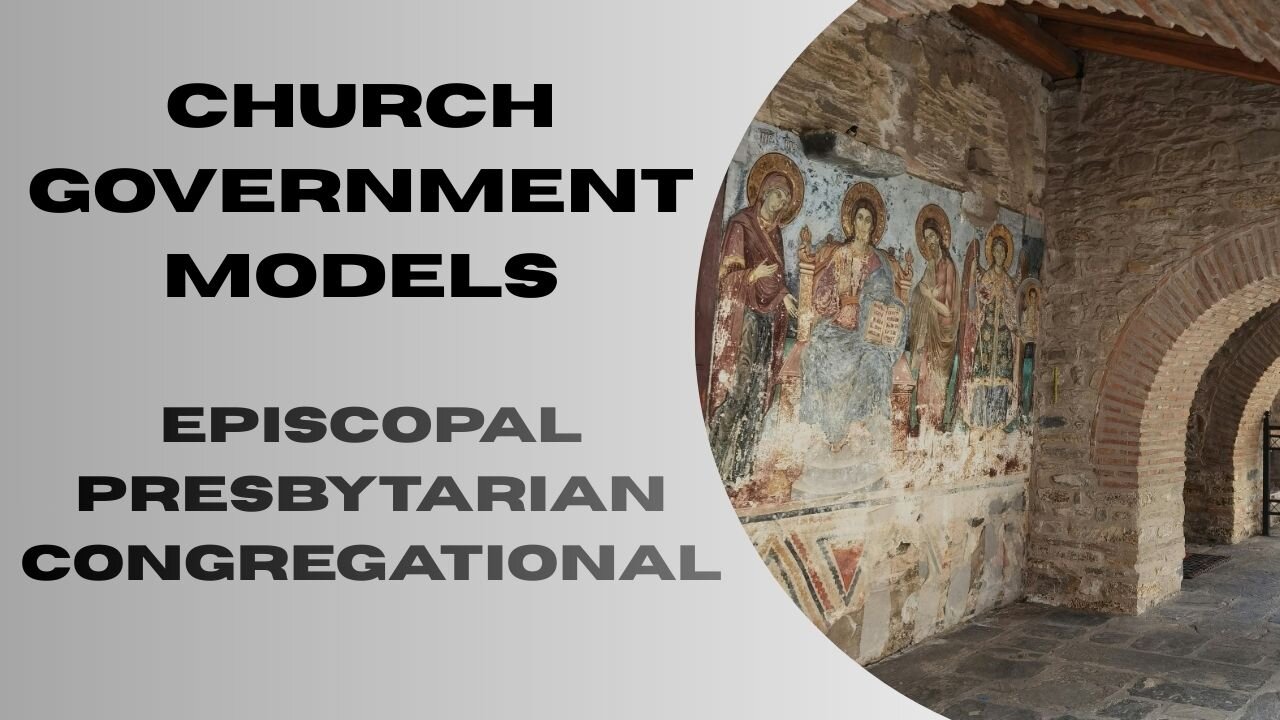
Church Government Models | Pastor William Hixson | Athens Bible Church
I asked Google AI for an opinion; here is the breakdown:
The three primary models of church governance are Episcopal, Presbyterian, and Congregational, each with distinct structures and decision-making processes.
1. Episcopal Governance
Structure: This model is characterized by a hierarchical system where authority is vested in bishops. Bishops oversee multiple congregations and have significant decision-making power.
Characteristics: The governance structure includes bishops, priests (or presbyters), and deacons. Bishops hold ultimate responsibility and sacramental authority, while priests lead local congregations under the bishop's oversight.
Strengths: Clear lines of authority and unity within the church. It can facilitate efficient decision-making and maintain continuity in doctrine and practice. This model is prevalent in the Roman Catholic Church, Anglican Church, and Orthodox Churches.
2. Presbyterian Governance
Structure: Governed by a body of elders (presbyters) who share authority. Decisions are made collectively, with a session of elders governing each local congregation.
Characteristics: This model emphasizes a representative system where elders are elected by the congregation. It includes a presbytery (regional body) and potentially a synod (wider assembly) for broader decision-making.
Strengths: Promotes accountability and shared leadership, reducing the risk of authoritarianism. It allows for a balance between local autonomy and connection to a larger church body.
3. Congregational Governance
Structure: In this model, the local congregation holds the primary authority. Decisions are made by the members, often through voting on key issues such as budgets and leadership appointments.
Characteristics: Each congregation operates independently, with minimal external oversight. Leadership roles may include pastors and deacons, but the congregation retains ultimate decision-making power.
Strengths: Encourages participation and accountability among members, fostering a sense of ownership and responsibility for the church's direction. However, it can lead to divisiveness if not managed well.
-
 57:45
57:45
Athens Bible Church - Pastor Bill Hixson
8 days agoGreat Texts of the Bible: One Like Moses | Deuteronomy 18:15 | Pastor William Hixson
231 -
 34:21
34:21
Stephen Gardner
3 hours agoNew Trump Crackdown: Noem EXPOSES Minnesota Chaos – ICE Attacked, Insurrection Act On The Table
56.4K48 -
 3:28
3:28
RidiculousRides
9 hours ago $1.46 earned1950s Aston Martin Restored To $500,000 Masterpiece
11.3K3 -
 2:12:59
Steven Crowder
7 hours agoJoe Rogan is Deadass Wrong on ICE: We Need to Go Even Harder
528K504 -
 2:59:42
Wendy Bell Radio
8 hours agoNo More Effs To Give
105K177 -
 1:09:39
Sean Unpaved
4 hours agoGiants Hire Their Next Head Coach - John Harbaugh! | UNPAVED
49.8K -
 1:31:50
Simply Bitcoin
5 hours ago $1.34 earnedCoinbase JUST DESTROYED NEW Bill but NOT For The Reasons You Think...| EP 1419
34.2K2 -
 1:09:22
The Rubin Report
6 hours agoIlhan Omar Horrified When Reporter Proved She’d Done Her Homework
78.3K135 -
 LIVE
LIVE
LFA TV
18 hours agoLIVE & BREAKING NEWS! | THURSDAY 1/15/26
1,314 watching -
 LIVE
LIVE
Viss
6 hours ago🔴(LIVE) - The Plan Starts at 5 Million… | Arc Raiders LIVE
173 watching