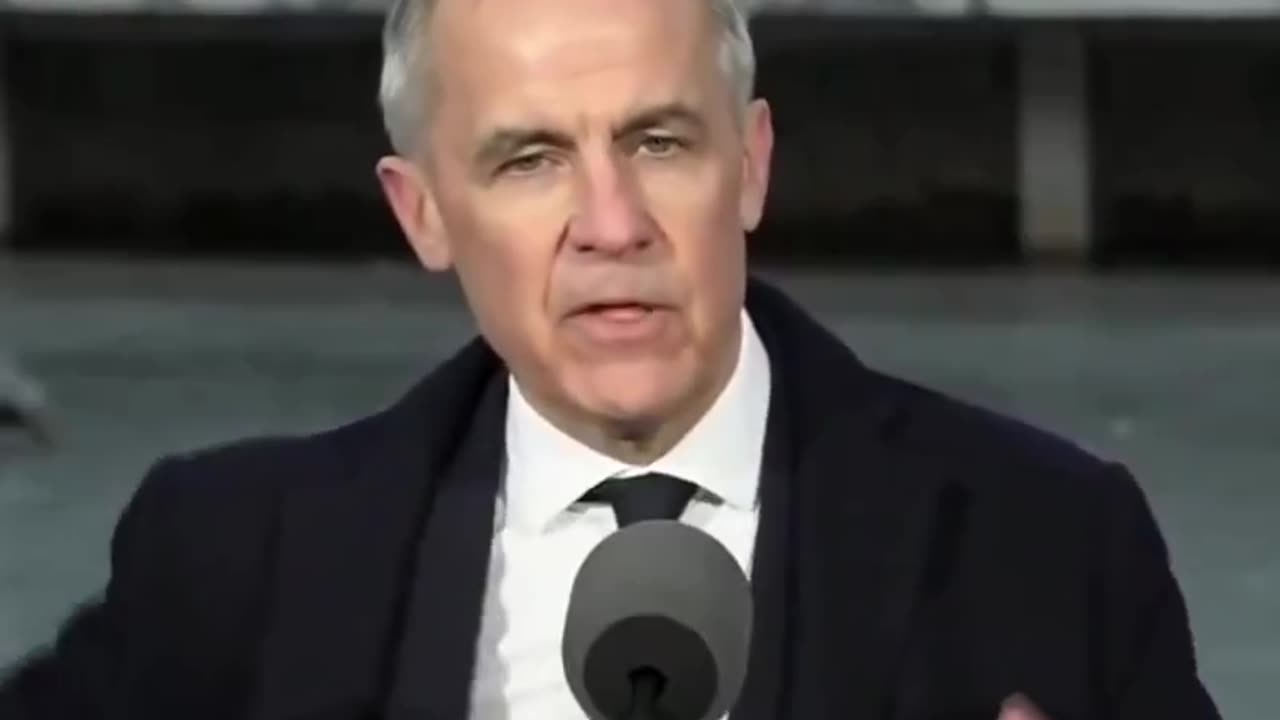
Carney on the ‘New World Order’: Global Trade, Finance, and Power Shifts
Transcript:
That’s a good question, because the world is still determining what that order will be.
First and foremost, we’re talking about how global trade will be governed. What role will the WTO play going forward? How important will bilateral and plurilateral trade agreements be, such as the partnerships we’re developing?
We’re also looking at how these agreements may link with other frameworks — for example, potential connections between trans-Pacific partnerships and the European Union.
Another major question is where financial regulation and payment-system regulation will fit into this evolving system.
The multilateral architecture that has developed over decades is being eroded. The question now is: what replaces it?
Will the new system be a patchwork of bilateral agreements, or will like-minded countries come together in specific areas to set rules?
‘Like-minded’ doesn’t mean agreement on everything. It can apply to areas such as digital trade, agriculture, climate finance, energy, and financial services.
We’re also seeing new coalitions form around geostrategy and geosecurity.
In practice, this means cooperation in areas like clean energy, conventional energy, agriculture, financial services, and the evolution of the global financial system — including cross-border payments and currency use.
Rather than these rules being developed solely through global institutions like the IMF or WTO, they are increasingly being shaped by coalitions of countries, often focused on specific regions or sectors.
-
 5:28
5:28
Canadian Citizens Journal
1 day agoStealing from Dans Country Market is a small business in Saint John New Brunswick
33 -
 LIVE
LIVE
BonginoReport
7 hours agoExposing Renee Good’s Ties To WOKE School - Nightly Scroll w/ Hayley Caronia (Ep.215)
10,614 watching -
 DVR
DVR
Kim Iversen
3 hours agoTrump CHICKENS OUT: Halts Iran Strike | Colonel Douglas Macgregor
23.5K77 -
 LIVE
LIVE
Nerdrotic
3 hours ago $16.41 earnedKathleen Kennedy OUT | Starfleet Academy ISNT Star Trek - Friday Night Tights 389 w YellowFlash
3,057 watching -
 1:13:11
vivafrei
4 hours agoCanada's Deal with the Devil! FBI Wrongdoer Promoted Again? AND MORE! Special Guest Kyle Seraphin
52.4K45 -
 1:04:58
Russell Brand
4 hours agoThe Money Is Breaking — And So Is the System | Max Keiser — SF670
113K35 -
 1:07:38
MattMorseTV
5 hours ago $22.44 earned🔴Trump just CALLED their BLUFF.🔴
69.5K229 -
 LIVE
LIVE
Dr Disrespect
7 hours ago🔴LIVE - DR DISRESPECT - ARC RAIDERS - SLICE AND DICE
1,003 watching -
![[Ep 827] Protests, Riots, or Terror? | All-Star Guest Line-Up!!](https://1a-1791.com/video/fww1/d9/s8/1/I/P/-/Q/IP-Qz.0kob-small-Ep-827-Protests-Riots-or-Te.jpg) LIVE
LIVE
The Nunn Report - w/ Dan Nunn
4 hours ago[Ep 827] Protests, Riots, or Terror? | All-Star Guest Line-Up!!
106 watching -
 1:10:22
The Tom Renz Show
2 hours agoJustice For J6? Not Without someone Growing a Spine!
19.5K3