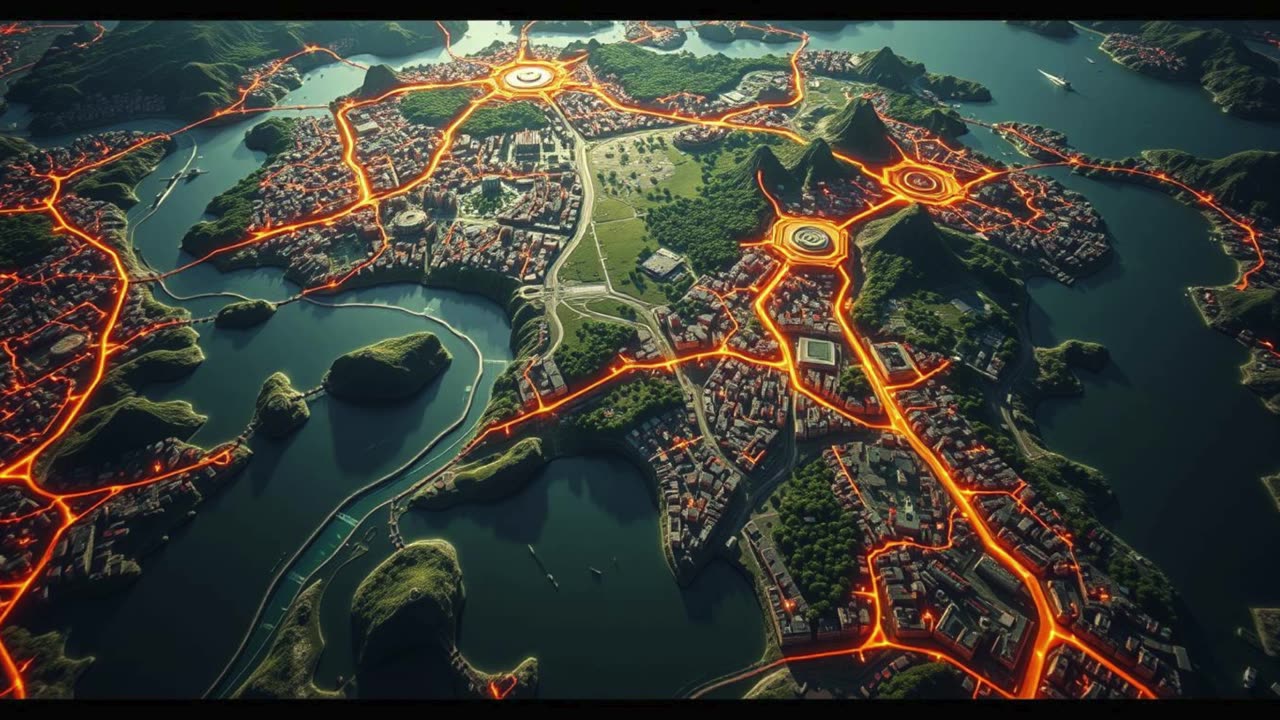
Megaregions & The Codex
how this codex relates to the concept of megaregions:
1. Decentralized, Bioregional Network Design for Megaregions
Decentralized Wave-Form Lattice Expansion:
Beyond traditional megaregions that often develop as sprawling, loosely connected urban clusters, this codex proposes a wave-form lattice grid with octagonal nodes spaced fractally (2.5-20 km scale, nodes 20-50 km apart). This creates a distributed, interconnected network rather than centralized megacities, which can reduce congestion, improve resilience, and local autonomy within the megaregion.
Scale & Population:
The codex’s bioregional network covers 277,391 km² with 50-100 nodes and a population capacity of nearly 8 billion, reflecting the scale at which megaregions operate but emphasizing balanced development.
Development vs. Ecosystem Recovery:
A strict 23% built environment / 77% ecosystem recovery ratio is enforced, ensuring that megaregions maintain or restore natural ecosystems alongside urban growth. This counters typical megaregion sprawl that often degrades ecosystems.
2. Integrated Multi-System Approach
Interlaced Systems (Water, Energy, Food, Materials, Social, Ecological):
Megaregions are complex systems with overlapping infrastructures and social dynamics. The codex’s emphasis on interlocking water-energy-food-material-social-ecological cascades supports resilient, self-sufficient nodes that together form a robust megaregion.
Renewable Energy & Autonomy:
Targets 100% renewable energy with distributed microgrids and 95%+ energy autonomy, crucial for megaregions to reduce carbon footprints and enhance energy security.
Water Recycling & Food Production:
High levels of water recycling (85-95%) and local food production (35-50%) reduce dependence on distant resources, mitigating vulnerability in megaregional supply chains.
3. Structural and Demographic Diversity as Core Principles
Multi-Species, Multi-Cultural, Multi-Functional Integration:
The codex’s insistence on structural diversity—including biodiversity, cultural diversity (Linguistic Waypoint Index ≥ 0.30), and functional diversity (15+ use types per cluster)—mirrors the social and ecological heterogeneity found in megaregions.
Demographic Mix & Social Equity:
Balanced age distribution and income mix with 30% affordable housing ensure social inclusivity, addressing common megaregion challenges of inequality and segregation.
Architectural and Ecological Diversity:
The design incorporates wildlife corridors, pollinator gardens, and companion animal infrastructure, which are vital for maintaining biodiversity in megaregions where natural habitats are fragmented.
4. Ecosystem Recovery and Long-Term Sustainability
Ecosystem Recovery Index (ERI):
With a 60-year timeline aiming for old-growth forest equivalence and high ecosystem health (EHI ≥ 0.9), the codex sets a long-term horizon for ecological restoration within megaregions, balancing urbanization with nature.
Carbon Sequestration & Water Quality:
Net positive carbon sequestration within 15 years and high water quality targets align with megaregion goals to combat climate change and protect vital water resources.
5. Mobility and Connectivity in Megaregions
Pedestrian Priority & Public Transit:
The codex prioritizes walkability (80% of trips under 2 km), cycling infrastructure, and electric autonomous public transit, which can drastically reduce car dependency and emissions in megaregions.
Road Minimization:
Limiting paved surfaces to 12% helps reduce habitat fragmentation and urban heat island effects.
6. Data, Communication
Open Data & Digital Commons:
Transparent environmental monitoring and community-owned digital infrastructure of collaborative management across megaregional nodes, enabling adaptive management and resilience.
7. Mathematical and Design Foundations for Megaregion Planning
The Decentralized Wave-Form Grid-Matrix (DWGM) formula and fractal lattice design provide a scientific basis for planning megaregions that balance density, diversity, and ecosystem integration.
Summary: How This Codex Reimagines Megaregions
This codex offers a holistic, systemic framework for megaregions that:
Moves away from sprawling, centralized urban clusters toward decentralized, fractal networks.
Prioritizes ecosystem recovery and biodiversity alongside human development.
Embeds social, cultural, and functional diversity as fundamental design pillars.
Integrates renewable energy, circular materials, local food, and water systems for sustainability.
Encourages walkability and public transit to reduce environmental impacts.
Uses data transparency and community governance for resilient management.
This approach could redefine megaregions as living, breathing socio-ecological networks that thrive through balance and integration rather than unchecked growth. It is a hopeful, actionable vision for future urban and regional planning aligned with sustainability and resilience.
-
 LIVE
LIVE
Steven Crowder
2 hours ago🔴Is Trump Backing Down or Doubling Down in Minnesota: Special Guest Nick Sortor
64,800 watching -
 LIVE
LIVE
The Rubin Report
1 hour agoIlhan Omar Finally Got Scared After Investigation Into Her $5M Winery Just Went Viral
2,322 watching -
 UPCOMING
Wendy Bell Radio
3 hours agoTrump to Tampon Tim: It Stops Now.
4.35K34 -
 LIVE
LIVE
LFA TV
14 hours agoLIVE & BREAKING NEWS! | TUESDAY 1/27/26
4,852 watching -
 1:00:18
BonginoReport
3 hours agoThe Minneapolis Story the Media Isn't Telling You | Episode 212 - 01/27/26 VINCE
173K71 -
 1:42:18
Benny Johnson
2 hours agoVICTORY: Tim Walz CAVES To Trump, Police Start ARRESTING Rioters & Working With ICE | O'Keefe LIVE
33.3K40 -
 LIVE
LIVE
Chad Prather
1 hour agoMinnesota BENDS THE KNEE, Sends In Local Police After Trump’s Call To Walz, Frey + Is It Over?!
724 watching -
 UPCOMING
MYLUNCHBREAK CHANNEL PAGE
1 hour agoMountains are Military Bases?
5631 -
 UPCOMING
The Shannon Joy Show
2 hours ago🔥SJ LIVE Jan 27 - Trump & Walz Stand Down In Minnesota - Did American Civilians Just Beat The Psyop? With Guest Matt Kibbe! 🔥
180 -
 UPCOMING
Grant Stinchfield
40 minutes agoTaking Back American Health Sovereignty - Why The US Finally Left The WHO