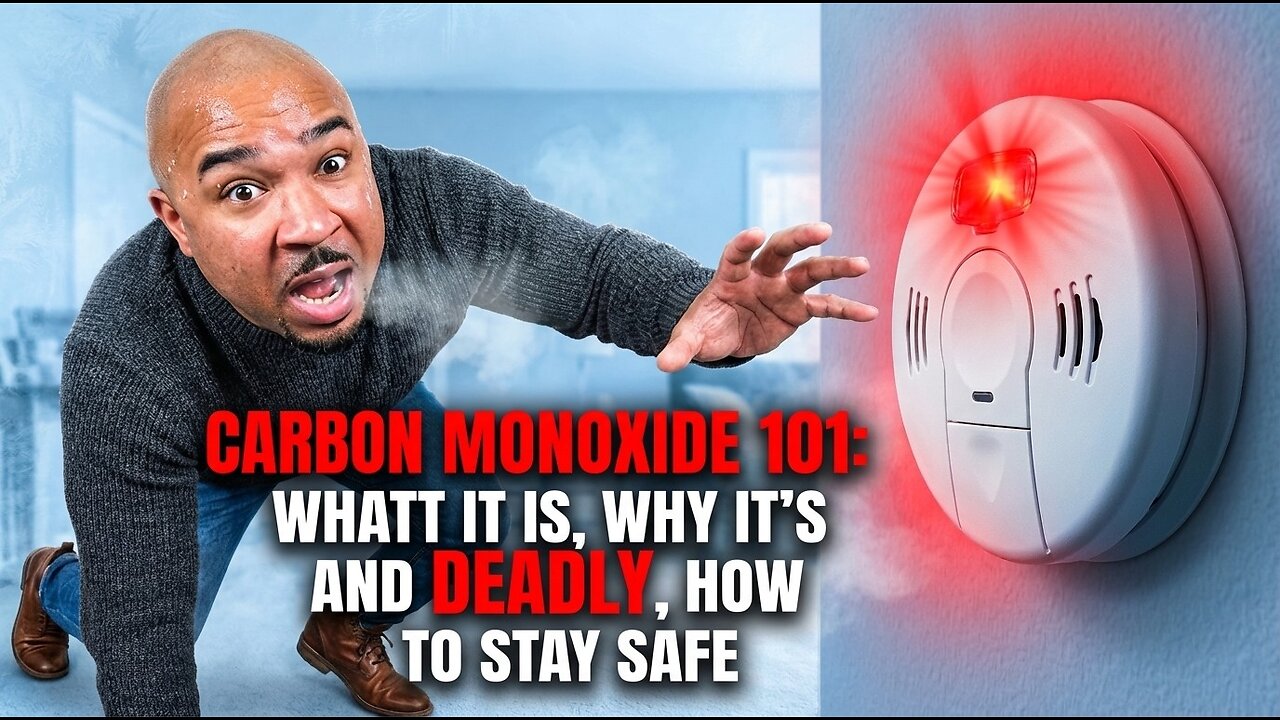
Why Carbon Monoxide Poisoning Happens So Fast
Some of the most dangerous threats we face don’t look dramatic. They don’t make noise. They don’t smell like smoke or feel like fire. Carbon monoxide is one of those threats — silent, invisible, and deadly.
This video breaks down why carbon monoxide poisoning happens, how it quietly overwhelms the body, and why it becomes especially dangerous during power outages, storms, and cold weather emergencies. Carbon monoxide is released whenever fuel burns without enough fresh air — gas, propane, charcoal, wood, gasoline — and once it builds up indoors, it replaces oxygen in your blood. Your body slowly shuts down without realizing what’s happening.
Amazon affiliate links:
Carbon Monoxide Detector (battery-powered)
https://amzn.to/4pQoNGH
Portable Indoor-Safe Propane Heater (e.g., Mr. Heater Buddy style)
https://amzn.to/4sqyCNh
Propane Heater Adapter Hose (20 lb tank hose / quick connect, depending on heater)
https://amzn.to/49jArUt
Propane Tank Gauge (helps avoid running out mid-outage)
https://www.amazon.com/s?k=propane+tank+gauge
Battery-Powered LED Lantern (safer than candles during outages)
https://amzn.to/4p8iEV1
What makes this danger so deadly is how normal it feels at first. Headaches. Dizziness. Nausea. Fatigue. Confusion. Many people assume they’re getting sick, lie down to rest, and never wake up. This isn’t panic — it’s biology.
During outages, people are just trying to survive. We need heat. We need light. We need power. That’s when generators, grills, heaters, and camp stoves get pulled out. The mistake isn’t intention — it’s placement. Running fuel-burning equipment inside homes, garages, basements, or too close to doors and windows allows carbon monoxide to seep inside and accumulate quickly, especially when homes are sealed tight to keep warm.
-
 1:17:52
vivafrei
2 hours agoWhy Has the Civil Rights Division IGNORED Alex Jones Persecution? Matt Walsh CROSSES A LINE! & MORE!
36.2K32 -
 1:17:00
Russell Brand
4 hours agoThe Cost of Facing the Past — SF683
82.6K8 -
 12:26
12:26
Clyde Do Something
6 hours ago $0.47 earnedPresident Trump SUPPORTS Alberta’s Right to Leave Canada
8.98K5 -
 7:52
7:52
Isabella Moody
1 hour agoWomen Like THIS Are Why Men Don’t Want to Get Married Anymore
293 -
 LIVE
LIVE
freecastle
5 hours agoTAKE UP YOUR CROSS- Let LOVE be WITHOUT hypocrisy. Abhor what is evil; CLING to what is GOOD!
62 watching -
 1:30:31
The Quartering
3 hours agoAOC HUMILATED, MICHAEL JORDAN CONTROVERSY, DAD KILLS DAUGHTER OVER TRUMP, "HOT" TEACHER ARRESTED
129K29 -
 1:50:10
MattMorseTV
3 hours ago $14.07 earned🔴They ACTUALLY DID IT.🔴
28.7K121 -
 LIVE
LIVE
Dr Disrespect
6 hours agoHEY! YOU GOT A PROBLEM!? | ARC Raiders
1,008 watching -
 LIVE
LIVE
Decoy
2 hours agoLawsuits are coming
143 watching -
 LIVE
LIVE
Viss
5 hours ago🔴(LIVE) - WEAPON STASH MASTER PLAN: 9 Days Remaining | ARC RAIDERS
92 watching