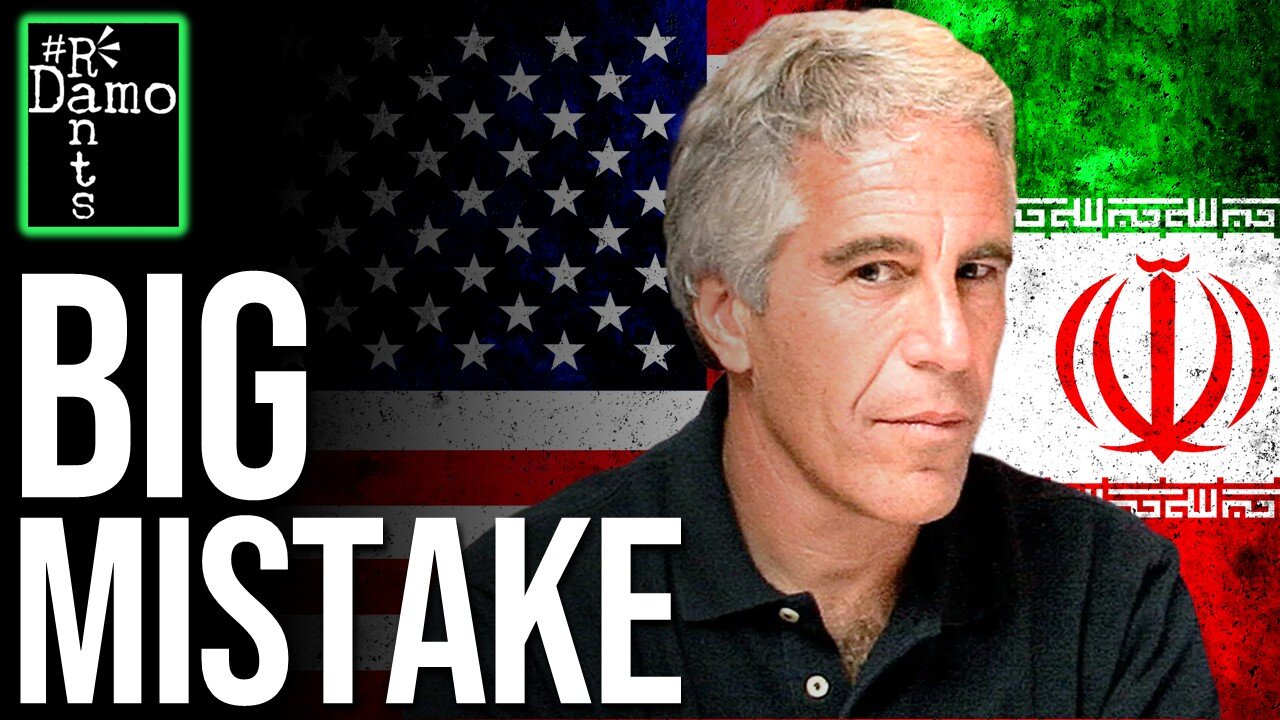
Epstein Files Just Changed Trump’s Survival Options
Right, so Donald Trump has been named again in Epstein-related material, and the important part isn’t shock, outrage, or whether anyone thinks this finally changes anything because it doesn’t. What’s changed is procedural. The material has come out through a formal process, his name is back on the live record, and he’s been forced to respond in public again just when he thought he’d buried it after the last lot of revelations. Well sorry not sorry Donnie, this is never going to go away and nor should it.
And Trump’s response tells you everything you really need to know. He hasn’t denied the documents exist. He hasn’t challenged their release. He’s simply insisted that whenever his name appears, that part is distorted or malicious, while the rest of the record apparently stands. That kind of denial doesn’t close anything. It’s childish, arrogant and take the global public for fools, but above all else, it doesn’t make it go away either. It keeps the issue alive.
But Trump has a disturbing track record whenever these kids of revelations come out for looking for a distraction to bury it in the news cycle and with his ships all lined up in a row right now, and all despite reports of ongoing talks, Iran must be looking awfully tempting right now.
Right, so Donald Trump has been named again in newly released Epstein-related material, because of course he has, he’s been named more times than Epstein himself has and the important thing about that is not novelty, not shock, and not whether anyone thinks it changes the legal picture, because it doesn’t.
The papers are out. Not leaked, not teased, not backgrounded. Out through a process that puts them on the record. Trump’s name is back in them, formally, and that matters because it raises the cost of the noise he has to generate in response. He was always going to speak out against it. The difference is that now, whatever cheap talk he chooses to chunter doesn’t work.
Just look at what he actually says. He doesn’t claim the documents are fake. He doesn’t say they shouldn’t exist. He just says that when his name appears, that part is wrong, twisted, malicious, while the rest of the material apparently stands.
But that’s the infantile bind he puts himself in. Trump’s whole way of dealing with problems is to flood the space. He doesn’t answer questions, he doesn’t resolve issues, and he doesn’t wait for things to pass. He throws out more statements, more fights, more outrages, more headlines until whatever was causing trouble gets buried under something louder. That’s not accidental. That’s the method. It’s how he’s always operated.
The Epstein material breaks part of that method.
Not because it proves anything new, and not because it suddenly makes prosecution likely. It breaks it because the story keeps coming back through formal channels he doesn’t control. Court releases. Document unsealing. Procedural steps that put his name back on the record whether he likes it or not. Every time that happens, the old level of noise stops being enough to bury it.
So when I say “the volume required to drown it out keeps rising”, I mean this very literally:
what used to distract people no longer does.
A normal Trump outburst. A routine scandal. A social media meltdown. That used to be enough to reset the agenda. Now it isn’t. The Epstein issue still sits there underneath, because it’s being reactivated by process, not by gossip or media interest.
That’s the change.
And this is where mainstream coverage gets it wrong. They keep asking, “Does this prove guilt?” or “Does this cross a legal threshold?” That lets everyone pretend nothing matters unless a charge appears. But Trump’s vulnerability has never been primarily legal. It’s loss of agenda control.
Once he can’t simply say “this is over” and have the system comply — once allies, institutions, and media no longer move on just because he says so — he loses narrative authority. And narrative authority is the thing that lets him survive unresolved scandals in the first place.
So the consequence isn’t a courtroom problem. It’s a pressure problem.
If cheap distractions don’t work anymore, only more expensive ones do. Louder moves. Bigger stages. Higher-risk theatres. Not because he wants drama for its own sake, but because the method demands escalation once its lower settings fail.
That’s the point. Not psychology. Not intent. Mechanics.
The system he uses to survive pressure now requires more force to function than it used to — and that’s what makes it dangerous, not the documents themselves.
Trump has never survived by persuading people he’s right. He survives by making the argument irrelevant. He overwhelms the space so completely that unfinished business gets buried under whatever the next, louder thing is. When that works, his denials don’t need to be convincing. They just need to sit there long enough for attention to move on.
The Epstein material breaks that cycle.
Not because it proves something new, but because it won’t stay buried. It doesn’t appear once and fade. It keeps coming back through formal releases, on a timetable he doesn’t control. That turns it from a one-off headache into a background drain. Every time it resurfaces, it costs him attention again.
And that’s the key change:
the problem now has a running cost.
When a problem keeps costing attention, you don’t get to choose whether to deal with it. You only get to choose how hard you try to smother it. If a normal distraction doesn’t push it off the front pages anymore, you have to reach for something louder.
That’s what “recurring costs force escalation” means in practice.
Not psychology. Not motive. Constraint.
Once smaller distractions stop working, escalation stops being optional. It becomes the only remaining move that still does the job. Not because Trump wakes up wanting chaos, but because the method he relies on has only one direction left when its lower settings fail.
That’s the bind he’s in. The Epstein issue isn’t something he can “win” or “lose” in the usual sense. It’s something that now demands ever more noise to suppress. And when suppression gets more expensive, the next move is always bigger than the last — whether anyone thinks that’s wise or not.
This isn’t hypothetical. He’s already done this.
In 2024, when Epstein material resurfaced through court unsealings, Trump didn’t try to argue it down or let it fade. He did what he always does when a story won’t die: he changed the size of the arena. He started talking about NATO in a way that guaranteed reaction, saying the US wouldn’t defend allies who didn’t pay enough and even saying Russia should do what it wanted to them.
That wasn’t random. It landed right when scrutiny was building again, and it worked immediately. News desks dropped the Epstein angle and switched to panic mode. Governments responded. NATO officials reacted. The story stopped being “Trump and Epstein” and became “Trump might blow up the alliance system”.
So when I say “larger theatres where the rules of coverage change”, I mean this very literally:
foreign policy statements force a different kind of media behaviour. They’re treated as urgent. They trigger official responses. They crowd out everything smaller underneath them.
And that’s the key point. Whether that NATO rhetoric was true, serious, or even workable doesn’t matter. What mattered is that it reset the agenda. It replaced a reputational problem with a geopolitical one.
So this isn’t speculation about what Trump might do under pressure. It’s a demonstrated pattern. When a domestic scandal won’t stay buried, he reaches for something that makes editors, institutions, and governments react on a bigger scale — because once they’re reacting, the original problem disappears from view.
That move matters because it shows what he reaches for when the easy options are gone.
It doesn’t mean he’s sitting there plotting distractions. It means that when a problem won’t shut up, he goes somewhere else where the rules are different. He says things about foreign policy because those things can’t be ignored. They don’t get debated slowly. They don’t sit in commentary columns. They force reactions.
When Trump talks about NATO or Russia, editors don’t get to treat it as gossip. Governments have to answer. Officials have to respond. The tone shifts from “is this true?” to “what happens now?” And once that happens, the original scandal gets pushed off the table without being resolved.
That’s what “externalised consequences” means in practice. The cost of his words lands on other people. Allies, institutions, diplomats, voters. The attention moves outward, away from him, and onto the fallout.
And because that move has worked before, it becomes the move he goes back to. Not because it’s clever, but because it’s reliable. When denial doesn’t end a problem, and noise at the usual level doesn’t drown it out, he reaches for the kind of statement that forces a response from bigger actors and swamps everything underneath it.
That’s the pattern. Nothing mystical. Just a method that’s already been tested and reused.
Iran is in this because it’s what’s on the table right now. It’s what Trump is already kicking around. It’s what officials are already reacting to. He doesn’t need to conjure it up. He just has to point at it.
And the second he does, everything else gets shoved aside. The questions stop being about him and start being about what might happen next. Risk replaces judgement. Threat replaces behaviour. That switch happens instantly, because Iran is one of the few subjects where people stop arguing and start bracing.
So when the Epstein material comes back and won’t sit quietly, Iran isn’t a sidebar. It’s the biggest thing nearby that can drown it out without resolving it. Nothing underneath gets answered. Something heavier just lands on top.
And that’s the problem. Because piling something bigger on top of an unresolved mess doesn’t make the mess go away. It just means the next move has to be bigger again.
And this is why the Epstein material matters without producing charges or confessions. It hasn’t created a legal event. It’s created a containment problem. Trump can no longer rely on the story staying buried once he’s thrown enough noise at it. Every time it comes back through a formal release, it forces another round of response, another round of pressure.
From this point on, escalation doesn’t read cleanly anymore. Every big move elsewhere invites the same suspicion, even from people who don’t believe a word of the allegations: what is this trying to push out of view? That question now follows him automatically.
And once that question exists, it doesn’t go away. Denial doesn’t kill it. It feeds it. Every denial keeps the issue live. Every jump to a bigger stage confirms that the pressure underneath is real enough to need covering. The story no longer depends on new revelations to stay alive. It keeps running just by watching what he does next.
Courts drip material out instead of resolving anything. Political institutions postpone decisions instead of closing them. Media runs the story until attention drops, then moves on without settlement. The result is a system where scandals don’t end. They just pause. And when nothing ever ends, the incentive isn’t to explain or resolve. The incentive is to dominate the agenda hard enough that unfinished business gets pushed out of view.
That’s the system Trump fits into so easily. It doesn’t reward answers. It rewards noise. It rewards whoever can seize attention fastest and hold it longest. And when no one is capable or willing to bring something to a close, escalation becomes the only reliable reset. Bigger stories wipe out smaller ones. That’s not cynicism. That’s how the machine behaves.
The dark joke in all of this is how everyone pretends they’re being responsible. Courts say they’re following procedure. Politicians say they’re respecting limits. Media says it’s being balanced. Trump says he’s denying what’s false. Everyone claims restraint. And nothing ever gets settled.
So the cost doesn’t disappear. It gets dumped into the public space instead. Trust erodes. Attention fragments. People disengage. Not because they don’t care, but because they’re being fed an endless loop with no conclusion. That’s not some grand conspiracy or cartoon villainy. It’s something more banal and more damaging.
It’s avoidance pretending to be process.
What the new Epstein material does is strip away one more excuse everyone’s been leaning on. It shows, very clearly, that these things don’t just fade out if you wait long enough. They come back. They resurface through process. And every time they do, they force another response.
And each time that happens, it gets harder to smother. What worked last time doesn’t work the next time. A routine outrage isn’t enough. A standard Trump storm isn’t enough. You need something louder to push it out of view. That’s how the cost rises without anyone formally deciding to raise it. The structure does it for you.
That’s the position Trump is now stuck in. He doesn’t need to be found guilty for this to bite. He just needs to be unable to end the story. And that part is now locked. The Epstein issue isn’t something he can close down anymore. It keeps re-entering the system on its own terms, and that constrains what he can do next whether he likes it or not.
What mainstream coverage does instead is dodge that reality. It shrinks the question down to the safest possible one: does this prove anything new, does it cross a legal line, is there a charge? And if the answer is no, everyone pretends nothing has changed. That’s comfortable. It lets institutions avoid responsibility. It lets allies keep defending. It lets opponents keep shouting without consequence.
But something has changed, and it has nothing to do with proof. What’s changed is that the system has once again shown it won’t deliver closure, and Trump has once again shown that he doesn’t cope with unresolved exposure by sitting tight. He covers it with something bigger.
And this is where all the talk about innocence and guilt becomes a hiding place. If legality is the only thing you’re allowed to talk about, then power never has to be examined. Escalation gets reframed as strength. Noise gets mistaken for confidence. Pressure gets misread as control.
That trick only works until the pattern is obvious. And at this point, it is.
When pressure comes back on Trump, he doesn’t shrink his behaviour. He widens it. He doesn’t try to reduce the number of stories about him. He adds bigger ones. He moves into areas where the fallout lands on other people and other systems. That’s not strategy in the clever sense. It’s what’s left when the smaller moves stop working.
That’s what “constraint” means here. The usual tricks don’t push the problem out of view anymore. So the only moves that still work are the ones that force a much larger reaction. Small outrages get absorbed. Big ones reset the field.
That’s why “bigger distraction” isn’t a cheap insult or a glib line. It’s a description of how attention actually behaves. Distractions wear out. What buried a problem last time won’t bury it the next time. When that happens, you either live with sustained scrutiny or you crank the volume up again. Trump has already shown which way he goes.
The new Epstein material takes away the option of pretending this choice doesn’t exist. The pressure isn’t going to fade on its own. The smaller diversions aren’t doing the job. That leaves escalation as the only move left in the kit.
And there’s a timing problem layered on top of that. These scandals don’t just sit there waiting to be managed. They come back when courts move, when files unseal, when records surface. None of that runs on Trump’s schedule. Each return lands in a different moment, with less patience and more fatigue around it.
So something that might once have been tolerable becomes corrosive over time, not because the facts have changed, but because the room for ignoring them has.
When patience runs out, the risk doesn’t sit where the pressure started. It gets pushed outward. If escalation is the way pressure is managed, then the fallout lands on other people. Allies. Institutions. Whole populations who didn’t choose to be part of the manoeuvre. That’s how foreign policy talk works. It never stays theoretical for long. It creates expectations. It forces reactions. It limits what can be walked back later, even if nothing immediately happens.
That’s where it turns dangerous. Not because anyone is trying to blow things up, but because the margin for error disappears. Every statement has to be bigger than the last one. Every bluff has to sound more serious. Every attempt to step back looks like weakness. In that environment, things don’t go wrong in dramatic movie moments. They go wrong through routine mistakes. A misread. A bad assumption. Someone pushing too far because everyone’s exhausted.
And that’s the point the Epstein material lands on. It didn’t create this dynamic. It exposed it again at a time when there’s less slack in the system than there used to be. The documents aren’t going away. The responses have already happened. The pattern has already been set.
So the question isn’t whether this story can be closed. That option has gone. The only question left is what gets dragged into view next to stop it taking over — and how much risk comes with that choice.
Trump isn’t dealing with one scandal at a time anymore. He’s dealing with a permanent condition where exposure never fully goes away. It keeps resurfacing, and the way he copes with that is by escalating elsewhere. That setup doesn’t depend on anyone believing the allegations. It only depends on repetition and time. If something keeps coming back and never gets closed, pressure keeps building whether the claims are true, false, or unresolved.
And the end result of that isn’t outrage. It’s numbness. Risk starts to feel normal. Big statements stop sounding big. Threats that once would have set off alarms get absorbed into the background noise. That doesn’t calm anything down. It does the opposite. It means that when something finally does go wrong, the signals were there but nobody reacted because they were drowned out by constant escalation.
Trump doesn’t need to announce anything dramatic tomorrow for this to matter. The damage has already been done. He’s lost the ability to shut the Epstein story down and move on quietly. That option has gone. What’s left is a shrinking set of moves that all involve more noise, bigger arenas, and costs that land somewhere else.
That’s the break. Not a legal moment. Not a theatrical one. A structural one. And it leaves a single question hanging over everything that comes next: how long can you keep piling escalation on top of unresolved exposure before the escalation itself becomes the thing that blows back.
Of course it’s not just Trump that the Epstein revelations have hit hard on, its been Israel too, former Israeli PM’s banking dynasties and their coveted tech sector all implicated so get more on that story here.
Please do also hit like, share and subscribe if you haven’t done so already so as to ensure you don’t miss out on all new daily content as well as spreading the word and helping to support the channel at the same time which is very much appreciated, holding power to account for ordinary working class people and I will hopefully catch you on the next one. Cheers folks.
-
 1:12:22
Right Side Broadcasting Network
11 hours agoLIVE: President Trump Makes an Announcement from the White House - 02/05/26
17.2K12 -
 1:13:26
Donald Trump Jr.
3 hours agoCommunists From Coast to Coast: NY & LA Mayors Double Down Plus Jesse Kelly Interview | Triggered Ep.314
66.1K101 -
 51:50
51:50
MattMorseTV
1 hour ago $5.03 earned🔴Trump's NATIONAL ANNOUNCEMENT.🔴
6.41K28 -
 LIVE
LIVE
SpartakusLIVE
2 hours agoNEW Season - NEW Meta || MASSIVE CHANGES
256 watching -
 27:23
27:23
The Rubin Report
2 hours agoHave Dems Gone So Far That It’s Time for This Nuclear Option? | Ron Johnson
6.57K13 -
![Hi, how are ya?... 👋 [ART + GAMES + CHILL] !kofi !discord !uwu](https://1a-1791.com/video/fwe2/aa/s8/1/O/N/5/W/ON5Wz.0kob-small-Hi-how-are-ya...-ART-GAMES-.jpg) LIVE
LIVE
KittenCog
3 hours ago $0.12 earnedHi, how are ya?... 👋 [ART + GAMES + CHILL] !kofi !discord !uwu
132 watching -
 LIVE
LIVE
LFA TV
22 hours agoLIVE & BREAKING NEWS! | THURSDAY 2/5/26
1,437 watching -
 LIVE
LIVE
GritsGG
7 hours ago25 W Streak Camo ✅! #1 Warzone Victory Leaderboard 1205+ Ws!!🔥
104 watching -
 LIVE
LIVE
Mally_Mouse
3 hours ago🎮 Let's Play!!: Stardew Valley pt. 39
76 watching -
 LIVE
LIVE
Random Kiwi Gamer
3 hours agoCursed Halo Reach Stream
33 watching