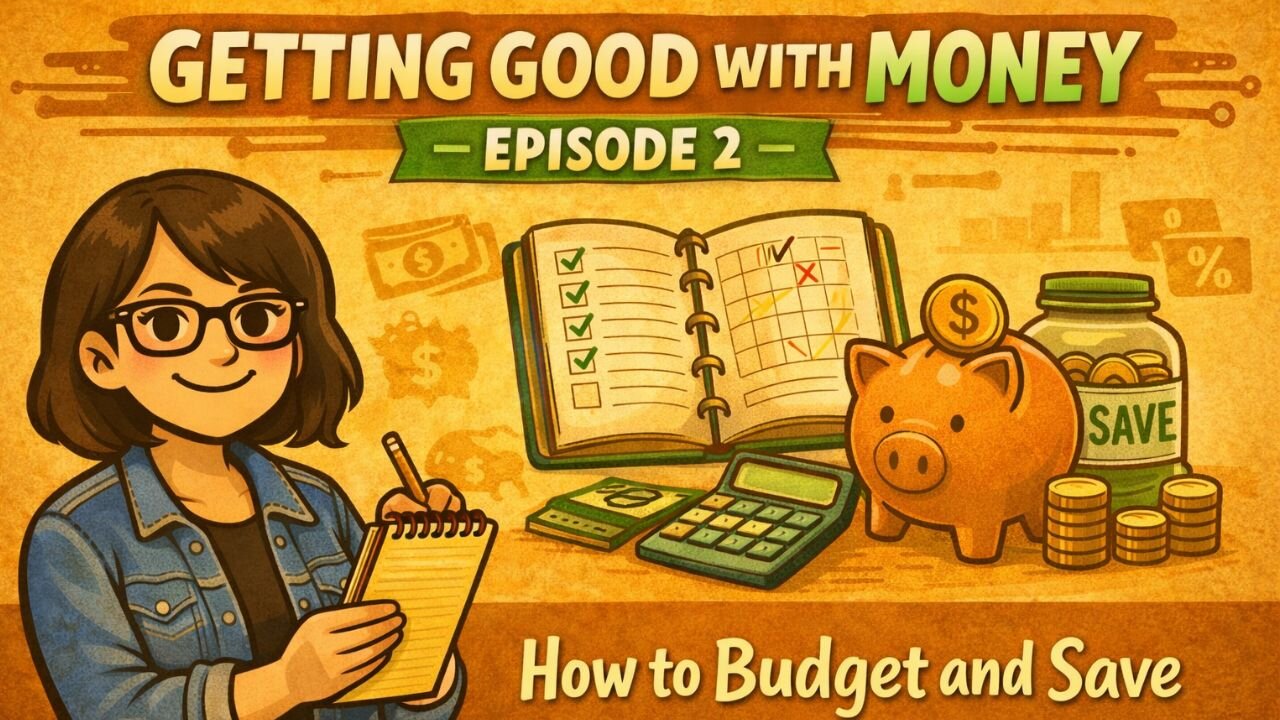
From Money Panic and Avoidance to Peace and Security
Money doesn’t just live in your bank account—it lives in your gut, your sleep, and your sense of safety. What if saving wasn’t about restriction, but about relief? This episode breaks down how emergency savings can completely change your relationship with money.
In this episode, the conversation explores how deeply emotional money can be and how fear, panic, and avoidance often shape financial decisions more than logic ever does. Drawing from lived experience and insights from Get Good With Money by Tiffany Aliche, the discussion walks through practical, realistic ways to build emergency savings, reduce anxiety, and regain control. The focus isn’t on becoming wealthy overnight, but on creating stability, resilience, and peace of mind through intentional saving and smarter systems.
Top Topics Covered
The Emotional Cost of Money
Money problems often show up as panic, dread, and sleepless nights. When bills arrive or emergencies hit, the lack of savings can trigger fear and avoidance. Understanding that money is emotional—not just mathematical—is the first step toward change.
Emergency Savings and the “Squirrel” Mindset
Emergency savings are framed as protection, not deprivation. Using the analogy of squirrels storing acorns during good times, the episode emphasizes saving when life is calm so emergencies don’t lead straight to debt and chaos.
The Power of the First $1,000
Building even a small emergency fund can break the cycle of constant debt. Once there’s a buffer, unexpected expenses no longer require credit cards, and financial momentum finally begins to shift.
The Noodle Budget
A “noodle budget” identifies the bare minimum needed to survive if everything goes wrong. Knowing this number removes fear and clarifies how much flexibility actually exists in everyday spending.
Automating Savings and Separating Accounts
Automating savings and separating money into purpose-driven accounts removes decision fatigue and emotional stress. Bills get paid, savings grow quietly, and spending money becomes clear and guilt-free.
Key Takeaways
Emergency savings create calm, not limitation. Having money set aside reduces panic, improves sleep, and allows better decisions during crises. Over time, savings transform money from a source of fear into a tool for freedom.
Priorities matter more than appearances. By focusing on what truly brings value—rather than constant small purchases—long-term goals like security, retirement, and meaningful experiences become possible.
Money works best when it’s intentional and invisible. Systems that move money automatically make consistency easier than willpower ever could.
-
 1:32:17
Man in America
14 hours agoSatanic Ritual Abuse Survivor Exposes Epstein, the Vatican & Who Runs the World
367K275 -
 14:30
14:30
Clyde Do Something
16 hours ago $7.47 earnedWoke Canadian Media PANICKED When Conservative MP Took This Trade Deal to Washington
32.6K14 -
 2:11:26
TheSaltyCracker
12 hours agoThe Left's Violent Kids ReeEStream 02-15-26
196K376 -
 1:29:53
iCkEdMeL
11 hours ago $16.15 earned🔴 BREAKING: Savannah Guthrie Speaks Out as Burglary Theory Grows | YouTubers vs Journalists
49.9K15 -
 22:32
22:32
Jasmin Laine
14 hours agoMarco Rubio Gets STANDING OVATION After BLASTING “Managed Decline”—Liberals PANIC Over X
73.2K30 -
 2:02:07
Nerdrotic
13 hours ago $28.82 earnedKentucky Goblins | Forbidden Frontier #129
192K6 -
 2:23:43
vivafrei
21 hours agoEp. 303: Barnes to Sue Mike Davis? Epstein, Bannon, Alex Jones, Texas, D.C. Corruption AND MORE!
174K121 -
 8:01:32
Akademiks
16 hours agoVLAD Exposes JAY Z, Roc Nation and the industry. THE TRUTH Finally Explained - THE JAYSTEIN FILES!
220K16 -
 1:07:41
Patriots With Grit
18 hours agoSilver About To Detonate-Could it Hit $10,000? | Jon Dowling
73.9K18 -
 4:51:38
EricJohnPizzaArtist
4 days agoAwesome Sauce PIZZA ART LIVE Ep. #80: “Duke” the Dog!
61.7K9