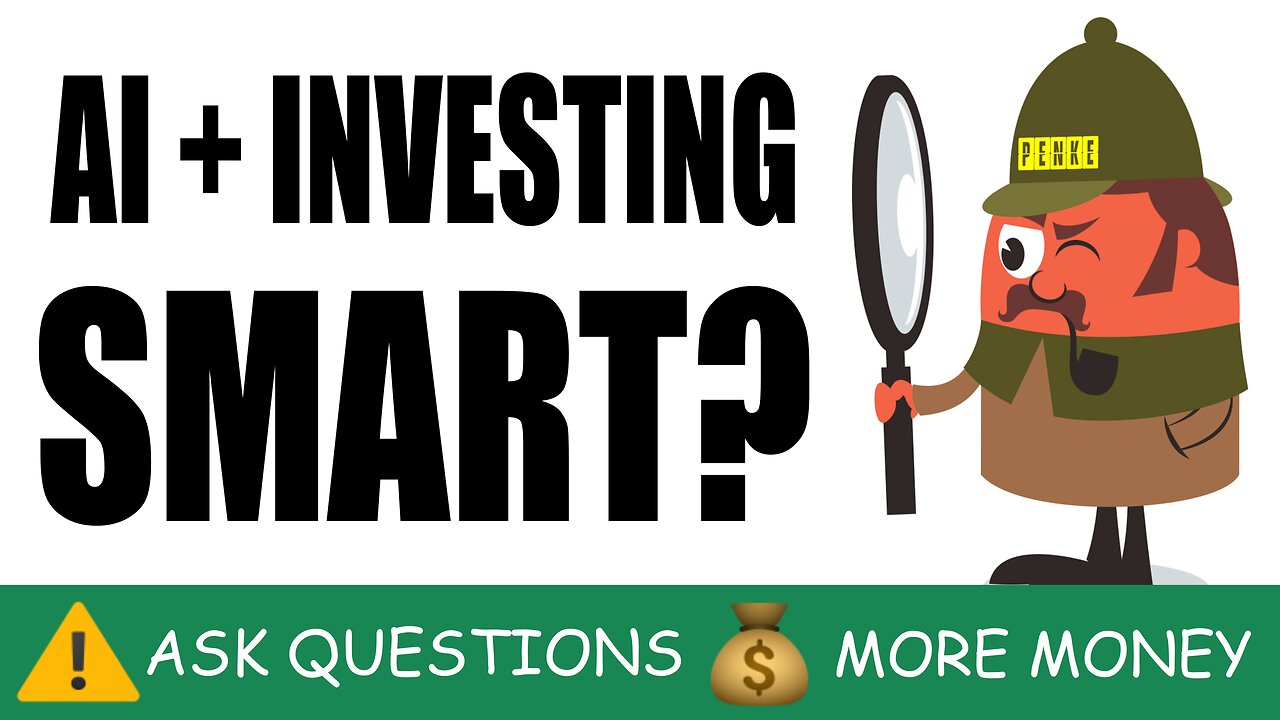
AI doesn’t make YOU smarter. Better questions do. (And data.)
Investing isn’t about predictions. It’s about asking better questions — using real company data.
Most people use AI to confirm what they already believe.
In investing, that’s how you miss risks.
In this video, I show how I actually use AI for stock analysis — not for predictions or price targets, but as a thinking tool.
I walk through a real example (Microsoft) and explain:
- how to download an AI-structured dataset
- how to upload it into your own AI (I use ChatGPT)
- how to use AI prompts per pain point to surface blind spots
- why the AI must use only the uploaded data
- and why the most important part is still you, not the AI
The key idea is simple:
AI is fast, but it doesn’t think.
Better questions + structured data turn AI into a mirror — not an oracle.
At the end, I always ask the AI for a short, simple summary of the full conversation.
If that summary still makes sense, the analysis usually does too.
This video is for people who:
- invest based on businesses, not narratives or ticker price target hype
- want to understand business risk, not just upside pumps
- use AI as leverage, not authority
If you’re looking for stock tips or predictions, this isn’t that.
If you want to think more clearly about what you own — or want to own — this will make sense.
Questions?
Ask below. I read and answer them myself.
0:00 AI doesn’t make you smarter — better questions and data do
0:08 Why most people use AI wrong for investing
0:16 Downloading an AI-structured dataset for stock analysis
0:24 Uploading company data into ChatGPT
0:32 Using AI prompts per pain point (finding blind spots)
0:41 Example: analyzing Microsoft stock with AI
0:59 Replacing company names and controlling AI context
1:12 Feeding the AI correctly (data first, questions second)
2:21 How AI responds when given structure and constraints
2:33 Asking AI to explain in simple language
2:59 Forcing AI to use only the uploaded dataset
3:21 Why you — not AI — make the investment decision
3:43 Using AI to challenge assumptions, not confirm them
4:14 Asking follow-up and critical questions
4:40 Why there’s no shame in not knowing (AI as a mirror)
5:16 Why most people gamble on tickers and narratives
5:44 Asking for a short summary of the full AI conversation
6:08 Interpreting AI output: Microsoft example
6:44 Identifying real risk vs obvious risk
7:18 The most important investing question: am I missing something?
7:52 Compounding knowledge using AI, data, and your brain
8:06 Expanding AI pain points for stock analysis
8:15 Final thoughts and how to use this yourself
#AIInvesting #LongTermInvesting #FundamentalAnalysis #ValueInvesting
-
 1:48:15
The Quartering
4 hours agoPSYCHO NURSE FINDS OUT AGAIN, NEIL DEGRASSE TYSON HUMILIATED, TRUMP WILL BE FINE ON TARIFFS!
88.8K36 -
 LIVE
LIVE
StoneMountain64
2 hours agoArc Raiders Anvil Splitter MAXXED OUT BUILD
57 watching -
 LIVE
LIVE
GrimmHollywood
6 hours ago🔴LIVE • GRIMM HOLLYWOOD • TRADER JOE vs SQUEAKER the PREACHER • ARC RAIDERS + WILKY'S CAR X STREET
102 watching -
 11:59
11:59
Clintonjaws
4 hours ago $2.07 earnedBill Maher LOSES IT & ENDS SHOW When Neil deGrasse Tyson Says This
14.5K20 -
 LIVE
LIVE
TheRealTombi - Live Streaming
5 hours ago $0.01 earned🔴 BUILDING DOJO! Pt 8🤫 LET'S GO DOJO | Full Test and Compile - Chill and Music🔴#JustChatting
95 watching -
 2:47:18
Tucker Carlson
4 hours agoTucker Confronts Mike Huckabee on America’s Toxic Relationship With Israel
91.5K364 -
 LIVE
LIVE
FusedAegisTV
21 hours ago#1 Non-Toxic JRPG Streamer Plays First "Yeast" Game | Ys X: Proud Nordics
22 watching -
 1:04:33
DeVory Darkins
4 hours agoSCOTUS issues SHOCKING Ruling against Trump as Wes Moore gets HUMILIATED
140K72 -
![MAHA News [2.20] - Glyphosate E.O., Food System = Warfare, GRAS System, Aging Farmers = Not Good](https://1a-1791.com/video/fww1/3d/s8/1/E/r/l/1/Erl1z.0kob-small-MAHA-News-2.20.jpg) DVR
DVR
Badlands Media
11 hours agoMAHA News [2.20] - Glyphosate E.O., Food System = Warfare, GRAS System, Aging Farmers = Not Good
10.6K1 -
 1:09:28
Sean Unpaved
4 hours agoJayden Maiava Is The KEY In Changing USC's TRAJECTORY In 2026! | UNPAVED
31.7K