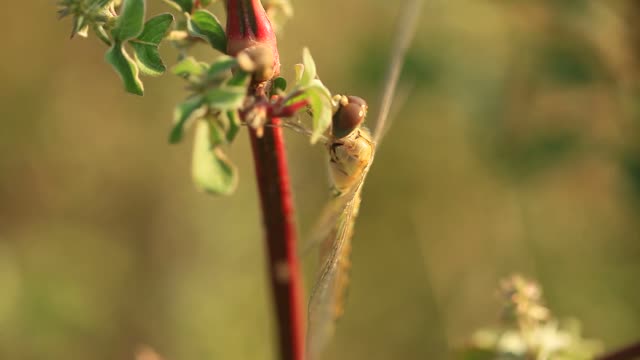
Dragonfly Insect Life Cycle You Don't Know
Dragonfly species (Anisoptera) are characterized by long bodies with two narrow pairs of intricately veined, membranous wings that, while generally transparent, may have coloured markings. Unlike damselflies, the front and rear wing pairs are shaped differently.
In addition, dragonflies rest with their wings spread horizontally, rather than held vertically against each other (with the exception of one very small family, Epiophlebiidae). Dragonflies have a more powerful build and are generally much stronger fliers than damselflies.
The globe skimmer (or wandering glider, Pantala flavescens), a migratory dragonfly, for example, makes an annual multigenerational journey of some 18,000 km (about 11,200 miles); to complete the migration, individual globe skimmers fly more than 6,000 km (3,730 miles)—one of the farthest known migrations of all insect species. Dragonflies also have huge bulging eyes that occupy most of the head, giving some a field of vision approaching 360 degrees.
The winged adults are diversely coloured in a variety of shades ranging from metallic to pastel. Compared with other insects, they are large, with some having wingspans of up to 16 cm (about 6 inches). Even the smallest species are about 20 mm (0.8 inch) across. As well as being extremely agile fliers, they are also among the fastest insects. Dragonfly wing muscles must be warm to function optimally, and so, if cool, the insect often engages in wing-whirring and basking in the sun to generate heat before taking flight.
The dragonfly’s speed and agility contribute to its being one of the most effective aerial predators. Small flying insects are the usual fare, but some dragonflies regularly consume prey that is 60 percent of their own weight.
Young dragonflies, called larvae or sometimes nymphs or naiads, are aquatic and are as dedicated predators under water as the adults are in the air. The functionally wingless larvae are usually mottled or dull in colour, matching the sediments or water plants among which they live.
They have bulging eyes somewhat similar to the adults, but possess a formidable anatomical structure not present in the adult. Called the “mask,” it is a fusion of the larva’s third pair of mouthparts. Disproportionately large, the mask folds beneath both the head and thorax when it is not in use.
At the end of the mask is a set of fanglike pincers used to seize prey such as worms, crustaceans, tadpoles, and small fish. Different species of dragonfly larvae can be described as sprawlers, burrowers, hiders, or claspers. Their shape, metabolism, and respiration differ concordantly with the microhabitat they occupy.
-
 0:20
0:20
CWFell
3 years ago $0.01 earnedIf You Don't Know
24 -
 24:14
24:14
DeVory Darkins
1 day agoTrump announces HISTORIC WIN for American families as Costco launches shocking lawsuit
19.1K68 -
 20:31
20:31
Actual Justice Warrior
1 day agoOxford Student Who Celebrated Charlie Kirk's Murder Plays Victim
2.09K9 -
 23:40
23:40
Code Blue Cam
13 hours agoMan Celebrates Independence Day by Losing His Freedom
10.8K7 -
 58:39
58:39
MattMorseTV
10 hours ago $29.95 earned🔴Rand Paul just made a BIG MISTAKE.🔴
65K145 -
 37:25
37:25
Nikko Ortiz
14 hours agoTerrible Military Deaths and War Crimes
10.6K7 -
 24:21
24:21
The Pascal Show
9 hours ago $6.09 earned'CHALLENGE ACCEPTED!' TPUSA Breaks Silence On Candace Owens Charlie Kirk Allegations! She Responds!
14.5K7 -
 19:23
19:23
MetatronHistory
15 hours agoThe REAL Origins and Function of the PRETORIANS in Ancient Rome
9.38K -
 2:03:59
Side Scrollers Podcast
19 hours agoKaceytron Publicly Humiliated by H3H3 + Sabrina Carpenter/White House FEUD + More | Side Scrollers
55.8K7 -
 2:17:46
The Connect: With Johnny Mitchell
4 days ago $17.43 earnedA Sitdown With The Real Walter White: How An Honest Citizen Became A Synthetic Drug Kingpin
100K2