
Autumn leaf rake and burn - Timelapse
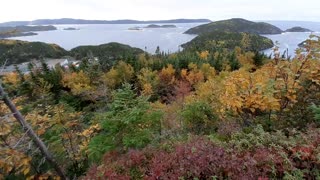
Autumn leaf color is a phenomenon that affects the normal green leaves of many deciduous trees and shrubs by which they take on, during a few weeks in the autumn season, various shades of yellow, orange, red, purple, and brown.
In some areas of Canada and the United States, "leaf peeping" tourism is a major contribution to economic activity. This tourist activity occurs between the beginning of color changes and the onset of leaf fall, usually around September and October in the Northern Hemisphere and April to May in the Southern Hemisphere.
A green leaf is green because of the presence of a pigment known as chlorophyll. When abundant in the leaf's cells, as during the growing season, the chlorophyll's green color dominates and masks out the colors of any other pigments that may be present in the leaf. Thus, the leaves of summer are characteristically green.
Chlorophyll has a vital function: it captures solar rays and uses the resulting energy in the manufacture of the plant's food – simple sugars which are produced from water and carbon dioxide. These sugars are the basis of the plant's nourishment – the sole source of the carbohydrates needed for growth and development. In their food-manufacturing process, the chlorophylls break down, thus are being continually "used up". During the growing season, however, the plant replenishes the chlorophyll so that the supply remains high and the leaves stay green.
As autumn approaches, with daylight hours shortening and temperatures cooling, the veins that carry fluids into and out of the leaf are gradually closed off as a layer of special cork cells forms at the base of each leaf. As this cork layer develops, water and mineral intake into the leaf is reduced, slowly at first, and then more rapidly. During this time, the amount of chlorophyll in the leaf begins to decrease. Often, the veins are still green after the tissues between them have almost completely changed color.
Deciduous plants were traditionally believed to shed their leaves in autumn primarily because the high costs involved in their maintenance would outweigh the benefits from photosynthesis during the winter period of low light availability and cold temperatures. Other factors involved include insect predation, water loss, and damage from high winds or snowfall.
-
 0:04
0:04
AmplifiedLIFE
1 year ago $0.03 earned“Peep”-ing & Chirping Cardinal
128 -
 27:01
27:01
Cr8urCanvas
4 years agoSingle Yellow Autumn Leaf
51 -
 0:26
0:26
NewHampshire603
4 years agoAutumn Beauty
648 -
 0:06
0:06
Our Outdoor Life With Danny & Lorraine
4 years agoAutumn Colors
7213 -
 0:55
0:55
Vothuy
4 years agoHello Autumn
31 -
 2:07:44
TimcastIRL
13 hours agoTrump's Secret Plan To Make Charlie Kirk VP, America Fest IN CIVIL WAR | Timcast IRL
247K241 -
 4:09:13
I_Came_With_Fire_Podcast
21 hours agoLive Fire: Christmas Special
60.4K10 -
 46:26
46:26
Sarah Westall
15 hours agoWhat’s Behind the Silver Surge? Large Institutions Cashing In w/ Andy Schectman
56.9K4 -
 6:42:10
Turning Point USA
20 hours agoLIVE NOW: AMFEST DAY 2 - VIVEK, JACK POSOBIEC, MEGYN KELLY, ALEX CLARK AND MORE…
1.41M198 -
 1:14:37
Flyover Conservatives
1 day agoHow to Win 2026 Before It Starts — Clay Clark’s Goal-Setting Blueprint | FOC Show
56.1K1