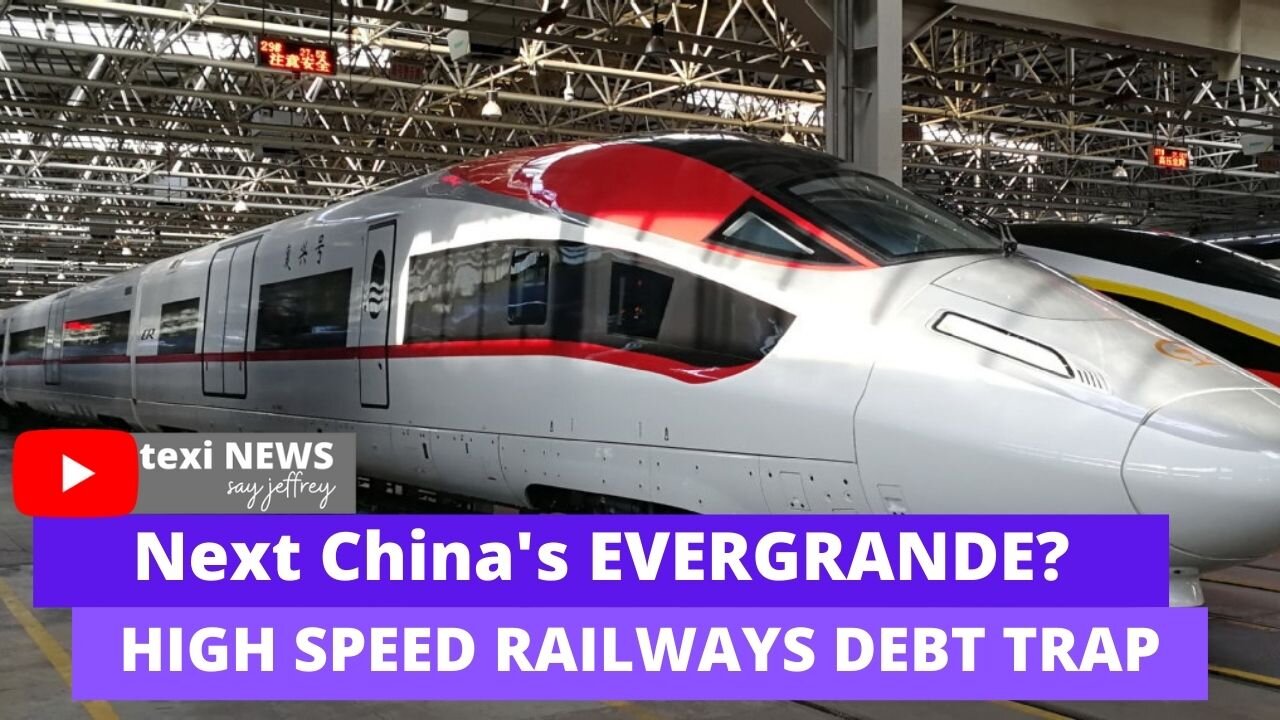
China’s High Speed Railways Plunge from High Profits into a Debt Trap
China’s high-speed railways plunge from high profits into a debt trap.
Just over a decade ago, in 2009, China’s first long-distance high-speed rail (HSR) service covered the 968 kilometers between Wuhan and Guangzhou at an average speed of around 350 kilometres per hour. The feat was recognised as the Communist Party of China’s “debt-fuelled” response to the global financial crisis. It was a sort of a “Railway Keynesianism,” where China re-engineered its railway infrastructure to drive the demand for concrete and steel and create millions of jobs. In the decade that followed, China’s HSR network spanned over a track length of 38,000 kilometres, the highest in the world. Bagging a share of 26 percent of the country’s total railway network, HSR today connects almost every major city in China, with travel time just a couple of hours more than air travel, but with the comfort that only trains can provide.
China’s HSR obsession.
In the mad rush to gain the rich economic dividends that the HSR delivered on several profitable lines, especially the Beijing-Shanghai and Beijing-Guangzhou lines, provincial governments across the country have blindly tried to emulate the feat. However, most of such provincial construction has ignored the low- to zero- the potential of the expensive routes to attract similar volumes of passenger traffic and are running at high idle capacity.
Most new HSR lines in China have witnessed a sharp decline in their “transportation density”. Measured in passenger kilometres, it is an indicator that projects the line’s operating efficiency in terms of annual average transport volume per kilometer. For example, while the 1,318-kilometre Beijing-Shanghai HSR corridor’s transportation density was 48 million passenger kilometers in 2015 and continues to be high, the 1,776-kilometre Lanzhou-Urumqi line has only 2.3 million passenger-kilometers of transportation density. China’s overall transportation density of HSR was 17 million passenger kilometers in 2015, while it was 34 million passenger-kilometers for Japan’s Shinkansen in the same year.
-
 57:01
57:01
Coin Stories with Natalie Brunell
21 hours agoSamourai CEO Keonne Rodriguez: Guilty Plea, Prison Ahead, and the Fight for Privacy in Bitcoin
20.1K5 -
 53:33
53:33
Dialogue works
2 days ago $2.69 earnedMatthew Hoh: Inside the New U.S. National Security Strategy: Realities, Risks, and Flaws
18.7K10 -
 2:19:51
Side Scrollers Podcast
22 hours agoSmashJT CRASHES The Game Awards 2025 + Full Show Recap with Vara Dark + More | Side Scrollers
73K10 -
 10:11
10:11
MattMorseTV
18 hours ago $11.54 earnedThe Documents just got UNSEALED…
29.7K66 -
 14:55
14:55
Nikko Ortiz
17 hours agoI Laugh I Go To Hell...
24.6K4 -
 23:45
23:45
GritsGG
1 day agoMost OP Weapon In Warzone History? USE NOW!
16.5K1 -
 1:12:47
MetatronGaming
6 days agoNo, I'm not Human PART 2 ENDING
40.8K1 -
 3:55:52
PandaSub2000
2 days agoMetroid Prime 4: Beyond | ULTRA BEST AT GAMES (Original Live Version)
13.3K3 -
 13:16
13:16
The Pascal Show
14 hours ago $3.07 earned'CANDACE, STOP LYING!' Erika Kirk Demands Candace Owens Stop Spreading Lies about Charlie Kirk
16.2K21 -
 9:41
9:41
MetatronCore
6 days agoCNN is actually STUPID
12.7K6