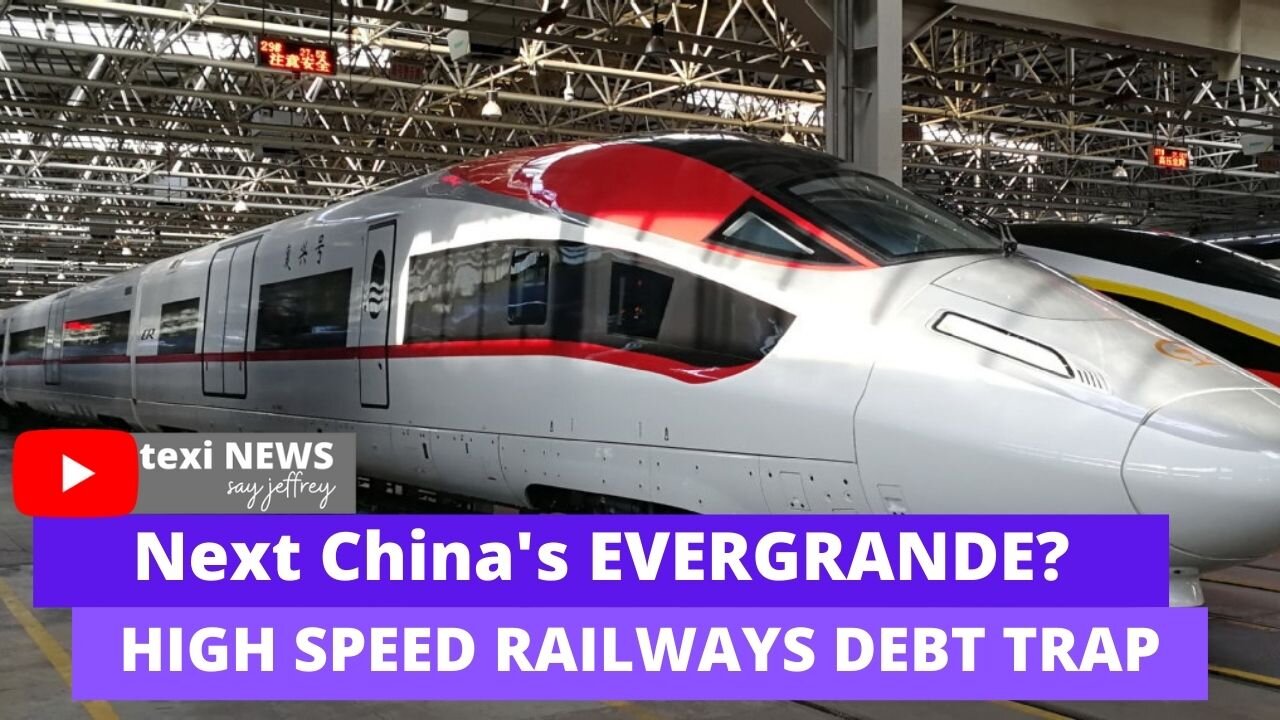
China’s High Speed Railways Plunge from High Profits into a Debt Trap
China’s high-speed railways plunge from high profits into a debt trap.
Just over a decade ago, in 2009, China’s first long-distance high-speed rail (HSR) service covered the 968 kilometers between Wuhan and Guangzhou at an average speed of around 350 kilometres per hour. The feat was recognised as the Communist Party of China’s “debt-fuelled” response to the global financial crisis. It was a sort of a “Railway Keynesianism,” where China re-engineered its railway infrastructure to drive the demand for concrete and steel and create millions of jobs. In the decade that followed, China’s HSR network spanned over a track length of 38,000 kilometres, the highest in the world. Bagging a share of 26 percent of the country’s total railway network, HSR today connects almost every major city in China, with travel time just a couple of hours more than air travel, but with the comfort that only trains can provide.
China’s HSR obsession.
In the mad rush to gain the rich economic dividends that the HSR delivered on several profitable lines, especially the Beijing-Shanghai and Beijing-Guangzhou lines, provincial governments across the country have blindly tried to emulate the feat. However, most of such provincial construction has ignored the low- to zero- the potential of the expensive routes to attract similar volumes of passenger traffic and are running at high idle capacity.
Most new HSR lines in China have witnessed a sharp decline in their “transportation density”. Measured in passenger kilometres, it is an indicator that projects the line’s operating efficiency in terms of annual average transport volume per kilometer. For example, while the 1,318-kilometre Beijing-Shanghai HSR corridor’s transportation density was 48 million passenger kilometers in 2015 and continues to be high, the 1,776-kilometre Lanzhou-Urumqi line has only 2.3 million passenger-kilometers of transportation density. China’s overall transportation density of HSR was 17 million passenger kilometers in 2015, while it was 34 million passenger-kilometers for Japan’s Shinkansen in the same year.
-
 1:23:16
LIVE WITH CHRIS'WORLD
11 hours agoTHE WAKE UP CALL - 12/11/2025 - Episode. 23
36K4 -
 5:12
5:12
Blackstone Griddles
15 hours agoApple Pie Pancakes on the Blackstone Camping Griddle
12.4K2 -
 44:02
44:02
CarlCrusher
1 day agoFormer Green Beret Mike Battista can Summon UAP using Psionics - Part 4
11.3K7 -
 44:31
44:31
Damon Imani
16 hours agoDamon VS The View | Best of 2025
12.9K5 -
 28:31
28:31
Living Your Wellness Life
19 hours agoShould You Shower Every Day?
13.1K6 -
 1:00:36
A Cigar Hustlers Podcast Every Day
1 day agoHustler Every Week Day Episode 426 "What To Know Before Its To Late!"
11.9K1 -

BEK TV
1 day agoTrent Loos in the Morning - 12/11/2025
11.6K -
 1:34:34
Tucker Carlson
11 hours agoWhy Are We Defending Mass Murder in Gaza? Because Our Greatest Ally Demands It
102K454 -
 30:01
30:01
James Klüg
17 hours agoA Murder Capital of America Protests ICE DEPORTING Criminals
17.7K22 -
 26:10
26:10
Michael Knowles
16 hours agoFormer Diddy Escort Reflects on Turning to Christianity | Michael & Shawn Dearing
26.4K13