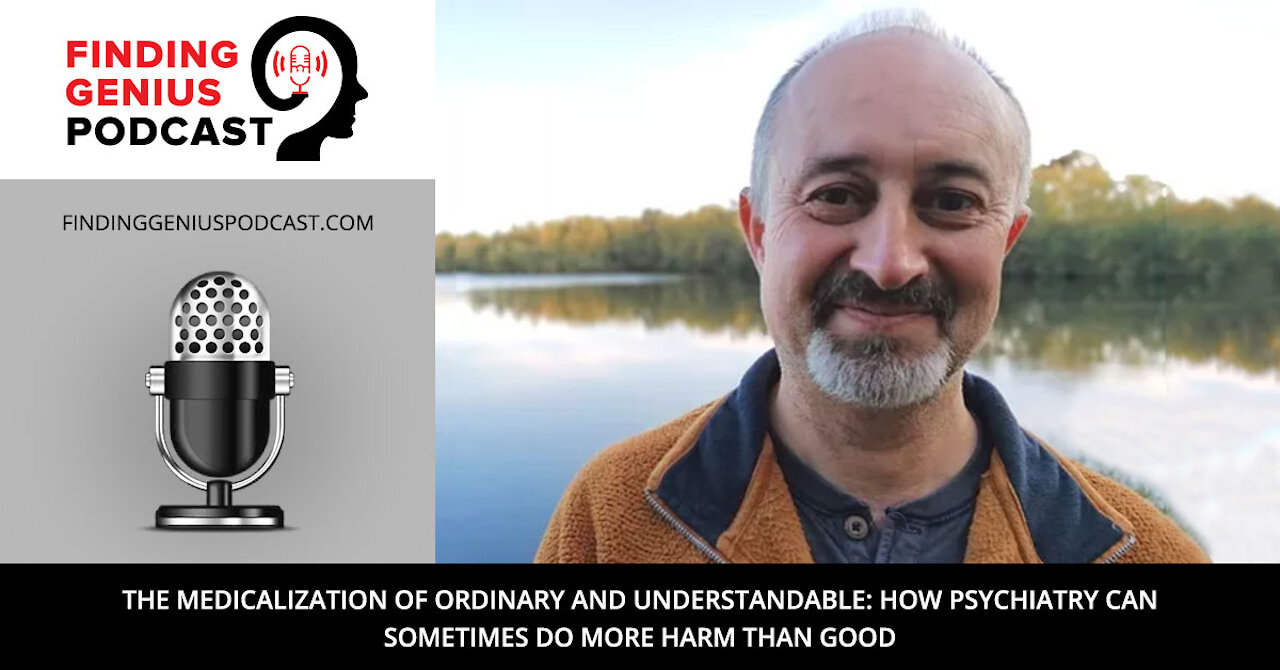
How Psychiatry Can Sometimes Do More Harm Than Good
“If it ain’t broke, don’t fix it.” It’s a saying you’ve probably heard before, but today’s episode puts a spin on it and places it in the context of mental health: “If it’s not ‘wrong,’ don’t try to fix it as if it is.”
Tune in to discover:
How and why psychiatric diagnoses have become more like labels that act as consumer brands rather than scientifically-based medical diagnoses
The power of labeling and its effect on self-perception and perception of others
The definition of meta-emotions and how people experience them
How developmental expectations of adolescents and young adults differ between cultures, and the conflict they can create within the person who is held to those expectations
The critical difference between ordinary, understandable emotions and clinical conditions perceived as “wrong” and in need of medical treatment
Dr. Sami Timimi is a consultant child and adolescent psychiatrist who has worked at National Health Service in the UK his entire working life. He’s been involved with several research projects involving mental health and cross-cultural issues, and has contributed to the publication of a dozen books, in addition to many papers and journal articles. He frequently appears in national and international conferences on matters of mental health, and teaches and trains others in his area of expertise.
In the early 90s during his medical training, Dr. Timimi completed a placement in child and adolescent psychiatry, a field that at the time saw children and young people as connected to their history and broader environment (e.g., their parents, peer groups, cultural ideas). It was nothing like what he’d seen in general psychiatric wards, which he describes as dominated by a narrow medicalized approach as opposed to a truly therapeutic approach that embraces a broader understanding of how mental health problems are identified, characterized, and addressed.
For over two decades now, Dr. Timimi has immersed himself in this field as a practicing child and adolescent psychiatrist.
In this episode, he discusses everything from the way cultural and societal expectations and assumptions shape the way we perceive our own experience and the experience of others, to how ideas popularized by many in the psychiatric profession actually contribute to increased rates of distress and feelings of alienation in young adults (especially in the context of the current virus situation).
He also explains how certain treatments given for a short-term problem can actually cause it to become a long-term problem.
But it’s not all bad. Tune in to learn about some extremely successful models for addressing even the most serious mental issues; chances are, you’ve never heard of them before.
Visit https://www.madinamerica.com/ for more information and resources.
Episode also available on Apple Podcasts: http://apple.co/30PvU9C
-
 31:36
31:36
FGP
6 days agoProfit First For Law Firms: Building Financial Clarity With Ben Hockema
27 -
 20:02
20:02
WhatCulture - Film
3 days ago20 Movie Reveals Nobody Noticed
18 -
 6:49
6:49
RidiculousRides
20 hours agoPeel P50: The 59kg Car You Can Park Indoors
39 -
 13:02
13:02
WhatCulture Gaming
1 day ago10 Video Games That Broke The Rules
16 -
 2:12:02
Battlefront: Frontline with Dustin Faulkner
11 hours agoThe DoJ Leadership Reveals Failure to the People with Epstein Files During Bondi Testimony | Has the GOP Lost the Midterms with Bad Focus | Trust in Media and Government Definitely Failing in the West
4941 -
 7:58
7:58
CinemaBlend
1 day ago'The Penguin' Interviews With Colin Farrell, Cristin Milioti, Matt Reeves And More
-
 22:33
22:33
Welker Farms
1 day ago $4.07 earned$4,000 Leak? Let's Crack It Open & Investigate!
47.5K1 -
 20:42
20:42
Jasmin Laine
15 hours agoSupreme Court CANCELS Election Win—Liberal MP LOSES It After VIRAL Clip HAUNTS Him
20.3K25 -
 15:03
15:03
tactical_rifleman
22 hours ago $6.29 earnedGriffin Armament MK2 Review
16.5K6 -
 4:56
4:56
Paul Joseph Watson
2 days agoThey Tried to Cover It Up... Now We Know Why
80.9K69